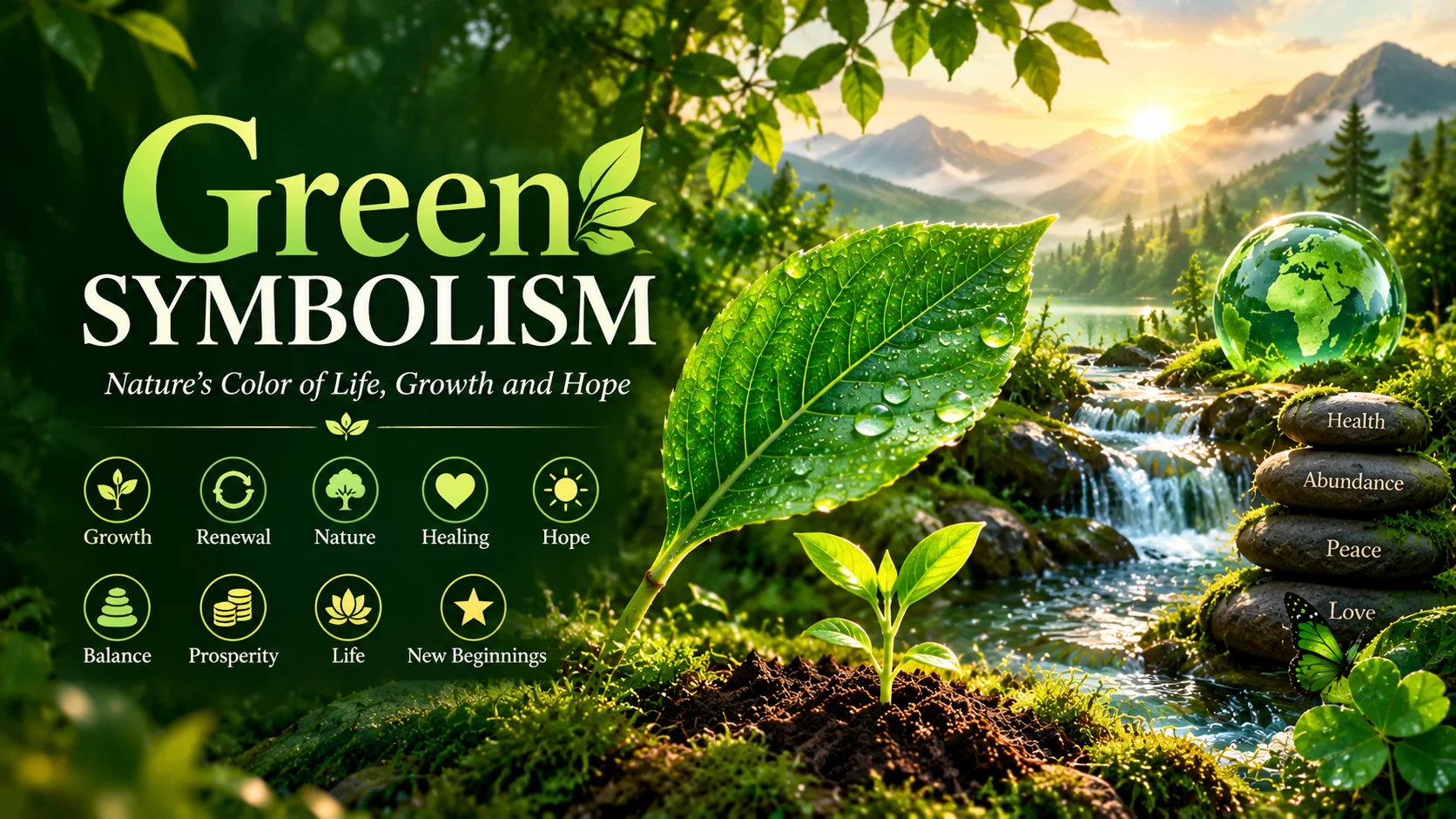
Green symbolism is deeply connected with nature, growth, renewal, balance, hope, and life. As the color of leaves, forests, plants, and spring, green often represents the natural cycle of regeneration and the feeling of beginning again.
Across cultures and traditions, green can carry different meanings. It may symbolize healing and prosperity in one context, while representing jealousy or inexperience in another. Understanding green symbolism therefore requires looking at its emotional, spiritual, cultural, and practical associations.
Green Symbolism Meaning (Clear Definition)
Green symbolism refers to the meanings and ideas associated with the color green, especially growth, renewal, nature, harmony, healing, prosperity, and hope.
Green is strongly associated with the living world. Fresh leaves and new plants make it a natural symbol of growth and renewal, while its connection with fertile landscapes can suggest abundance and prosperity.
Common meanings of green include:
- 🌿 Growth — personal development, progress, and new beginnings
- 🌱 Renewal — restoration, rebirth, and fresh opportunities
- 💚 Love and compassion — emotional balance and caring relationships
- 🍃 Nature — life, fertility, and connection with the natural world
- ☘️ Luck — fortune, opportunity, and positive outcomes
- 🕊️ Peace and harmony — calmness, balance, and emotional stability
- 💰 Prosperity — wealth, abundance, and financial growth
- 🌿 Healing — restoration, health, and emotional recovery
The exact meaning depends on the shade of green, cultural setting, and situation in which it appears.
What Does Green Symbolism Represent?
Green commonly represents life, growth, balance, hope, abundance, and transformation.
Because green sits between warm and cool colors on the color spectrum, it is often perceived as visually balanced. Its natural associations can also create feelings of calmness and stability.
Growth and New Beginnings
A green leaf emerging from a branch is a simple but powerful image of renewal. Green can therefore symbolize personal growth, learning, recovery, and starting a new chapter.
Nature and Life
Green is inseparable from the natural environment. Forests, grasslands, gardens, and plants make it one of the strongest symbolic colors for life and ecological connection.
Hope and Renewal
Green can represent the possibility of better days ahead. A landscape becoming green after winter, for example, naturally evokes renewal and hope.
Wealth and Prosperity
Green is also associated with money and financial success in many modern contexts. This gives green symbolism another dimension: abundance, opportunity, security, and prosperity.
Jealousy and Envy
Not every meaning of green is positive. Expressions such as “green with envy” have helped establish green as a symbol of jealousy, possessiveness, and emotional insecurity.
Spiritual Meaning of Green Symbolism
Spiritually, green is often associated with healing, balance, compassion, renewal, and connection with life.
In spiritual traditions that use color symbolism, green may represent the restoration of emotional energy and the ability to grow through change.
Green can also encourage a sense of grounding. Spending time around trees, gardens, or natural landscapes often feels calming because green is visually and psychologically connected with the natural world.
Green and the Heart
In some spiritual and energy-based traditions, green is connected with the heart chakra, which is associated with love, compassion, forgiveness, acceptance, and emotional balance.
This association has made green a popular symbolic color for healing relationships and opening oneself to love.
Green as a Symbol of Transformation
Growth is rarely instantaneous. Plants develop gradually, making green a useful symbol for patient transformation.
Seeing green symbolically can therefore serve as a reminder that meaningful personal change often happens step by step.
Biblical / Religious Meaning of Green Symbolism
Green does not have one universal religious meaning, but it frequently appears as a symbol of life, flourishing, restoration, and spiritual vitality.
In Christian symbolism, green has traditionally been associated with ordinary time and spiritual growth, reflecting the continuing journey of faith. Green imagery such as grass, trees, vines, and pastures can also evoke ideas of life, nourishment, and God’s creation.
The broader religious symbolism of green is often connected to the natural world and the idea that life can be renewed.
However, the interpretation of a particular green object or passage depends on its religious tradition and context rather than color alone.
Green Symbolism in History and Culture
Green has carried diverse meanings throughout history.
In ancient and medieval traditions, green was closely linked with vegetation, fertility, spring, and the renewal of life. Its natural associations made it particularly powerful in agricultural societies.
In some historical contexts, green became associated with youth, inexperience, and immaturity. The expression “green” meaning inexperienced continues to appear in modern language.
Green has also become strongly associated with luck, particularly through cultural traditions surrounding shamrocks and other green imagery.
In modern environmental culture, green has developed an especially strong association with ecology, sustainability, conservation, and environmental awareness.
Thus, green symbolism has evolved while retaining its fundamental connection with life and nature.
Green Symbolism in Literature and Art
Writers and artists frequently use green to communicate ideas that go beyond literal color.
A green forest may represent mystery, life, freedom, or an untouched natural world. A green field can suggest peace, fertility, childhood, or abundance.
Green can also express emotional complexity. A character surrounded by green imagery might be connected with jealousy, desire, growth, or transformation depending on the story.
In visual art, different shades produce different impressions:
| Shade of GreenCommon Symbolic Meaning | |
|---|---|
| Light green | Youth, freshness, hope, renewal |
| Emerald green | Wealth, elegance, vitality, prosperity |
| Dark green | Stability, maturity, ambition, nature |
| Olive green | Peace, wisdom, resilience |
| Mint green | Calmness, freshness, healing |
| Yellow-green | Energy, youth, jealousy, caution |
| Forest green | Nature, grounding, strength, security |
Artists can therefore use green not simply to represent nature but to influence the emotional atmosphere of an entire scene.
Dream Meaning of Green Symbolism
Dreaming of green often relates symbolically to growth, healing, renewal, hope, or emotional balance.
The meaning depends heavily on the dream’s details.
For example:
- Green plants may symbolize growth or new opportunities.
- A green forest may represent exploration, mystery, or connection with nature.
- Green clothing may reflect renewal, identity, or emotional development.
- Bright green light may symbolize hope, energy, or transformation.
- Withered green plants may suggest neglected growth or an opportunity that needs attention.
- Green objects associated with money may relate to prosperity or financial concerns.
Dream symbolism is personal rather than scientifically fixed. Your emotions during the dream and your real-life circumstances are often more meaningful than a universal dream dictionary.
Modern Meaning of Green Symbolism
Today, green symbolism is particularly powerful in environmentalism, health, wellness, sustainability, and personal growth.
Businesses and organizations often use green to communicate natural products, environmental responsibility, freshness, or health.
In everyday life, green may suggest:
- Sustainable living
- Environmental awareness
- Organic or natural products
- Wellness and restoration
- Financial growth
- Fresh starts
- Peaceful environments
- Connection with nature
Green has also become a popular color in interior design because natural shades can create a grounded and refreshing atmosphere.
Green Symbolism in Different Contexts
The meaning of green can change significantly depending on where it appears.
In nature: Green represents life, fertility, growth, and renewal.
In relationships: It may symbolize compassion, emotional balance, love, or jealousy.
In spirituality: It can represent healing, harmony, forgiveness, and spiritual growth.
In finance: Green is often connected with money, wealth, prosperity, and opportunity.
In environmental movements: Green represents sustainability, conservation, and ecological responsibility.
In emotions: Green can communicate calmness and hope but may also suggest envy or insecurity.
This flexibility is one reason green remains such a powerful symbolic color.
Green Symbolism and Personality
People sometimes associate green with qualities such as patience, generosity, stability, compassion, and a love of nature.
Someone drawn strongly to green may appreciate peaceful surroundings, personal growth, balance, or natural beauty. However, color preference alone cannot reliably determine someone’s personality.
Green is better understood as a color that can evoke particular feelings and associations rather than as a fixed personality code.
Frequently Asked Questions About Green Symbolism
What is the main meaning of green symbolism?
The main meanings of green symbolism are growth, renewal, nature, balance, healing, hope, and prosperity. Its interpretation can change depending on cultural and personal context.
What does green symbolize spiritually?
Spiritually, green commonly symbolizes healing, compassion, emotional balance, renewal, and connection with nature. Some spiritual traditions also associate it with the heart and unconditional love.
Is green a symbol of good luck?
Yes. Green is widely associated with luck, fortune, and opportunity, although the strength of this association varies across cultures and traditions.
What does green symbolize in dreams?
Green in dreams may symbolize growth, healing, renewal, hope, or prosperity. The specific meaning depends on what was green, the emotions involved, and the dreamer’s personal circumstances.
Can green symbolize jealousy?
Yes. Green can symbolize jealousy and envy, especially in Western expressions and literary traditions. This is one of the best-known negative associations of the color.
Conclusion
Green symbolism ultimately reflects one of nature’s most enduring messages: life can grow, recover, and begin again. From fresh leaves and peaceful forests to healing, prosperity, hope, and spiritual renewal, green carries a rich range of meanings.
Its symbolism is not limited to one interpretation. Green can represent both the calm of balance and the energy of growth, making it a powerful color for understanding nature, emotions, culture, and personal transformation.

I am Luna Grace, an author passionate about exploring the meanings, history, and symbolism behind everyday signs. I enjoy sharing thoughtful insights that help readers understand symbols and their deeper significance.