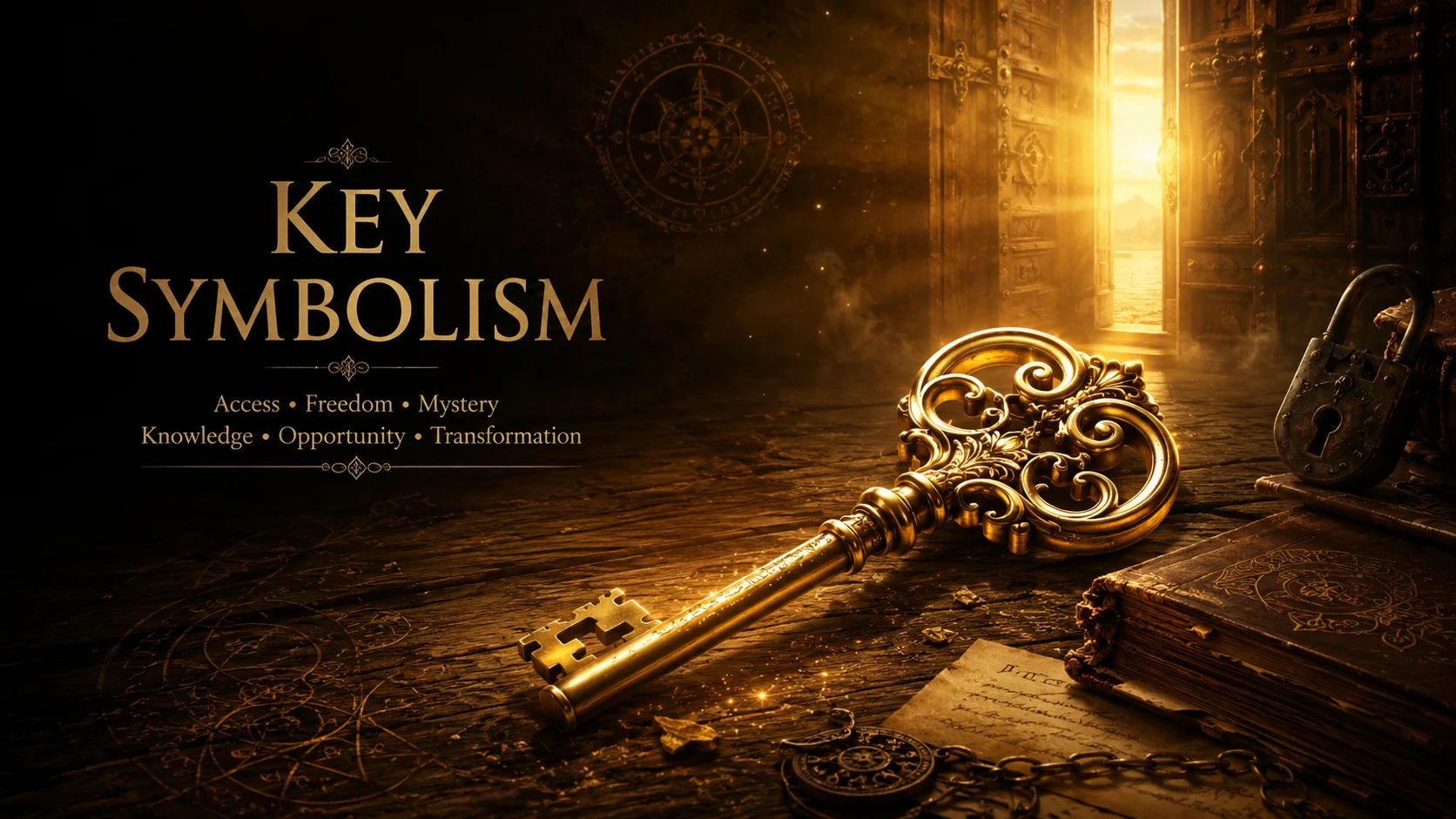
A key may be small, but its meaning can be remarkably powerful. Key symbolism is often associated with access, opportunity, freedom, knowledge, mystery, and transformation. Across cultures and traditions, a key can represent the ability to open something hidden, enter a new stage of life, or discover an answer that was previously out of reach.
if you encounter a key in jewelry, artwork, literature, dreams, religious imagery, or everyday life, its symbolic meaning often centers on one powerful idea: something important is waiting to be unlocked.
Key Symbolism Meaning (Clear Definition)
Key symbolism refers to the meanings and ideas associated with a key beyond its practical purpose of opening a lock.
In symbolic language, a key commonly represents access, secrets, knowledge, freedom, opportunity, authority, and personal discovery. Because a key gives someone the ability to open what is closed, it naturally becomes a metaphor for solutions and possibilities.
Common Key Symbolism Meanings
| Symbolic Meaning | What It Represents |
|---|---|
| Access | Entering something previously unavailable |
| Freedom | Escaping restrictions or limitations |
| Knowledge | Discovering hidden information or truth |
| Opportunity | A new possibility or open door |
| Mystery | Secrets waiting to be revealed |
| Authority | Power to control or grant access |
| Transformation | Moving into a new stage of life |
| Protection | Securing something valuable |
The meaning of a key can change depending on its shape, context, culture, and personal significance.
What Does Key Symbolism Represent?
Key symbolism can represent several important aspects of human experience.
1. Access and Opportunity
A key gives access to something that was previously closed. Symbolically, it can represent a new opportunity, important connection, or unexpected possibility.
A key appearing at an important moment may therefore feel like a reminder to recognize opportunities rather than overlook them.
2. Freedom and Liberation
Keys can symbolize freedom because they can unlock doors, gates, chains, and other barriers.
For this reason, a key may represent breaking free from fear, limitations, unhealthy patterns, or circumstances that have held someone back.
3. Knowledge and Discovery
A key can also symbolize knowledge. The phrase “the key to understanding” reflects the idea that knowledge provides access to something previously difficult to comprehend.
In this sense, a key may represent an answer, insight, realization, or hidden truth.
4. Secrets and Mystery
A locked box or door suggests something concealed. The key becomes the object that can reveal what is hidden.
This makes keys powerful symbols of mystery, curiosity, secrets, and discovery.
5. Authority and Responsibility
Historically and symbolically, possessing a key could indicate authority. Someone holding the key to a room, treasury, city, or fortress had control over who could enter.
A key can therefore represent responsibility as well as power.
6. Transformation and New Beginnings
Opening a door often marks the beginning of something new. Consequently, a key can symbolize personal growth, transition, change, and renewal.
It may represent leaving an old chapter behind and entering another.
Spiritual Meaning of Key Symbolism
Spiritually, key symbolism is often connected with awakening, divine guidance, hidden wisdom, spiritual access, and personal transformation.
A key can represent the idea that certain answers cannot be forced. They become available when a person is ready to understand them.
Key as a Symbol of Spiritual Awakening
A spiritual key may represent an insight that changes how you see yourself or the world.
It can symbolize discovering a deeper truth, developing greater awareness, or recognizing an opportunity for inner growth.
Key as Divine Guidance
In spiritual traditions, a key may sometimes be interpreted as a sign of guidance or direction. The symbolic message may be:
There is a way forward, even if you cannot see it yet.
Key and Hidden Wisdom
Because keys open what is concealed, they can represent spiritual knowledge that requires patience, reflection, and experience to understand.
A key can therefore become a metaphor for discovering wisdom within yourself.
Biblical / Religious Meaning of Key Symbolism
Keys have significant symbolic meaning in Christianity and appear in biblical imagery as representations of authority, access, responsibility, and spiritual power.
One of the best-known examples is the imagery of keys associated with Peter. In Matthew 16:19, Jesus speaks of giving Peter “the keys of the kingdom of heaven.” The passage has traditionally been understood as symbolizing authority and responsibility connected with the kingdom of heaven.
Keys also appear in Revelation in symbolic contexts involving authority over death, Hades, and spiritual realms.
In Christian art, keys are especially associated with Saint Peter, who is traditionally depicted holding one or more keys. These are often understood as symbols of spiritual authority and the “keys of heaven.
Religious interpretations can vary between traditions, so the precise meaning depends on the theological context.
Key Symbolism in History and Culture
Keys have carried practical and symbolic importance for thousands of years.
In ancient societies, keys were associated with homes, valuables, temples, gates, and places of authority. Possessing a key could indicate trust because it gave a person access to something protected.
Over time, keys became associated with ideas such as:
- Trust and responsibility
- Power and authority
- Security and protection
- Social status
- Access to privileged spaces
- Ownership and belonging
In European religious and artistic traditions, keys became strongly connected with Saint Peter and spiritual authority.
In ceremonies and civic traditions, giving someone a key can also symbolize recognition, trust, welcome, or honorary status.
Key Symbolism in Literature and Art
Keys are particularly powerful in literature because they create immediate questions:
What does the key open? Who owns it? Why was it hidden? What happens after the door is unlocked?
These questions make keys natural symbols for mystery and discovery.
A key in a story may represent:
- A hidden truth
- A forbidden secret
- A lost memory
- A new opportunity
- A dangerous discovery
- Personal identity
- Freedom from confinement
- Entry into another world
In art, keys may appear beside doors, locks, books, hearts, clocks, wings, or religious figures. Their meaning depends heavily on the surrounding imagery.
A key placed beside a heart, for example, may symbolize emotional access or love, while a key beside a locked chest may emphasize mystery and hidden knowledge.
Dream Meaning of Key Symbolism
Dreams involving keys can have many possible interpretations, and personal circumstances matter more than any universal dream dictionary.
Generally, a key in a dream may symbolize solutions, opportunities, access, secrets, control, or personal change.
Finding a Key in a Dream
Finding a key may represent discovering an answer or recognizing an opportunity that you had previously overlooked.
Losing a Key in a Dream
Losing a key may reflect feelings of uncertainty, missed opportunities, lack of control, or difficulty finding a solution.
Receiving a Key
Being given a key can symbolize trust, responsibility, acceptance, or being granted access to something important.
A Broken Key
A broken key may symbolize frustration, blocked progress, or an approach that is no longer working.
A Key Opening a Door
Opening a door with a key can represent progress, discovery, freedom, or readiness to enter a new phase of life.
The most useful interpretation comes from asking how the dream made you feel and what the key was connected to.
Modern Meaning of Key Symbolism
Today, key symbolism remains surprisingly relevant.
Keys can represent privacy, independence, security, identity, opportunity, and personal freedom. Even as digital technology changes how people access homes, accounts, cars, and information, the symbolic power of the key remains strong.
A key necklace may represent independence or a meaningful life transition. A key tattoo may symbolize freedom, a personal breakthrough, or access to one’s inner self.
Digital “keys” also have symbolic parallels. Passwords, encryption keys, access codes, and security credentials all determine who can access something valuable.
In modern culture, the key continues to communicate a simple but powerful message:
You have access to something important—or you are searching for the means to reach it.
Key Symbolism in Different Contexts
The meaning of a key can change significantly depending on where it appears.
- Key and lock: Access, security, secrets, or a solution.
- Key and door: Opportunity, transition, and new beginnings.
- Old key: History, forgotten knowledge, mystery, or the past.
- Golden key: Success, privilege, valuable opportunity, or spiritual significance.
- Skeleton key: Universal access, hidden knowledge, mystery, or independence.
- Key necklace: Personal freedom, identity, love, or meaningful change.
- Key tattoo: Transformation, liberation, personal discovery, or overcoming obstacles.
- Multiple keys: Choices, possibilities, responsibilities, or different paths.
- Lost key: Confusion, blocked progress, or fear of losing access.
- Found key: Discovery, opportunity, insight, or an unexpected solution.
Frequently Asked Questions About Key Symbolism
What is the main meaning of key symbolism?
The main meaning of key symbolism is access. Keys commonly represent opportunity, freedom, knowledge, secrets, authority, protection, and new beginnings.
What does a key symbolize spiritually?
Spiritually, a key can symbolize awakening, divine guidance, hidden wisdom, transformation, and access to deeper understanding.
What does a key symbolize in Christianity?
In Christianity, keys can symbolize spiritual authority and responsibility. They are particularly associated with Saint Peter and the biblical imagery of the keys of the kingdom of heaven.
What does finding a key symbolize?
Finding a key can symbolize discovering an opportunity, solution, insight, or previously hidden possibility. Its personal meaning depends on the circumstances and emotions surrounding the experience.
What does a key symbolize in dreams?
A key in a dream may symbolize access, solutions, control, secrets, opportunities, or transition. The meaning can change depending on whether the key is found, lost, broken, received, or used.
Conclusion: The Deeper Meaning of Key Symbolism
Key symbolism reminds us that life often contains doors we cannot open immediately—but that does not mean they will remain closed forever.
A key can represent freedom, knowledge, opportunity, mystery, protection, authority, and transformation. Whether found in ancient art, religious imagery, literature, dreams, jewelry, or everyday life, it carries an enduring message: sometimes the next chapter begins when you discover what you already have the power to unlock.

I am Luna Grace, an author passionate about exploring the meanings, history, and symbolism behind everyday signs. I enjoy sharing thoughtful insights that help readers understand symbols and their deeper significance.