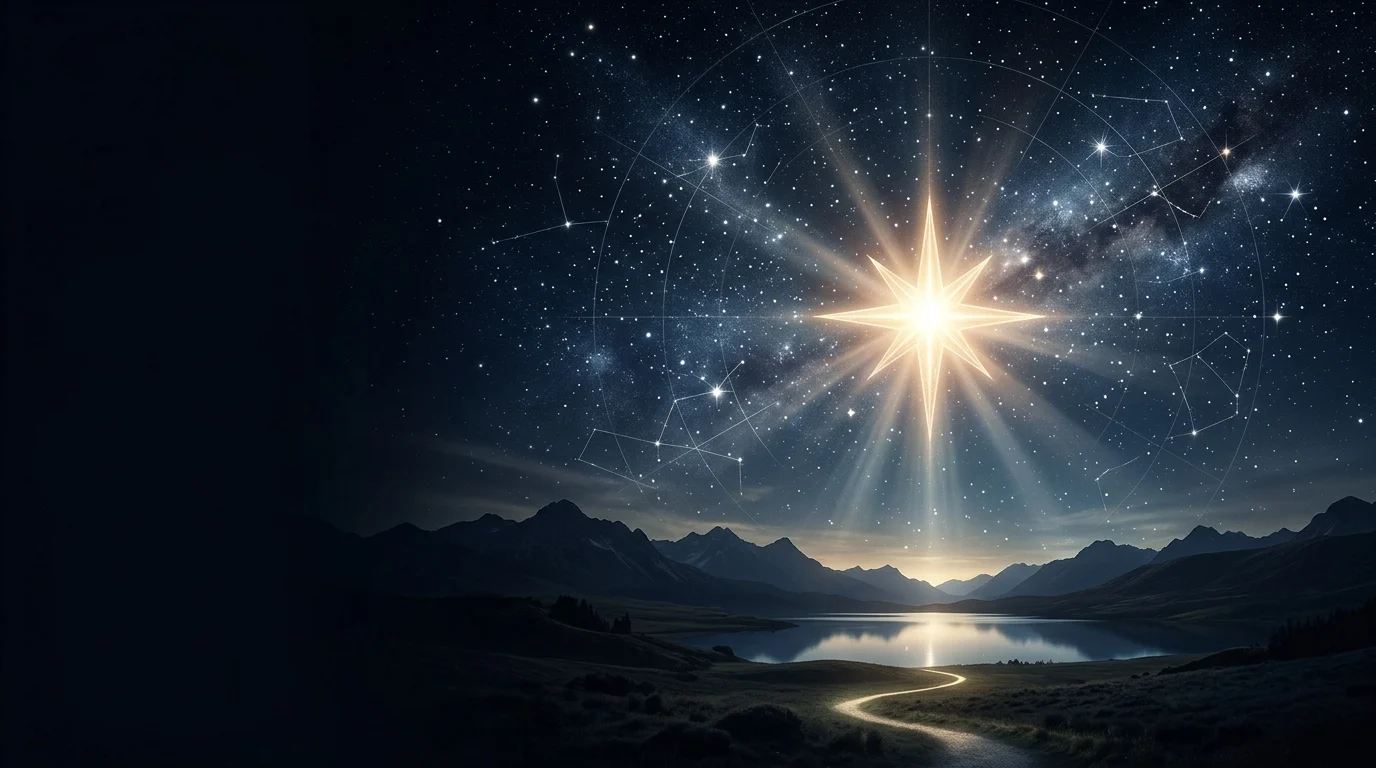
Stars have fascinated humanity for thousands of years. They light up the night sky, guide travelers, mark important seasons, and appear in myths, religions, art, and dreams. Star symbolism often represents hope, guidance, destiny, inspiration, spirituality, and the desire to reach something greater.
if you notice a bright star during a quiet night, dream about stars, or feel drawn to their mysterious beauty, their symbolism can carry different meanings depending on the culture and context.
Star Symbolism Meaning (Clear Definition)
Star symbolism is the use of stars as symbols representing hope, guidance, ambition, divine presence, wisdom, destiny, and spiritual illumination.
Because stars shine in darkness, they are naturally associated with light and direction. A star can symbolize the idea that even during uncertain or difficult periods, there is still something to guide us forward.
Common meanings associated with stars include:
- Hope — light during difficult times
- Guidance — finding direction when life feels uncertain
- Destiny — a sense of purpose or a meaningful path
- Spirituality — connection with something greater
- Wisdom — knowledge gained through experience
- Inspiration — encouragement to pursue dreams
- Ambition — reaching toward higher goals
- Transformation — moving from darkness toward light
The exact meaning depends on how the star appears and the context in which it is being interpreted.
What Does Star Symbolism Represent?
Stars can represent several powerful ideas at once. Their meaning often comes from their position high above us and their ability to remain visible across generations.
1. Hope
A star shining in a dark sky is one of the clearest natural images of hope. It suggests that darkness does not necessarily mean the absence of light.
2. Guidance
Before modern navigation systems, people looked to the heavens for direction. Certain stars and constellations helped travelers navigate across oceans and unfamiliar landscapes.
This connection gives stars a strong symbolic association with finding your way.
3. Dreams and Ambition
The expression “reach for the stars” captures another important meaning. Stars can symbolize goals that seem distant but inspire us to grow.
4. Destiny
In many traditions, stars have been associated with fate and the unfolding of human lives. Astrology, for example, developed around the belief that celestial patterns could provide insight into earthly experiences.
5. Spiritual Illumination
Stars can represent inner light, spiritual awareness, and the search for truth. Their distant glow often evokes feelings of mystery and connection with the universe.
| Star Symbolism | Common Meaning |
|---|---|
| Bright star | Hope, success, clarity |
| Falling star | Wishes, change, fleeting opportunity |
| North Star | Guidance, stability, direction |
| Many stars | Possibility, abundance, wonder |
| Starry night | Mystery, spirituality, imagination |
| Five-pointed star | Protection, balance, symbolism |
| Distant star | Dreams, ambition, longing |
Spiritual Meaning of Star Symbolism
Spiritually, stars are often viewed as symbols of light, guidance, divine connection, and higher awareness.
Their presence in the night sky can encourage people to look beyond immediate problems and consider a larger perspective.
A star may symbolize:
- A guiding light during uncertainty
- Spiritual awakening
- Inner wisdom
- Connection with the universe
- Faith in the future
- Protection and divine guidance
- A reminder of personal purpose
For some people, seeing a star at a meaningful moment can feel like a reminder to remain hopeful. While such experiences are personal rather than universal signs, the symbolism can provide comfort and reflection.
Stars and Inner Guidance
The star’s light does not remove the darkness around it. Instead, it gives the darkness a point of direction.
Symbolically, this can represent resilience: you do not always need to understand the entire path ahead. Sometimes, you only need enough light to take the next step.
Biblical / Religious Meaning of Star Symbolism
Stars appear throughout religious traditions and often carry meanings connected with divine signs, guidance, creation, and spiritual significance.
In the Bible, stars are frequently associated with God’s creation and the vastness of the heavens. They can also be used symbolically to represent descendants, heavenly beings, rulers, or signs.
One of the best-known biblical examples is the Star of Bethlehem, traditionally associated with the birth of Jesus. In Christian tradition, it represents divine guidance and directs the Magi toward Jesus.
Stars also appear in other religious and cultural traditions. Across different belief systems, celestial lights may symbolize divine order, spiritual beings, protection, or the connection between heaven and Earth.
Because interpretations vary by tradition, it is important not to treat one religious interpretation as universal.
Star Symbolism in History and Culture
Stars have played an important role in human history.
Ancient civilizations carefully observed the night sky to track seasons, create calendars, navigate, and develop stories about the heavens. Constellations became part of mythology, with cultures giving recognizable patterns their own names and stories.
Stars in Navigation
The night sky was once an essential navigation tool. The North Star, also called Polaris, became especially important in the Northern Hemisphere because it appears close to the celestial north pole.
This historical role strengthened the symbolic meaning of the star as a representation of direction, reliability, and staying on course.
Stars in National Symbols
Stars also appear on flags, emblems, coats of arms, and other cultural symbols. Their meanings vary widely, but they can represent unity, aspirations, identity, states or regions, ideals, and national goals.
Stars in Mythology
Many cultures created myths explaining the origins of stars and constellations. These stories connected the heavens with heroes, gods, animals, ancestors, and important events.
As a result, stars became more than astronomical objects—they became part of humanity’s shared storytelling tradition.
Star Symbolism in Literature and Art
Stars have inspired poets, writers, painters, musicians, and filmmakers for centuries.
In literature, stars can represent something distant yet desirable. A character looking at the stars may be expressing hope, loneliness, curiosity, love, or a longing for a different life.
Stars are particularly powerful in poetry because they combine beauty with distance. They can symbolize dreams that feel almost unreachable while still encouraging the person looking toward them.
In visual art, a starry sky can create feelings of mystery, peace, isolation, wonder, or transcendence.
The symbolism changes depending on the surrounding imagery. A single bright star may suggest hope, while an enormous field of stars may represent infinity and the vastness of existence.
Dream Meaning of Star Symbolism
Dreams involving stars can have many interpretations because dream symbolism is highly personal.
A bright star may represent hope, confidence, inspiration, or a goal that feels important to you.
A falling star may symbolize a wish, sudden change, a fleeting opportunity, or the feeling that something is passing quickly.
A sky filled with stars may represent possibilities, imagination, spiritual curiosity, or a sense of wonder.
A star that guides you may reflect your desire for direction or certainty in waking life.
Rather than relying on one fixed dream interpretation, consider your emotions during the dream. Feeling peaceful beneath the stars may suggest something different from feeling frightened or lost.
Modern Meaning of Star Symbolism
Today, stars continue to represent many of the same ideas while gaining new meanings through popular culture and everyday language.
People commonly associate stars with:
- Personal achievement
- Fame and recognition
- Excellence
- Creativity
- Individuality
- Hope for the future
- Personal dreams
- Inspiration
The phrase “star quality”, for example, suggests exceptional talent or charisma. Calling someone a “rising star” implies that their success or influence is growing.
Stars are also popular in tattoos, jewelry, fashion, home décor, logos, and digital imagery because their symbolic meaning is immediately recognizable.
Different Types of Stars and Their Symbolic Meanings
Not every star carries exactly the same symbolism.
North Star
The North Star is strongly connected with guidance, stability, direction, and staying true to your path.
Shooting Star
A shooting star often represents wishes, opportunity, change, and brief moments of possibility.
Five-Pointed Star
The five-pointed star has been used in many different cultures and contexts. Depending on the tradition, it can represent balance, protection, human qualities, spiritual concepts, or other symbolic ideas.
Star Cluster
A cluster of stars can symbolize community, connection, abundance, and many possibilities coming together.
Single Bright Star
A lone bright star may represent individuality, hope, uniqueness, or a guiding purpose.
What Does It Mean When You Keep Seeing Stars?
If you repeatedly notice stars, the personal meaning may depend more on what stars represent to you than on a universal interpretation.
You might see them as a reminder to stay hopeful, pursue a goal, appreciate the present moment, or remain open to new possibilities.
Sometimes, simply paying attention to something beautiful can create a meaningful pause in an otherwise busy day.
Star Symbolism and Personal Growth
Stars can offer a simple metaphor for personal growth.
You may not always see the entire path ahead, but you can still move toward something meaningful. Like a distant star, a goal does not have to be within immediate reach to influence your direction.
Star symbolism can therefore encourage:
Dream boldly. Stay curious. Keep your direction. Let difficult seasons pass without losing sight of the light ahead.
Frequently Asked Questions About Star Symbolism
What is the main meaning of star symbolism?
The main meanings of star symbolism include hope, guidance, inspiration, spirituality, destiny, and ambition. The specific meaning depends on cultural, religious, and personal context.
What does a star symbolize spiritually?
Spiritually, a star can symbolize divine guidance, inner illumination, spiritual awareness, hope, and connection with something greater than oneself.
What does a shooting star symbolize?
A shooting star commonly symbolizes wishes, opportunities, transformation, and brief moments of possibility. Its meaning can also relate to change or something meaningful that quickly passes.
What does a star symbolize in dreams?
A star in a dream may represent hope, goals, inspiration, guidance, or spiritual curiosity. The dreamer’s emotions and the appearance of the star are important when considering its personal meaning.
What does the North Star symbolize?
The North Star commonly symbolizes guidance, stability, direction, and staying on the right path. Its historical role in navigation makes it especially powerful as a metaphor for finding one’s way.
Conclusion: The Lasting Power of Star Symbolism
Star symbolism reminds us why humans have looked toward the night sky for so long. Stars can represent hope in darkness, guidance during uncertainty, dreams that inspire us, and the mystery of something larger than ourselves.
Their light may be distant, but their symbolism feels remarkably close to human experience. if a star represents faith, ambition, memory, or hope, it can serve as a quiet reminder that even a small light can make the darkness feel different.

I am Luna Grace, an author passionate about exploring the meanings, history, and symbolism behind everyday signs. I enjoy sharing thoughtful insights that help readers understand symbols and their deeper significance.