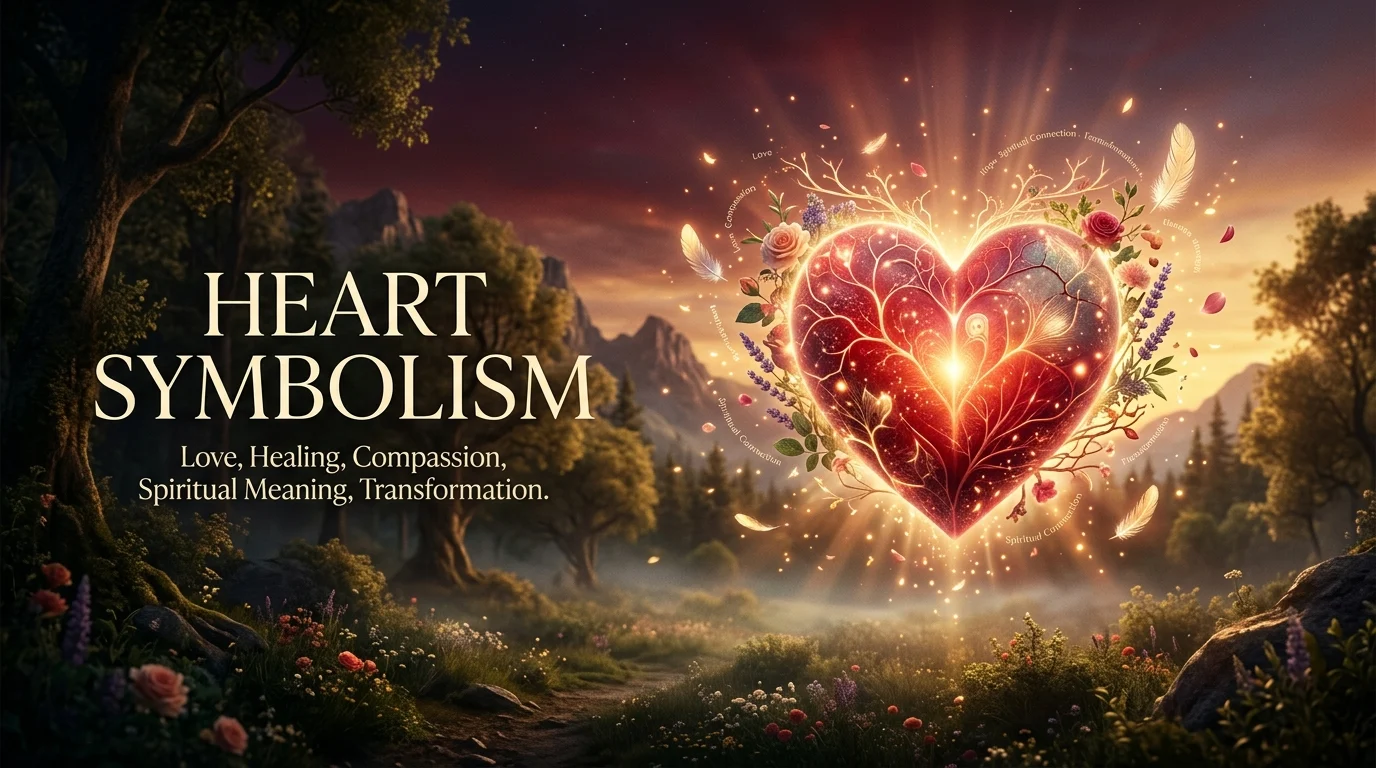
Few symbols are as instantly understood as the heart. Across cultures and generations, heart symbolism has represented love, affection, compassion, courage, emotional connection, and the deepest parts of human experience. From ancient religious traditions to modern emojis, the heart continues to express feelings that words sometimes cannot capture.
But the heart means much more than romantic love. Its symbolism can change depending on its color, shape, cultural setting, spiritual tradition, or appearance in dreams and art. Understanding these different meanings reveals why the heart remains one of humanity’s most powerful universal symbols.
Heart Symbolism Meaning (Clear Definition)
Heart symbolism refers to the symbolic meanings associated with the heart, especially love, emotion, compassion, life, courage, and spiritual connection.
The physical heart has long been connected with life itself because it beats continuously and sustains the body. Over time, this biological importance became intertwined with emotional and spiritual ideas.
Common meanings of the heart include:
- Love and romance
- Compassion and kindness
- Emotional connection
- Courage and bravery
- Life and vitality
- Inner truth
- Spiritual devotion
- Vulnerability and empathy
- Forgiveness and healing
The heart often symbolizes what people consider their deepest or most authentic feelings.
What Does Heart Symbolism Represent?
Heart symbolism can represent several powerful aspects of human life. Although romantic love is its most familiar meaning, the symbol reaches far beyond relationships.
| Heart Symbolism | Common Meaning |
|---|---|
| ❤️ Heart | Love, affection, emotional connection |
| Broken heart | Grief, loss, heartbreak, emotional pain |
| Red heart | Passion, romance, desire, deep affection |
| White heart | Purity, peace, sincerity, compassion |
| Golden heart | Generosity, kindness, goodness |
| Heart with wings | Freedom, spiritual love, devotion |
| Heart with an arrow | Romantic attraction or falling in love |
| Heart and crown | Devotion, loyalty, honor, or spiritual love |
At its core, the heart represents what matters most to us emotionally. Saying someone has a “good heart,” for example, describes their character rather than their physical health.
Love and Affection
The heart is perhaps the world’s most recognizable symbol of love. It can represent romantic relationships, family bonds, friendship, and unconditional affection.
Compassion and Kindness
A heart can symbolize empathy and concern for others. Expressions such as “kind-hearted” and “compassionate heart” show how closely the symbol is connected with generosity.
Courage
The heart has also represented bravery. Being “strong-hearted” or “having heart” suggests determination in difficult circumstances.
Emotional Truth
The heart is often contrasted with the mind. While the mind is associated with logic and reason, the heart is commonly connected with intuition, emotion, desire, and personal truth.
Spiritual Meaning of Heart Symbolism
Spiritually, the heart often represents the inner self—the place where love, intention, devotion, compassion, and conscience are believed to reside.
Many spiritual traditions use the heart as a metaphor for inner transformation. A “pure heart” may symbolize sincerity, humility, goodness, or closeness to the divine.
Heart symbolism can therefore represent:
- Spiritual love
- Inner peace
- Compassion
- Divine connection
- Emotional healing
- Self-love
- Forgiveness
- Inner wisdom
- Spiritual awakening
In contemplative traditions, turning inward toward the heart can represent moving beyond surface desires and discovering deeper meaning.
The spiritual heart is not necessarily about romance. It can describe a person’s relationship with themselves, other people, nature, or a higher power.
Biblical / Religious Meaning of Heart Symbolism
In the Bible, the heart frequently represents the inner person, including thoughts, intentions, emotions, character, and spiritual condition.
Rather than simply referring to the physical organ, biblical references to the heart often describe a person’s deepest motivations. A sincere or pure heart can therefore symbolize faithfulness, goodness, humility, and devotion.
Christian art also developed rich heart symbolism. The Sacred Heart of Jesus, for example, became an important Christian symbol associated with divine love, compassion, sacrifice, and devotion.
Heart imagery also appears in other religious and spiritual traditions. Across cultures, the heart has frequently been connected with morality, spiritual awareness, love, and the essence of human identity.
Because religious interpretations differ, the exact meaning depends on the specific tradition and context.
Heart Symbolism in History and Culture
The heart’s symbolic history is remarkably long and diverse.
Ancient cultures often considered the heart central to human identity. In ancient Egypt, for example, the heart held an especially important place in ideas about morality and the afterlife. The heart was associated with a person’s character and was symbolically important during judgment after death.
In medieval Europe, the heart increasingly became associated with romantic devotion and religious love. Artistic representations gradually developed recognizable heart shapes that became increasingly popular.
Over centuries, the symbol moved from religious manuscripts and heraldry into jewelry, paintings, greeting cards, literature, advertisements, and everyday communication.
Today, the heart is understood across much of the world without requiring explanation.
Cultural Interpretations of the Heart
Different cultures may emphasize different aspects of heart symbolism:
- Western culture: romance, love, passion, and emotional attachment
- Religious traditions: devotion, compassion, sacrifice, and spiritual purity
- Ancient cultures: life, character, morality, and the soul
- Popular culture: affection, friendship, support, and emotional expression
- Modern digital culture: approval, appreciation, love, and positive emotion
This adaptability is one reason the heart has remained culturally powerful.
Heart Symbolism in Literature and Art
Artists and writers have used the heart to communicate emotions that are difficult to express directly.
In literature, the heart often symbolizes love, longing, sorrow, desire, courage, or inner conflict. A character may follow their heart when choosing emotion over logic, or experience a “broken heart” after profound loss.
Visual artists have similarly used hearts to portray devotion, sacrifice, vulnerability, mortality, and spiritual love.
Common artistic forms include:
- A heart pierced by an arrow for romantic attraction
- A broken heart for emotional suffering
- Flaming hearts for passionate or spiritual love
- Hearts surrounded by thorns for sacrifice and pain
- Winged hearts for freedom or transcendent love
- Anatomical hearts for mortality, vulnerability, and raw emotion
The heart is especially powerful in art because viewers can recognize its emotional meaning almost immediately.
Dream Meaning of Heart Symbolism
Dreams involving hearts can have many interpretations, and their meaning depends heavily on the dreamer’s personal experiences and emotions.
A heart in a dream may symbolize love, relationships, emotional vulnerability, healing, or something deeply important to you.
Some common interpretations include:
- A healthy heart: emotional vitality, love, or inner balance
- A broken heart: grief, disappointment, or unresolved emotional pain
- A glowing heart: hope, affection, spiritual warmth, or emotional renewal
- A wounded heart: vulnerability or past emotional hurt
- Giving someone a heart: affection, trust, generosity, or emotional openness
- Receiving a heart: acceptance, love, appreciation, or a desire for connection
Dream symbolism is personal rather than predictive. The strongest interpretation usually comes from considering how you felt during the dream and what the heart represented to you personally.
Modern Meaning of Heart Symbolism
Today, the heart has become one of the most recognizable symbols in digital communication.
The ❤️ emoji can express romantic love, friendship, appreciation, support, gratitude, or enthusiasm depending on context. Social media platforms also use heart icons to represent approval or positive engagement.
Modern heart symbolism has expanded beyond romance. People use hearts to show support for causes, express sympathy, celebrate achievements, and communicate emotional warmth.
The symbol’s simplicity is part of its strength. A small heart can communicate an emotional message instantly.
Why the Heart Remains So Powerful
The heart continues to resonate because it combines physical reality with emotional meaning.
Everyone experiences love, loss, hope, fear, connection, and compassion. The heart gives these invisible experiences a simple visual form.
In this sense, the symbol reminds us that emotional life is an essential part of being human.
Heart Symbolism and Colors
Color can dramatically change the meaning of a heart.
- Red: passionate love, romance, desire, vitality
- Pink: tenderness, affection, sweetness, gentle love
- White: purity, peace, sincerity, remembrance
- Black: grief, mystery, sadness, or dark humor depending on context
- Gold: generosity, admiration, achievement, or precious love
- Green: growth, healing, renewal, nature, or compassion
- Blue: trust, calmness, loyalty, and emotional stability
- Purple: spirituality, admiration, imagination, or deep affection
These meanings are not universal rules. Context and culture can change how colors are interpreted.
Heart Symbolism in Everyday Life
Heart symbols appear everywhere—from jewelry and tattoos to wedding decorations, greeting cards, clothing, architecture, and digital messages.
A heart-shaped gift may communicate affection. A heart tattoo may represent a person, memory, belief, or life-changing experience. A heart placed beside a message can soften its tone and communicate warmth.
For many people, heart imagery becomes especially meaningful when connected to personal memories.
The symbol can remind someone of a loved one, represent an important relationship, or serve as a personal reminder to live with compassion and courage.
Frequently Asked Questions About Heart Symbolism
What is the main meaning of heart symbolism?
The main meaning of heart symbolism is love, emotional connection, compassion, and affection. It can also represent courage, life, sincerity, and spiritual devotion.
What does a heart symbolize spiritually?
Spiritually, a heart can symbolize divine love, compassion, inner peace, purity, devotion, emotional healing, and connection with one’s deeper self.
What does a broken heart symbolize?
A broken heart commonly represents grief, heartbreak, disappointment, loss, or emotional suffering. It can also symbolize the process of healing after a difficult experience.
What does a red heart symbolize?
A red heart traditionally represents romantic love, passion, affection, desire, and strong emotional connection. Its meaning can also include deep appreciation or support.
Why is the heart a symbol of love?
The heart became associated with love because ancient and later cultures connected the physical heart with life, emotion, courage, and the deepest parts of human identity. Over time, this association developed into the familiar heart symbol used today.
Conclusion
Heart symbolism represents far more than romance. It carries ideas of love, compassion, courage, emotional truth, spiritual devotion, healing, and human connection.
if it appears in ancient religious imagery, a work of art, a dream, a piece of jewelry, or a simple ❤️ message, the heart continues to express something deeply human: what we value, feel, and hold close

I am Simon Michael, an author passionate about exploring symbols, their meanings, and cultural significance. I enjoy making symbolism simple, engaging, and meaningful for curious readers everywhere.