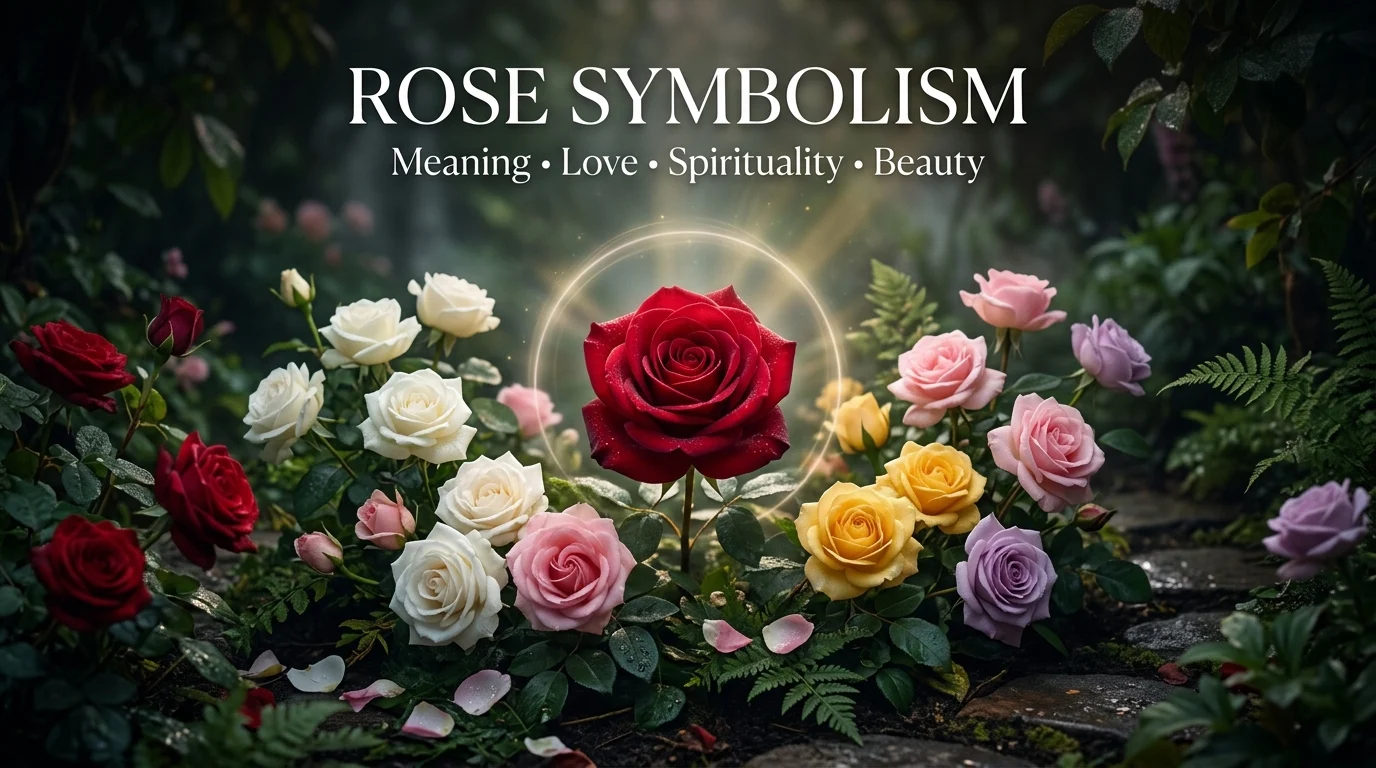
Rose symbolism has fascinated people for centuries. Roses can represent love, beauty, passion, purity, secrecy, remembrance, and even spiritual devotion. Their meaning often changes according to their color, cultural setting, and the situation in which they are given or seen.
From a red rose exchanged between lovers to a white rose placed at a memorial, this flower can communicate emotions that words sometimes cannot. Understanding rose symbolism helps reveal why roses remain one of the world’s most meaningful and recognizable flowers.
Rose Symbolism Meaning (Clear Definition)
Rose symbolism refers to the meanings and emotions traditionally associated with the rose flower. Across different cultures and periods, roses have been connected with love, beauty, passion, purity, mystery, remembrance, and spiritual transformation.
The meaning of a rose is often influenced by its color, number, condition, and context.
For example, a fresh red rose commonly expresses romantic love, while a white rose may suggest innocence, peace, or remembrance.
Quick Meaning of Rose Symbolism
| Rose Type | Common Symbolic Meaning |
|---|---|
| Red rose | Love, passion, romance, devotion |
| White rose | Purity, innocence, peace, remembrance |
| Pink rose | Gratitude, admiration, tenderness |
| Yellow rose | Friendship, joy, warmth |
| Orange rose | Enthusiasm, desire, energy |
| Lavender rose | Enchantment, mystery, fascination |
| Black rose | Mourning, endings, transformation, mystery |
These meanings are traditions rather than universal rules. Personal experiences and cultural backgrounds can give a rose a different meaning.
What Does Rose Symbolism Represent?
Roses represent a wide range of human emotions and experiences. Their thorns and delicate petals also create a powerful contrast between beauty and difficulty.
Common rose symbolism includes:
- Love: Especially associated with romantic affection and deep emotional bonds.
- Beauty: Roses are often used as symbols of physical and emotional beauty.
- Passion: Red roses can express intense desire and devotion.
- Purity: White roses are frequently associated with innocence and sincerity.
- Friendship: Yellow and pink roses can communicate warmth, appreciation, and affection.
- Remembrance: Roses may represent memories of people, relationships, or meaningful moments.
- Transformation: A rose’s growth from a small bud to a full bloom can symbolize personal development.
- Mystery: Certain rose traditions connect the flower with secrecy and hidden emotions.
The rose is particularly powerful because it combines softness with protection. Its petals suggest tenderness, while its thorns remind us that love and beauty can sometimes involve vulnerability or pain.
Spiritual Meaning of Rose Symbolism
Spiritually, roses can symbolize love, inner growth, divine beauty, compassion, and the unfolding of the soul.
A rose beginning as a closed bud and gradually opening can represent spiritual awakening. The process suggests that personal growth often happens slowly, revealing new understanding over time.
The rose’s fragrance can also be interpreted symbolically. Because fragrance cannot be seen but can strongly affect the senses, it may represent invisible qualities such as love, presence, grace, or spiritual influence.
In some spiritual traditions, the rose is associated with the heart. It can therefore represent emotional healing, compassion, forgiveness, and the ability to remain open despite previous pain.
What a Rose May Symbolize Spiritually
- Inner transformation
- Unconditional love
- Emotional healing
- Spiritual awakening
- Compassion and kindness
- Beauty beyond physical appearance
- The balance between vulnerability and strength
A rose can therefore serve as a reminder that growth does not require becoming free from difficulties; sometimes strength develops because of them.
Biblical / Religious Meaning of Rose Symbolism
The symbolism of roses in religion is more complex than popular interpretations sometimes suggest. The Bible does not consistently use the modern rose as a direct symbol of romantic love.
One frequently discussed biblical passage is Song of Solomon 2:1, where the speaker describes herself using flower imagery. The exact botanical identity of the flower has been debated in translations and scholarship, so it is important not to treat every reference to a “rose” as a straightforward reference to the modern garden rose.
In Christian tradition, however, the rose later developed rich symbolic associations.
The red rose became connected with martyrdom, sacrifice, and divine love because its color could evoke blood and suffering. The white rose became associated in some traditions with purity and innocence.
The rose also became strongly connected with the Virgin Mary in Christian art and devotional traditions. The “mystical rose” is an established Marian title, linking the flower with purity, grace, and spiritual beauty.
In other religious and mystical traditions, rose imagery can similarly represent divine love, spiritual devotion, and the relationship between earthly beauty and higher reality.
Rose Symbolism in History and Culture
Roses have played an important role in mythology, politics, religion, ceremonies, and everyday customs.
In ancient Greece and Rome, roses were associated with love and beauty and were connected with figures such as Aphrodite and Venus. Roses could also appear in celebrations, festivals, and funerary practices.
In medieval Europe, the rose acquired additional religious meanings. It appeared in Christian symbolism and artwork, particularly in association with spiritual love and purity.
The flower later became a powerful political symbol in England. The Wars of the Roses, a series of dynastic conflicts in the fifteenth century, are traditionally associated with the symbols of the red rose of Lancaster and the white rose of York.
Across cultures, roses have also been used at weddings, funerals, anniversaries, religious ceremonies, and memorials. Their ability to represent both celebration and mourning makes them unusually versatile symbols.
Rose Symbolism in Literature and Art
Roses appear throughout literature and visual art because they provide a simple image for complicated ideas.
A rose can represent romantic love, but writers often use it to explore the temporary nature of beauty. A beautiful flower eventually fades, making it a natural symbol of mortality, time, youth, and impermanence.
One of the most famous literary examples comes from William Shakespeare’s Romeo and Juliet, where a rose is used to question whether a name changes the essential nature of a thing.
Roses also appear frequently in poetry as symbols of desire, beauty, innocence, secrecy, and loss.
In visual art, the flower’s color and condition can communicate different moods. A blooming rose may suggest vitality and fulfillment, while a fading rose can evoke memory, aging, or the passing of time.
The contrast between petals and thorns is especially useful artistically. It suggests that something beautiful can simultaneously contain pain, danger, or sacrifice.
Dream Meaning of Rose Symbolism
Dreaming about roses can have different interpretations depending on the dream’s emotional atmosphere and details.
A red rose in a dream may symbolize love, attraction, passion, or a powerful emotional connection.
A white rose may represent peace, innocence, healing, or a desire for emotional clarity.
A wilted rose can suggest disappointment, fading affection, loss, or the end of a particular stage in life.
A rose with thorns may represent a relationship or situation that is beautiful but emotionally complicated.
A rose garden may symbolize abundance, personal growth, relationships, or a rich emotional life.
Dream symbolism is highly personal, so the strongest interpretation usually comes from considering what the rose meant to you during the dream and how you felt when you saw it.
Modern Meaning of Rose Symbolism
Today, roses remain closely connected with love and relationships, but their meanings have expanded beyond romance.
People give roses to express congratulations, gratitude, sympathy, friendship, appreciation, and support. Social media and modern gifting culture have also made flower colors part of a broader visual language of emotions.
The red rose remains the strongest symbol of romantic love, particularly on occasions such as Valentine’s Day and anniversaries. Pink roses are often used for appreciation and affection, while white roses frequently appear at weddings and memorial services.
Roses can also represent personal identity and self-expression. Someone may choose a rose tattoo, artwork, photograph, or gift because it reflects resilience, beauty, a meaningful relationship, or an important life transition.
Why Rose Symbolism Still Matters
The enduring appeal of the rose comes from its ability to express opposing ideas at once:
- Beauty and pain
- Love and vulnerability
- Life and mortality
- Innocence and experience
- Fragility and strength
- Growth and impermanence
That combination makes the rose more than simply a beautiful flower. It has become a visual language for some of life’s deepest emotions.
Frequently Asked Questions About Rose Symbolism
What is the main meaning of rose symbolism?
The main meaning of rose symbolism is love, beauty, and emotional connection. However, the exact meaning depends on the rose’s color, cultural context, and situation.
What does a red rose symbolize?
A red rose traditionally symbolizes romantic love, passion, devotion, and deep affection. It is one of the most widely recognized symbols of romantic relationships.
What does a white rose symbolize?
A white rose commonly represents purity, innocence, peace, sincerity, and remembrance. It is often associated with weddings, spiritual occasions, and memorials.
What does a rose symbolize spiritually?
Spiritually, a rose can symbolize divine love, inner transformation, compassion, healing, and spiritual awakening. Its blooming process can represent personal growth and the unfolding of the inner self.
What does a rose with thorns symbolize?
A rose with thorns can symbolize the connection between beauty and pain. It may suggest that love, growth, or meaningful experiences can involve vulnerability and challenges.
Conclusion
Rose symbolism endures because the rose captures the complexity of human experience. Its petals suggest beauty and love, while its thorns remind us that meaningful things can come with vulnerability and pain.
if it represents romance, friendship, remembrance, spiritual growth, or transformation, the rose continues to give people a powerful way to express feelings that are difficult to put into words. Sometimes, a single rose can say more than an entire conversation.

I am Simon Michael, an author passionate about exploring symbols, their meanings, and cultural significance. I enjoy making symbolism simple, engaging, and meaningful for curious readers everywhere.