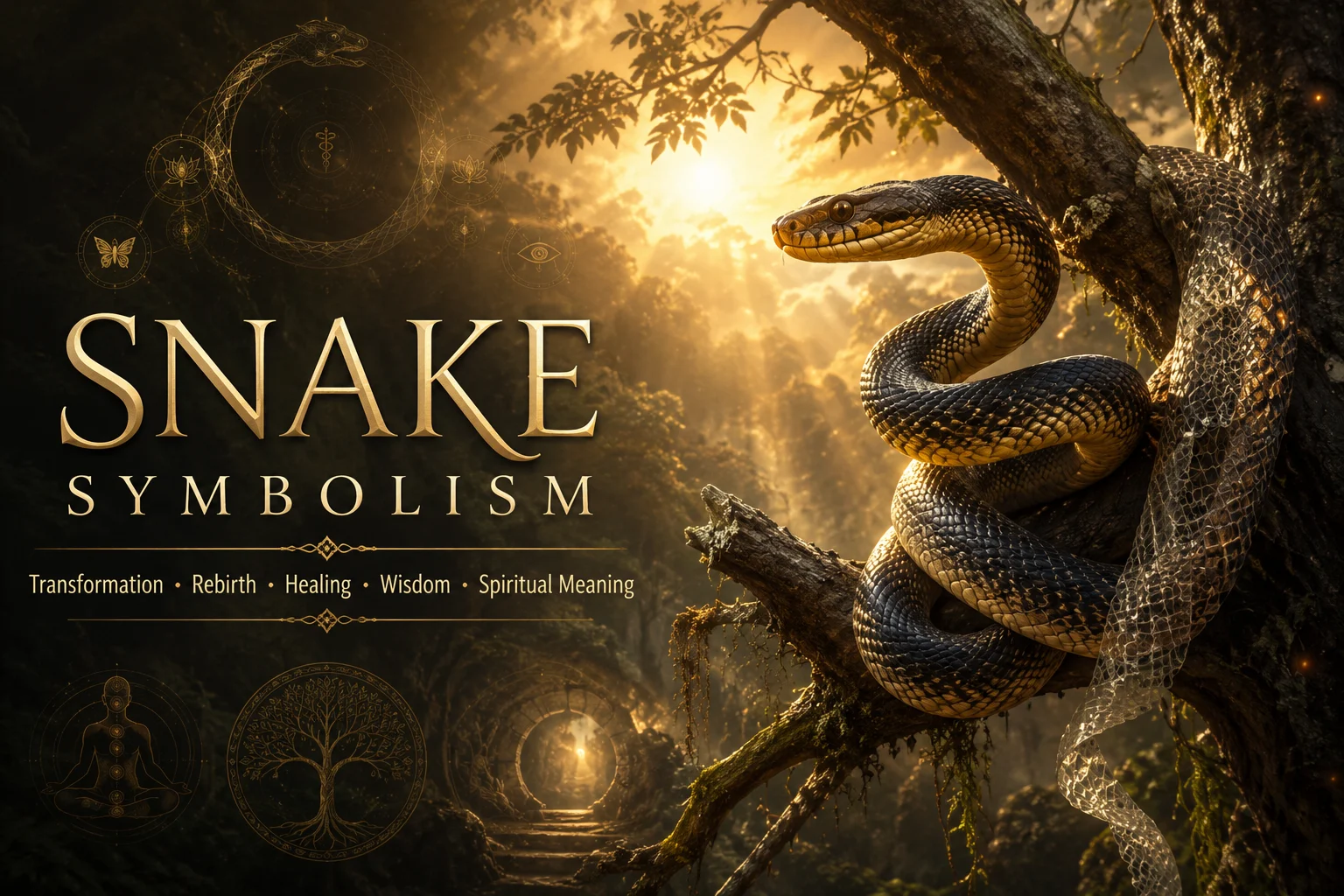
Few animals carry as many layers of meaning as the snake. Across history, snake symbolism has been connected with transformation, healing, wisdom, danger, rebirth, mystery, and spiritual awakening. Because snakes shed their skin, they naturally became powerful symbols of renewal and change.
At the same time, their quiet movement, venom, and association with darkness have given them more complicated meanings. A snake can represent protection in one tradition and temptation or danger in another. Understanding its symbolism often depends on culture, personal experience, and the situation in which the snake appears.
Snake Symbolism Meaning (Clear Definition)
Snake symbolism refers to the meanings people have traditionally associated with snakes, including transformation, rebirth, healing, wisdom, temptation, protection, and hidden knowledge.
The snake’s ability to shed its old skin is one of its strongest symbolic qualities. It suggests leaving behind an outdated identity, habit, relationship, or stage of life and moving toward something new.
Common snake symbolism includes:
| Symbolic Meaning | What It Can Represent |
|---|---|
| Transformation | Personal growth and major life changes |
| Rebirth | Starting over or entering a new chapter |
| Healing | Recovery, medicine, and restoration |
| Wisdom | Hidden knowledge and deeper awareness |
| Protection | Guardianship and spiritual defense |
| Temptation | Desire, deception, or difficult choices |
| Mystery | The unknown and unseen aspects of life |
| Renewal | Releasing the past and becoming new |
This wide range of meanings explains why snakes appear so often in mythology, religion, dreams, art, and spiritual traditions.
What Does Snake Symbolism Represent?
Snake symbolism can represent both positive and challenging forces. It is rarely limited to a single interpretation.
Transformation and Rebirth
The snake’s shedding process makes it a natural symbol of transformation. Its old skin is left behind while the snake continues forward, creating a powerful image of personal renewal.
Symbolically, this may suggest that you are ready to release an old version of yourself.
Healing and Medicine
Snakes have long been associated with healing and medicine. The ancient Greek symbol of the Rod of Asclepius, featuring a serpent around a staff, remains associated with medicine today.
This connection gives the snake a symbolic relationship with recovery, health, restoration, and the healing process.
Wisdom and Hidden Knowledge
Because snakes move quietly and often remain hidden, they can represent knowledge that is not immediately visible.
In symbolic traditions, encountering a snake may therefore encourage deeper observation, intuition, and awareness of what lies beneath the surface.
Danger and Warning
A snake can also symbolize danger, fear, deception, or an approaching problem. Its venom and unpredictable movements naturally contributed to these associations.
In this context, snake symbolism may represent a warning to pay attention to your surroundings or trust your instincts.
Protection
Some ancient traditions viewed snakes as guardians of sacred places, treasures, knowledge, or spiritual boundaries.
A snake appearing as a protector can symbolize the need to establish boundaries and defend what is valuable.
Spiritual Meaning of Snake Symbolism
Spiritually, snake symbolism is often connected with transformation, awakening, energy, healing, intuition, and renewal.
A snake may appear symbolically during periods when life is changing. Its message can be understood as an invitation to release what no longer serves you and make room for growth.
In some spiritual traditions, the snake is associated with life force or rising energy. The coiled form of a snake can also symbolize potential energy waiting to awaken.
Snake as a Symbol of Spiritual Transformation
Seeing a snake during a meaningful period of change may be interpreted as a reminder that transformation is not always comfortable.
Growth can require you to leave behind familiar patterns before you understand where the next stage will lead.
Snake as a Symbol of Intuition
Because snakes are highly sensitive to their environment, they can symbolically represent awareness and instinct.
Snake symbolism may encourage you to slow down, observe carefully, and pay attention to feelings that you normally overlook.
Snake as a Symbol of Renewal
The shedding of skin provides one of the clearest spiritual metaphors associated with snakes:
You can outgrow an old identity without losing your essential self.
This makes the snake a meaningful symbol for new beginnings, personal development, and emotional renewal.
Biblical / Religious Meaning of Snake Symbolism
The meaning of snakes in religious traditions is complex because they can represent both positive and negative ideas.
In the Bible, the serpent in Genesis is associated with temptation and the fall of humanity. This story strongly influenced later Western interpretations of snakes as symbols of deception, temptation, and evil.
However, biblical symbolism is not uniformly negative. In the Book of Numbers, Moses raises a bronze serpent, and those who look upon it are healed. This creates an important connection between the serpent and healing.
The New Testament also contains a reference to the serpent in a context of wisdom, encouraging people to be wise while remaining innocent.
Therefore, within biblical symbolism, the snake can represent temptation, danger, wisdom, judgment, healing, and spiritual lessons, depending on the passage and context.
Other religious and spiritual traditions have developed very different interpretations of snakes. In Hindu traditions, for example, serpents can have sacred associations and may be connected with divine power, protection, and spiritual energy.
Snake Symbolism in History and Culture
Snake symbolism appears across civilizations, often carrying surprisingly different meanings.
In ancient Egypt, snakes could represent both danger and divine protection. The uraeus, a rearing cobra associated with royalty and divine authority, became an important protective symbol.
In ancient Greece, the serpent was connected with healing through the traditions surrounding Asclepius.
In various Hindu traditions, nagas are powerful serpent beings associated with water, fertility, protection, and spiritual significance.
In Mesoamerican cultures, feathered serpent traditions became associated with important divine and cultural figures.
The ouroboros, a serpent or dragon consuming its own tail, became a powerful symbol of cycles, eternity, death and rebirth, and the continuous renewal of existence.


These examples show why there is no single universal definition of a snake. Its meaning changes according to the culture, period, and story surrounding it.
Snake Symbolism in Literature and Art
Artists and writers have repeatedly used snakes because their symbolism can communicate complicated ideas with a single image.
In literature, snakes may represent temptation, forbidden knowledge, deception, transformation, or hidden danger. A snake can create tension because its presence immediately raises questions: Is it a threat, a guide, a protector, or a symbol of change?
In visual art, snakes are often portrayed alongside gods, healers, rulers, heroes, or sacred objects. Their coiled bodies can represent cycles and eternity, while their shedding skin can symbolize renewal.
The snake’s visual flexibility makes it particularly powerful in mythology, religious art, fantasy, tattoos, jewelry, and contemporary design.
Dream Meaning of Snake Symbolism
Dreams about snakes can have many interpretations, and there is no single meaning that applies to everyone.
The emotional atmosphere of the dream is often more useful than the snake itself.
Dreaming of a Snake
A snake may represent change, intuition, hidden concerns, or something in your life that deserves closer attention.
Being Chased by a Snake
This may symbolize avoidance. You could be trying to escape a difficult emotion, responsibility, conflict, or decision.
A Snake Biting You
A snake bite in a dream can represent emotional pain, betrayal, fear, or a sudden wake-up call. In some interpretations, it can also symbolize the beginning of healing after recognizing an important problem.
Killing a Snake
This may symbolize overcoming fear, confronting a difficult situation, or attempting to eliminate something you perceive as threatening.
A Calm Snake
A peaceful snake can suggest transformation, intuition, healing, or acceptance of change rather than danger.
Many Snakes
Seeing many snakes may reflect overwhelming emotions, complicated circumstances, or several changes happening at once.
When interpreting a snake dream, ask yourself: How did I feel when I saw the snake? Fear, curiosity, peace, disgust, or fascination can significantly change the possible meaning.
Modern Meaning of Snake Symbolism
Today, snake symbolism continues to appear in tattoos, fashion, jewelry, logos, storytelling, psychology-inspired imagery, and spiritual practices.
A snake tattoo, for example, may symbolize transformation after a difficult period. Someone might choose a snake to represent resilience, independence, healing, or a new identity.
In modern culture, snakes are also frequently used to express duality. They can represent both danger and healing, fear and wisdom, destruction and renewal.
This makes the snake especially relevant to modern ideas about personal growth.
Rather than viewing transformation as becoming someone completely different, snake symbolism suggests that growth can mean shedding what no longer fits and revealing what was already within you.
Common Snake Symbolism and Their Meanings
The most important interpretations can be summarized as follows:
- Transformation: Leaving behind an old phase of life.
- Rebirth: Beginning again after a major change.
- Healing: Recovery, restoration, and medicine.
- Wisdom: Discovering hidden knowledge or deeper understanding.
- Intuition: Trusting instincts and subtle signals.
- Protection: Guarding yourself, your boundaries, or something valuable.
- Temptation: Facing desire, deception, or difficult choices.
- Mystery: Exploring what is hidden or unknown.
- Renewal: Releasing outdated patterns and embracing growth.
- Power: Connecting with personal strength and resilience.
Frequently Asked Questions About Snake Symbolism
What is the main meaning of snake symbolism?
The main meanings of snake symbolism include transformation, rebirth, healing, wisdom, intuition, protection, and danger. Its interpretation depends heavily on cultural and personal context.
Is snake symbolism positive or negative?
Snake symbolism can be either positive or negative. Snakes may represent healing and renewal in one tradition while symbolizing temptation, deception, or danger in another.
What does a snake symbolize spiritually?
Spiritually, a snake can symbolize transformation, awakening, intuition, healing, renewal, and the release of old patterns. It can encourage personal growth and deeper awareness.
What does dreaming about a snake mean?
Dreaming about a snake may relate to change, fear, intuition, hidden concerns, or personal transformation. The snake’s behavior and your emotions during the dream are important clues.
What does a snake symbolize in the Bible?
In the Bible, snakes can symbolize temptation and deception, particularly in Genesis, but they can also be connected with healing and wisdom in other passages.
Conclusion
Snake symbolism is ultimately a symbol of duality and transformation. The snake can represent danger and healing, temptation and wisdom, fear and renewal. Its ability to shed its skin offers a powerful reminder that life often asks us to release the past so we can grow into something new.
Whether you encounter a snake in mythology, art, a dream, or as a personal symbol, its meaning may invite you to look beneath the surface—and recognize the transformation already taking place within you.

I am Luna Grace, an author passionate about exploring the meanings, history, and symbolism behind everyday signs. I enjoy sharing thoughtful insights that help readers understand symbols and their deeper significance.