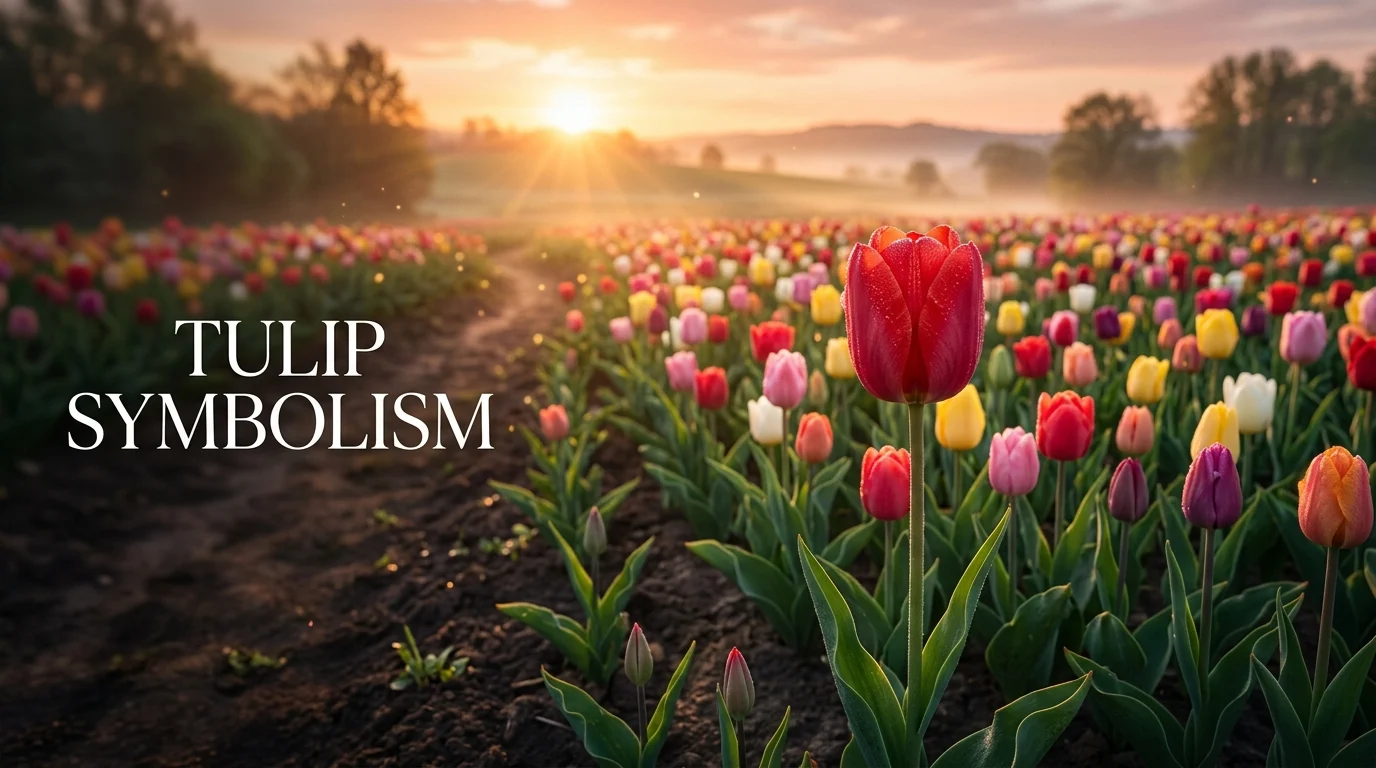
Tulip symbolism is closely associated with perfect love, deep affection, renewal, prosperity, and graceful beauty. These elegant spring flowers have carried rich meanings across cultures, making them popular symbols in relationships, celebrations, art, dreams, and spiritual reflection.
Unlike flowers whose meanings can be overwhelmingly complex, tulips often communicate something beautifully simple: love can bloom again, life can begin anew, and beauty can emerge after a difficult season.
Tulip Symbolism Meaning (Clear Definition)
At its core, tulip symbolism represents perfect love, affection, renewal, elegance, prosperity, and new beginnings.
Tulips bloom in spring, so their natural cycle makes them powerful symbols of awakening and fresh starts. Their simple shape and vibrant colors also give them an emotional clarity that has made them meaningful for centuries.
What Do Tulips Symbolize?
| Symbolic Meaning | What It Represents |
|---|---|
| Perfect love | Deep, sincere, and enduring affection |
| New beginnings | Fresh starts and positive change |
| Renewal | Rebirth after a difficult period |
| Beauty | Grace, elegance, and natural charm |
| Prosperity | Success, abundance, and good fortune |
| Passion | Romantic attraction and strong emotions |
| Hope | Optimism and brighter days ahead |
The exact meaning can change depending on the tulip’s color, cultural context, occasion, and personal association.
What Does Tulip Symbolism Represent?
Tulip symbolism can represent several powerful ideas:
- Love and romance: Tulips are traditionally connected with sincere romantic affection.
- Perfect love: Especially in flower symbolism, tulips can express an idealized or wholehearted love.
- Renewal: Because tulips return and bloom in spring, they naturally suggest rebirth.
- New beginnings: They can symbolize starting a new chapter in life.
- Hope: Their bright blossoms appearing after winter make them a natural image of optimism.
- Prosperity: Tulips can also represent abundance, success, and good fortune.
- Elegance: Their clean, graceful form is associated with refinement and beauty.
Tulip Color Symbolism
Different colors can add another layer of meaning.
Red tulips are strongly associated with passionate love, romance, and deep affection.
Pink tulips often symbolize happiness, caring, affection, and gentle love.
White tulips can represent purity, forgiveness, peace, innocence, and sincere intentions.
Yellow tulips are commonly connected with cheerful thoughts, friendship, happiness, and optimism.
Purple tulips can suggest royalty, elegance, admiration, and sophistication.
Orange tulips often evoke enthusiasm, energy, desire, and warmth.
Because flower meanings vary across traditions, color symbolism should be viewed as a cultural interpretation rather than a universal rule.
Spiritual Meaning of Tulip Symbolism
The spiritual meaning of tulips is often connected with renewal, awakening, hope, and the ability to begin again.
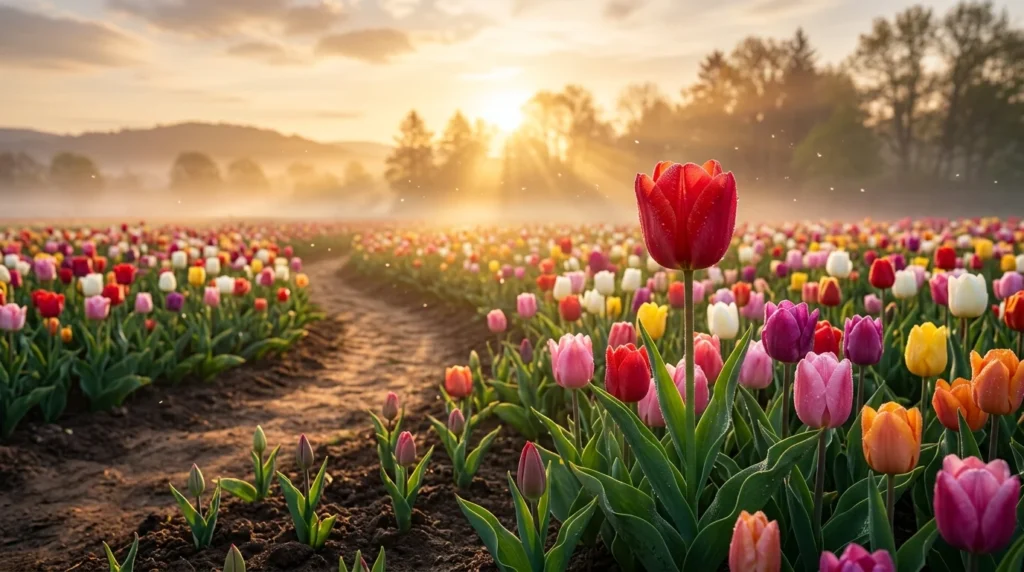
A tulip spends much of its life hidden beneath the soil before producing a visible flower. Symbolically, this can represent an inner transformation that happens quietly before becoming visible to others.
For someone going through change, a blooming tulip can serve as a reminder that growth does not always happen where it can immediately be seen.
Tulips can also symbolize emotional openness. Their cup-shaped flowers gently open toward the light, creating an image of a person becoming more receptive to love, possibility, and spiritual growth.
Tulip Symbolism and New Beginnings
One of the most meaningful interpretations of the tulip is starting over.
A tulip’s return after winter can remind us that an ending does not necessarily mean everything is lost. Sometimes a dormant period is simply preparation for a new stage of growth.
This makes tulips especially meaningful during:
- Moving into a new home
- Beginning a relationship
- Starting a new career
- Recovering from a difficult chapter
- Celebrating personal growth
- Welcoming a new season of life
Biblical / Religious Meaning of Tulip Symbolism
Tulips are not specifically mentioned in the Bible, so there is no established biblical symbolism for the tulip itself.
However, some people interpret flowers more broadly through biblical themes such as creation, beauty, renewal, humility, and the temporary nature of earthly life.
Spring flowers can also serve as personal reminders of hope and renewal. In this sense, tulips may take on spiritual meaning for an individual even though the flower does not have a specific biblical definition.
It is therefore useful to distinguish between traditional biblical symbolism and personal spiritual interpretation.
Tulip Symbolism in History and Culture
Tulips have a fascinating cultural history, particularly because of their strong connection with the Ottoman Empire and the Netherlands.
The flower originated in regions of Central Asia and became especially important in Ottoman culture. Tulips were cultivated and admired for their distinctive forms and colors, becoming an important part of gardens, decorative arts, and cultural expression.
The tulip later became strongly associated with the Netherlands. During the famous Tulip Mania of the 17th century, tulip bulbs became objects of intense commercial speculation.
This history gave the tulip an unusual symbolic range. Beyond love and beauty, it can also evoke wealth, status, rarity, desire, and the risks of excessive obsession.
Tulips Across Cultures
The symbolism of tulips differs depending on place and tradition, but recurring themes include:
- Love and affection
- Beauty and elegance
- Spring and renewal
- Wealth and prosperity
- Celebration
- Hope and optimism
- Cultural identity
The tulip’s ability to carry both emotional and cultural meanings is one reason it remains such a recognizable flower today.
Tulip Symbolism in Literature and Art
Tulips have frequently appeared in poetry, paintings, gardens, decorative designs, photography, and other forms of visual expression.
Artists are naturally drawn to their strong colors and elegant shapes. A field of tulips can communicate abundance and joy, while a single tulip may create a quieter feeling of intimacy or contemplation.
In literature, flowers often become metaphors for human emotions and the passing of time. Tulips can therefore represent love, beauty, mortality, transformation, or emotional awakening, depending on the surrounding story.
The contrast between their short flowering season and their annual return also gives them a powerful connection to the cycles of life.
Dream Meaning of Tulip Symbolism
Dreaming about tulips is often interpreted symbolically rather than literally. The meaning can depend heavily on the flower’s color, condition, setting, and the emotions experienced in the dream.
A blooming tulip may symbolize happiness, love, growth, or a promising new chapter.
A red tulip may reflect romantic feelings, passion, or emotional desire.
A white tulip may suggest peace, forgiveness, purity, or the desire for emotional clarity.
A wilted tulip could represent disappointment, fading affection, the end of a phase, or concern about something that once brought happiness.
A field of tulips may symbolize abundance, possibility, emotional fulfillment, or many opportunities appearing at once.
Dream interpretation is personal, so your own experiences and emotions are usually more meaningful than any universal dream dictionary.
Modern Meaning of Tulip Symbolism
Today, tulips remain popular because their symbolism fits many modern occasions and relationships.
They can express romantic love without feeling overly dramatic, making them a thoughtful choice for anniversaries and Valentine’s Day. At the same time, their connection with renewal makes them appropriate for birthdays, graduations, housewarmings, and other milestones.
Tulips can also communicate sympathy and hope during difficult times. Their return each spring creates a simple but powerful message: life continues, growth is possible, and brighter seasons can come again.
When Are Tulips a Meaningful Gift?
Tulips can be especially appropriate when you want to communicate:
- “I love you.”
- “I am thinking of you.”
- “Congratulations on your new beginning.”
- “I believe better days are ahead.”
- “Thank you for being part of my life.”
- “I forgive you.”
- “I am proud of how far you have come.”
The color can then help personalize the message.
Frequently Asked Questions About Tulip Symbolism
What is the main meaning of tulip symbolism?
The main meanings of tulip symbolism are perfect love, affection, renewal, beauty, hope, and new beginnings. Red tulips are particularly associated with romantic love.
What do red tulips symbolize?
Red tulips traditionally symbolize deep love, passion, romance, and sincere affection. They are often given as a meaningful romantic gesture.
What do white tulips symbolize?
White tulips can symbolize purity, peace, forgiveness, innocence, and sincerity. They may be especially meaningful during moments of reconciliation or remembrance.
What do yellow tulips symbolize?
Yellow tulips are commonly associated with happiness, friendship, cheerful thoughts, optimism, and warmth. Their bright color makes them a natural symbol of positive energy.
Are tulips a symbol of new beginnings?
Yes. Because tulips emerge and bloom during spring, they are widely interpreted as symbols of renewal, fresh starts, growth, and hope for the future.
Conclusion
Tulip symbolism ultimately tells a beautiful story of love, renewal, hope, beauty, and transformation. From a single red tulip expressing affection to a field of spring blossoms representing a fresh beginning, these flowers remind us that life continually offers opportunities to grow and bloom again.
Whether you give tulips to someone you love or simply admire them in a garden, their message remains wonderfully timeless: even after a long winter, something beautiful can bloom.

I am Luna Grace, an author passionate about exploring the meanings, history, and symbolism behind everyday signs. I enjoy sharing thoughtful insights that help readers understand symbols and their deeper significance.