Flowers have been used for centuries to express feelings that words sometimes cannot capture. Flower symbolism explores the deeper meanings people associate with flowers, colors, growth, fragrance, and even the way a flower blooms or fades.
From roses representing love to lilies symbolizing purity, flowers can communicate emotions, spiritual ideas, personal milestones, and cultural traditions. Their meanings are not always universal, but understanding common associations can make flowers more meaningful in everyday life, art, dreams, celebrations, and spiritual reflection.
Flower Symbolism Meaning (Clear Definition)
Flower symbolism is the use of flowers and their characteristics to represent emotions, ideas, values, or spiritual concepts. A flower may symbolize love, beauty, innocence, remembrance, renewal, friendship, hope, or transformation depending on its type, color, and cultural context.
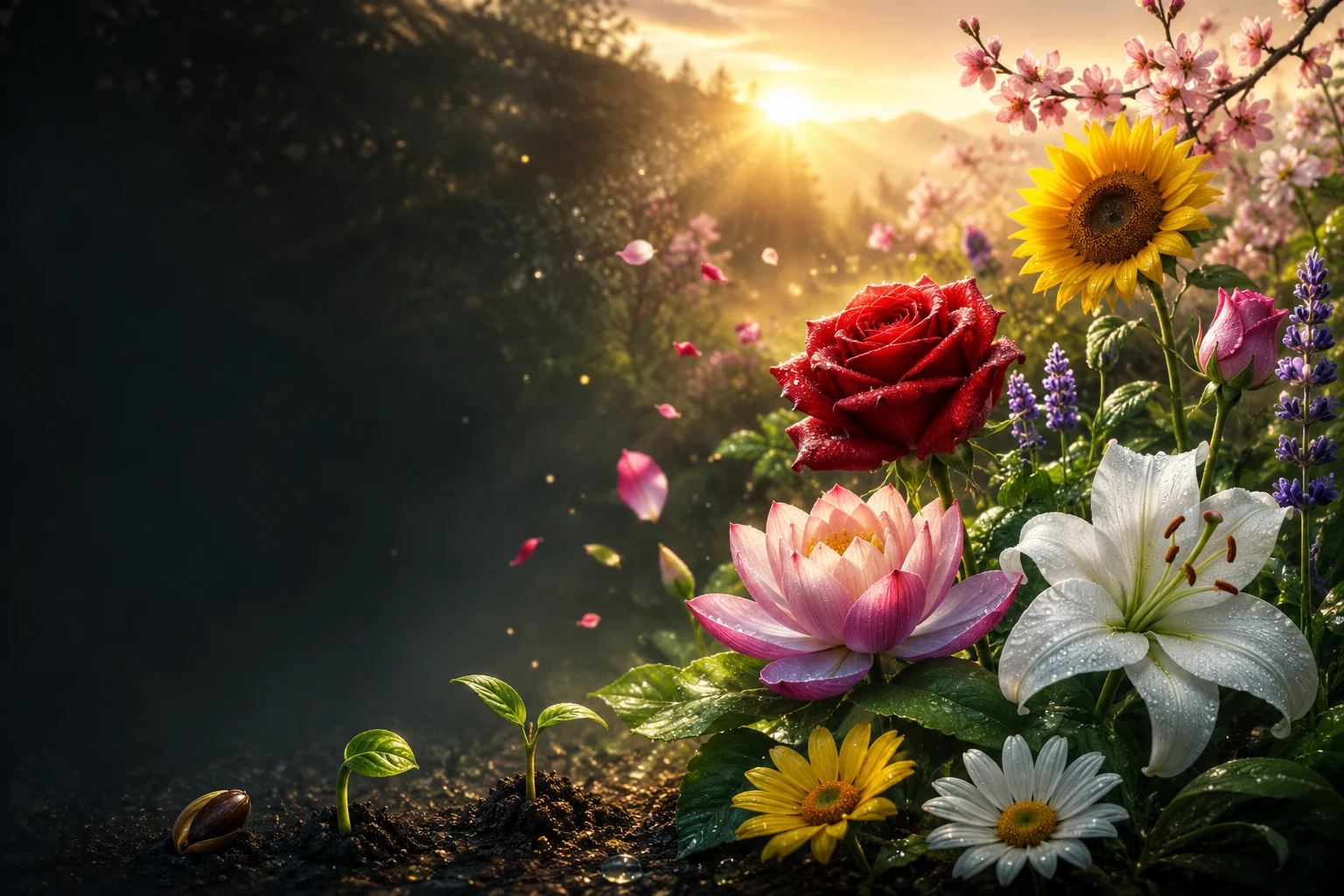
Flowers naturally lend themselves to symbolism because their lives mirror the human experience. They begin as seeds, grow toward the light, bloom for a time, and eventually fade and return to the earth.
Common flower symbolism meanings include:
- Love — often associated with roses and other romantic flowers
- Beauty — represented by blossoms in full bloom
- Growth — connected with a flower’s journey from seed to maturity
- Renewal — linked to seasonal blooming and new beginnings
- Hope — symbolized by flowers emerging after difficult seasons
- Purity — commonly associated with white flowers
- Remembrance — flowers used to honor people and preserve memories
- Transformation — reflected in the process of blooming and changing
What Does Flower Symbolism Represent?
Flower symbolism can represent many aspects of human life. The meaning often depends on the flower itself, its color, the occasion, and the feelings of the person giving or receiving it.
| Symbolic Meaning | What Flowers Can Represent |
|---|---|
| Love | Romance, affection, devotion |
| Beauty | Grace, elegance, appreciation |
| Growth | Personal development and maturity |
| Hope | Optimism and brighter beginnings |
| Renewal | Rebirth, recovery, fresh starts |
| Purity | Innocence, sincerity, spiritual cleanliness |
| Remembrance | Memory, honor, and lasting affection |
| Transformation | Change, resilience, and becoming something new |
| Friendship | Loyalty, warmth, and companionship |
| Mortality | The temporary nature of life and beauty |
One of the most powerful ideas behind flowers is impermanence. A beautiful bloom does not last forever, which can make it a reminder to appreciate the present moment.
Flower Colors and Their Symbolic Meanings
Color can dramatically change a flower’s message.
- Red flowers: Love, passion, courage, desire
- White flowers: Purity, peace, innocence, remembrance
- Yellow flowers: Friendship, happiness, optimism, warmth
- Pink flowers: Tenderness, affection, gratitude, admiration
- Purple flowers: Mystery, spirituality, dignity, imagination
- Blue flowers: Calmness, trust, tranquility, devotion
- Orange flowers: Energy, enthusiasm, creativity, confidence
These meanings are common associations rather than strict rules. Cultural traditions and personal experiences can give the same color a different significance.
Spiritual Meaning of Flower Symbolism
Spiritually, flowers are often viewed as symbols of growth, awakening, renewal, and the connection between life and nature.
A flower begins hidden within a seed and eventually reveals its beauty. This can represent an individual’s inner journey—developing quietly before becoming visible to the world.
Flower symbolism can also suggest:
Spiritual growth: Like a plant reaching toward sunlight, people may grow by seeking knowledge, wisdom, and higher understanding.
Renewal: Flowers that return each spring can represent restoration and the possibility of beginning again.
Inner beauty: A flower’s value is not only in its appearance but also in the life and process behind its bloom.
Transience: A fading flower can remind us that every stage of life is temporary.
Connection with nature: Flowers encourage awareness of seasonal cycles, creation, and the natural world.
For many people, receiving or seeing a flower at an important moment can feel like a quiet reminder that growth often happens gradually.
Biblical / Religious Meaning of Flower Symbolism
Flowers appear in religious imagery and sacred texts as illustrations of beauty, mortality, flourishing, humility, and the temporary nature of earthly life.
In biblical symbolism, flowers and grass can be used to emphasize how quickly earthly beauty can fade. This creates a contrast between temporary human life and what is understood as enduring divine truth.
The image of something beautiful blooming and then withering can encourage humility. It suggests that outward beauty and worldly achievements are temporary, while spiritual character and faith are treated as more enduring.
Different religious traditions also use flowers in worship, ceremonies, offerings, festivals, meditation, and remembrance. Their meanings vary significantly between cultures, so a flower should always be interpreted within its specific religious context.
Flower Symbolism in History and Culture
Flowers have carried symbolic meanings across civilizations for thousands of years.
In ancient societies, flowers were connected with gods, ceremonies, fertility, death, healing, celebration, and seasonal change. Their colors, fragrances, and natural cycles made them powerful symbols long before modern flower dictionaries existed.
Victorian Flower Symbolism
One of the best-known examples is the Victorian-era language of flowers, sometimes called floriography. During the 19th century, flowers could be arranged or exchanged to communicate sentiments indirectly.
A bouquet could express affection, friendship, sympathy, gratitude, or even rejection.
Flowers in Asian Cultures
Flowers have also played important roles throughout Asian traditions. For example, the lotus has powerful associations with purity, spiritual awakening, and rising above difficult conditions in several religious and cultural traditions.
Cherry blossoms in Japan are widely associated with beauty and the temporary nature of life because their spectacular blooming period is brief.
Flowers in Celebrations and Mourning
Flowers appear in weddings, birthdays, religious ceremonies, funerals, anniversaries, graduations, and memorials.
Their ability to communicate both joy and grief demonstrates how flexible flower symbolism can be. The same natural object can celebrate a new beginning while also honoring something that has ended.
Flower Symbolism in Literature and Art
Flowers have been powerful symbols in literature, painting, poetry, photography, and other forms of art.
Writers often use flowers to represent characters or emotional states. A blooming flower may suggest youth or love, while a fading flower may symbolize aging, loss, or mortality.
Artists frequently use flowers to create visual contrasts between beauty and impermanence. A carefully painted blossom can appear vibrant while subtly reminding the viewer that its beauty will not last forever.
Flowers can also symbolize hidden emotions. A character giving someone a particular flower may communicate feelings without directly speaking about them.
Because flowers are visually recognizable and emotionally rich, they remain among the most enduring symbols in creative expression.
Dream Meaning of Flower Symbolism
Dreams involving flowers can have many interpretations, and their meaning often depends on the dreamer’s emotions and circumstances.
A blooming flower may suggest growth, happiness, opportunity, or emotional development.
A wilted flower may represent disappointment, loss, fading affection, or something in life that needs attention.
A colorful flower garden can suggest abundance, creativity, emotional richness, or a sense of peace.
Receiving flowers in a dream may symbolize appreciation, affection, recognition, or a desire for connection.
Planting flowers may represent investing in the future, developing a relationship, or beginning a new chapter.
Dream symbolism is personal rather than predictive. The most useful interpretation usually considers what the flower meant to you and how you felt during the dream.
Modern Meaning of Flower Symbolism
Today, flowers remain a simple but powerful way to communicate emotions.
People use flowers to say:
- “I love you.”
- “I appreciate you.”
- “I am thinking of you.”
- “I am sorry.”
- “Congratulations.”
- “I remember you.”
- “I hope you feel better.”
- “Welcome to a new beginning.”
Flowers are also increasingly connected with mindfulness, wellness, nature, creativity, and emotional expression.
A person may grow flowers as a form of relaxation, photograph them to capture beauty, or keep a particular flower because it reminds them of someone important.
In modern life, flower symbolism does not require a formal dictionary. Personal meaning matters just as much as traditional symbolism.
A flower given by a parent, partner, friend, or loved one may carry a meaning that no traditional guide can fully explain.
Common Flowers and Their Symbolic Meanings
Different flowers have developed distinctive associations over time.
- Rose: Love, passion, beauty, devotion
- Lily: Purity, renewal, peace, spiritual significance
- Lotus: Spiritual awakening, purity, resilience
- Sunflower: Happiness, optimism, vitality, admiration
- Daisy: Innocence, simplicity, freshness
- Tulip: Love, elegance, affection, renewal
- Lavender: Calmness, grace, healing, serenity
- Jasmine: Love, beauty, purity, sensuality
- Cherry blossom: Impermanence, beauty, renewal
- Daffodil: New beginnings, hope, optimism
The symbolism of any particular flower can change depending on historical period, culture, religion, color, and personal experience.
Why Are Flowers So Powerful as Symbols?
Flowers combine several qualities that naturally inspire symbolic thinking.
They are beautiful but temporary, delicate yet capable of surviving harsh conditions. They emerge from darkness beneath the soil and eventually open toward the light.
This makes flowers especially meaningful representations of the human journey.
A seed can symbolize potential.
A growing plant can symbolize perseverance.
A flower in full bloom can symbolize fulfillment.
A fading flower can symbolize change.
Seeds returning to the earth can symbolize continuity and renewal.
In this way, the entire life cycle of a flower can become a metaphor for life itself.
Frequently Asked Questions About Flower Symbolism
What is the most common meaning of flower symbolism?
Flower symbolism commonly represents love, beauty, growth, hope, renewal, purity, remembrance, and transformation. The exact meaning depends on the flower, color, culture, and situation.
What flower symbolizes love?
Roses are among the most widely recognized symbols of romantic love, especially red roses. Other flowers can also represent love depending on cultural and personal traditions.
What flower symbolizes new beginnings?
Daffodils, tulips, and flowers that bloom in spring are often associated with new beginnings, renewal, hope, and fresh opportunities.
What flower symbolizes spiritual growth?
The lotus is strongly associated with spiritual growth and awakening in several Asian religious and cultural traditions. Its growth from muddy water into a beautiful bloom makes it a powerful metaphor for transformation.
Why are flowers associated with life and death?
Flowers naturally move through cycles of growth, blooming, fading, and returning to the earth. Because of this cycle, they can symbolize both the beauty of life and its temporary nature.
Conclusion
Flower symbolism reminds us that beauty can carry meaning far beyond appearance. From love and friendship to spiritual growth, remembrance, hope, and transformation, flowers provide a natural language for expressing some of life’s deepest emotions.
Perhaps their greatest lesson is simple: bloom where you are, appreciate the season you are in, and remember that even temporary beauty can leave a lasting impression.

I am Luna Grace, an author passionate about exploring the meanings, history, and symbolism behind everyday signs. I enjoy sharing thoughtful insights that help readers understand symbols and their deeper significance.