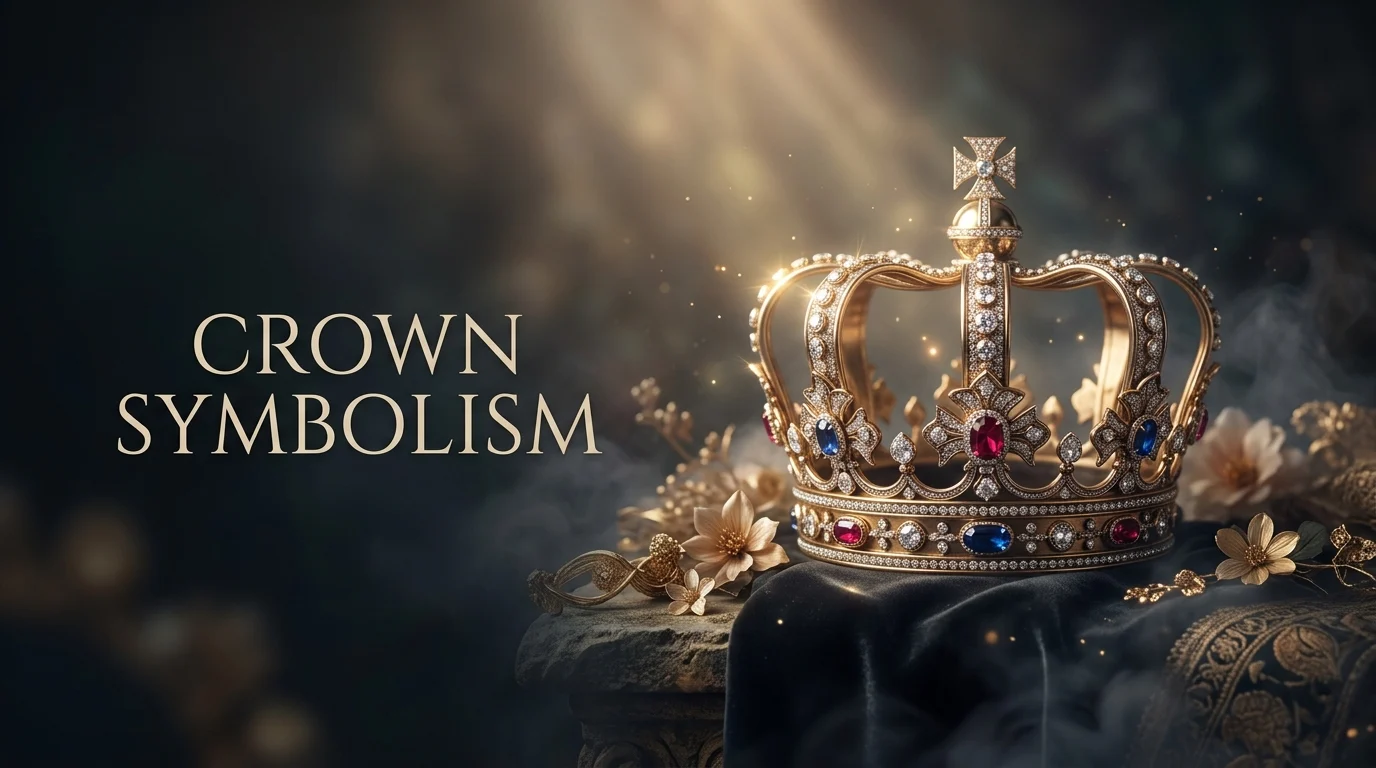
A crown is more than a symbol of royalty. Across cultures and centuries, crown symbolism has represented power, authority, achievement, honor, leadership, dignity, and spiritual elevation. From ancient rulers wearing elaborate crowns to modern people using crown imagery in jewelry, tattoos, art, and dreams, this symbol continues to carry deep meaning.
The meaning of a crown can change depending on its design, context, color, and who wears it. In some situations, it represents legitimate leadership and responsibility; in others, it can symbolize pride, ambition, victory, or personal achievement.
Crown Symbolism Meaning (Clear Definition)
Crown symbolism refers to the meanings associated with crowns as visual symbols of authority, leadership, honor, achievement, sovereignty, and elevated status.
At its simplest, a crown represents the highest position or achievement. Because crowns traditionally belonged to monarchs and rulers, they became closely connected with power and leadership.
However, a crown can also symbolize something deeply personal. Someone may view it as a reminder of self-worth, perseverance, confidence, or overcoming difficult circumstances.
Common Crown Symbolism Meanings
- Power — authority and influence
- Leadership — responsibility and guidance
- Royalty — nobility and elevated status
- Victory — achievement after struggle
- Honor — respect and recognition
- Wisdom — mature judgment and experience
- Dignity — self-respect and personal worth
- Ambition — desire to reach a higher position
- Spiritual elevation — connection with something greater
What Does Crown Symbolism Represent?
A crown can represent several ideas simultaneously. Its interpretation often depends on cultural background and personal circumstances.
1. Power and Authority
The most familiar meaning of a crown is authority. Historically, crowns distinguished monarchs and rulers from other members of society.
Because of this association, a crown can symbolize the ability to lead, make decisions, and influence others.
2. Leadership and Responsibility
A crown is not only about privilege. Traditional kingship also involved responsibility toward a kingdom and its people.
For this reason, crown symbolism can represent responsible leadership, duty, service, and accountability.
3. Achievement and Victory
Crowns can represent reaching the highest point after effort and perseverance. A person may use crown imagery to celebrate success, overcoming adversity, or accomplishing an important goal.
4. Honor and Recognition
A crown can signify that someone has earned admiration or respect. In symbolic language, being “crowned” often suggests receiving recognition for excellence or achievement.
5. Self-Worth and Confidence
Modern interpretations frequently connect crowns with confidence and self-respect. Wearing a crown symbol can serve as a personal reminder to recognize one’s own value.
6. Wisdom and Experience
Because rulers were traditionally expected to possess judgment and wisdom, crowns can also represent knowledge gained through experience.
Spiritual Meaning of Crown Symbolism
Spiritually, the crown can symbolize higher consciousness, divine authority, spiritual achievement, and connection with the sacred.
A crown positioned above the head naturally suggests elevation. Symbolically, this can represent rising beyond ordinary concerns and developing greater wisdom or awareness.
In spiritual traditions, crowns may also represent:
- Enlightenment
- Divine connection
- Spiritual authority
- Inner wisdom
- Higher consciousness
- Sacred purpose
- Transformation
- Completion
The crown can therefore be understood as a symbol of an inner journey rather than merely an external position of power.
Crown and Spiritual Growth
A crown may represent the idea that true greatness comes from developing character rather than simply possessing status. In this interpretation, the “crown” is something earned through patience, wisdom, compassion, and personal growth.
Biblical / Religious Meaning of Crown Symbolism
Crown imagery has important meanings in several religious traditions, particularly Christianity. In the Bible, crowns can symbolize reward, victory, honor, righteousness, and eternal life.
Different biblical passages use different expressions involving crowns. For example, the “crown of life” is associated with perseverance and faithfulness, while other crowns represent reward or glory.
The symbolism should not be reduced to earthly wealth or political authority. In many religious contexts, the crown points toward spiritual reward and divine recognition.
In Christian symbolism, crowns can therefore represent:
- Eternal life
- Spiritual victory
- Faithfulness
- Reward
- Glory
- Righteousness
- Divine promise
Other religious and cultural traditions also use crowns and crown-like objects to express sacred status, spiritual authority, or divine connection.
Crown Symbolism in History and Culture
Crowns have been used for thousands of years to distinguish rulers and communicate social status.
Ancient civilizations used elaborate headpieces, diadems, circlets, and other forms of ceremonial headwear. Over time, these objects developed into recognizable symbols of kingship and sovereignty.
In European monarchies, crowns became especially important during coronation ceremonies. A crown could communicate that authority had been formally granted or recognized.


Cultural Associations of Crowns
| Symbolic Idea | What the Crown Can Represent |
|---|---|
| Royalty | Noble or elevated status |
| Power | Authority and influence |
| Leadership | Responsibility and guidance |
| Victory | Success and achievement |
| Honor | Respect and recognition |
| Wisdom | Experience and judgment |
| Spirituality | Divine or higher connection |
| Confidence | Self-worth and dignity |
The design of a crown can also affect its meaning. A simple crown may communicate elegance or personal confidence, while an elaborate jeweled crown may emphasize wealth, royalty, and prestige.
Crown Symbolism in Literature and Art
Crowns have long been powerful visual and literary symbols.
In literature, a crown may represent a character’s authority, ambition, inheritance, responsibility, or temptation. A character who gains a crown may gain power but also face difficult moral choices.
Shakespearean works, fairy tales, legends, and epic stories frequently use royal imagery to explore themes such as ambition, succession, betrayal, justice, and responsibility.
In visual art, crowns immediately communicate status. Artists may place crowns on kings, queens, saints, heroes, religious figures, or symbolic characters to suggest authority or spiritual significance.
At the same time, an artist may deliberately show a broken, fallen, or abandoned crown to communicate the loss of power, downfall, humility, or the temporary nature of status.
Dream Meaning of Crown Symbolism
Dreaming about a crown can have different interpretations depending on the dreamer’s emotions and circumstances.
A crown may symbolize achievement, recognition, confidence, leadership, ambition, or a desire for respect.
Common interpretations include:
- Wearing a crown: confidence, responsibility, achievement, or recognition
- Receiving a crown: appreciation, success, or acknowledgment
- Losing a crown: fear of losing status, control, or recognition
- Seeing a broken crown: disappointment, change, or the end of an old position
- Giving someone a crown: admiration, respect, or recognition of another person’s qualities
- A golden crown: prosperity, achievement, prestige, or spiritual value
Dream symbolism is highly personal. The emotions experienced during the dream and the events happening in waking life can be more meaningful than any universal interpretation.
Modern Meaning of Crown Symbolism
Today, crowns appear far beyond royal ceremonies. They are common in fashion, tattoos, logos, jewelry, illustrations, social media graphics, and popular culture.
Modern crown symbolism often emphasizes self-confidence and personal achievement rather than inherited authority.
Someone might choose a crown tattoo to represent overcoming hardship or taking control of their life. Crown jewelry can symbolize confidence, elegance, or personal identity.
The phrase “wear your crown” is also commonly used as a metaphor for recognizing one’s worth and carrying oneself with confidence.
Crown Symbolism in Tattoos
A crown tattoo may represent:
- Personal strength
- Self-respect
- Leadership
- Achievement
- Family heritage
- Ambition
- Independence
- Victory over adversity
The surrounding imagery can change the interpretation. A crown combined with a lion may emphasize courage and leadership, while a crown with flowers may suggest beauty, growth, honor, or gentleness.
Crown Symbolism and Personal Growth
One of the most meaningful modern interpretations of the crown is the idea of earned greatness.
A crown can remind us that achievement comes with responsibility. Reaching a goal is important, but how a person uses their influence can matter just as much.
In this sense, crown symbolism encourages confidence without forgetting humility. It represents not only standing above challenges but also becoming wiser through them.
Frequently Asked Questions About Crown Symbolism
What is the main meaning of crown symbolism?
The main meaning of crown symbolism is authority, royalty, leadership, honor, and achievement. It can also represent confidence, wisdom, and personal success.
What does a crown symbolize spiritually?
Spiritually, a crown can symbolize higher consciousness, divine connection, spiritual victory, enlightenment, and sacred reward.
What does a crown symbolize in the Bible?
In biblical symbolism, crowns can represent rewards, victory, glory, righteousness, perseverance, and eternal life, depending on the passage and context.
What does wearing a crown symbolize?
Wearing a crown can symbolize authority, confidence, achievement, responsibility, recognition, or elevated status. Its meaning depends on the cultural and personal context.
What does a crown symbolize in dreams?
A crown in a dream may represent achievement, recognition, leadership, ambition, or self-worth. Its interpretation depends heavily on what happens in the dream and how the dreamer feels.
Conclusion
Crown symbolism carries a rich combination of meanings, from royalty and authority to achievement, wisdom, dignity, and spiritual elevation. Although crowns historically represented rulers and social power, their modern meaning can be much more personal.
if seen in history, religion, art, dreams, or everyday life, the crown often reminds us of one enduring idea: true greatness is not only about reaching a higher place but also about carrying that position with wisdom and responsibility.

I am Leon James, Administrator at SymboJoy, passionate about symbols, special characters, emojis, and creative text. I help make digital expression simple, useful, inspiring, and enjoyable.