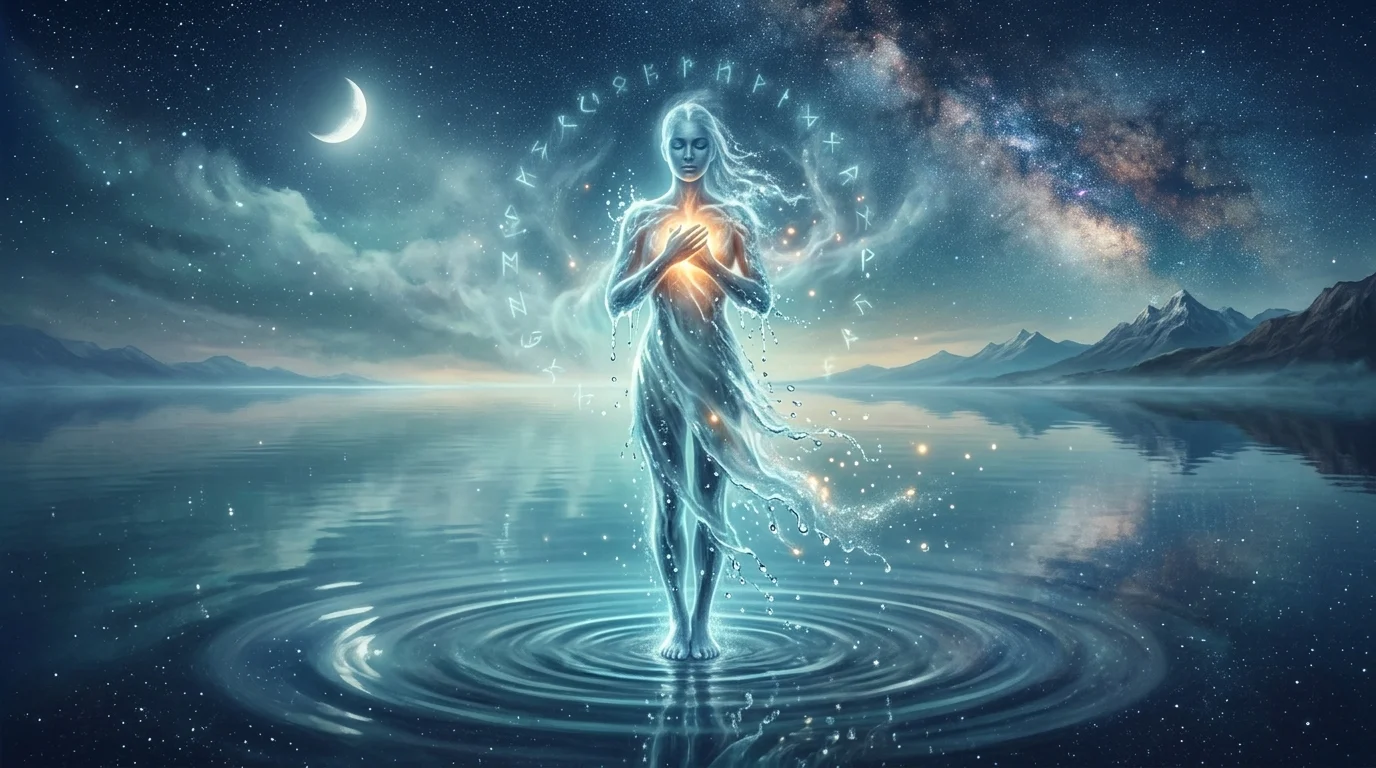
Water. It’s the very essence of life, covering most of our planet and making up a significant portion of our bodies. But beyond its physical necessity, water symbolism runs deep in our collective consciousness. Throughout history, across cultures, and within our personal dreams, water represents a powerful and complex web of meanings. It can signify purity, life, mystery, and even destruction.
Understanding water symbolism offers a unique lens through which to view our world, our emotions, and our spiritual selves. Join us as we explore the rich and varied meanings of this essential element. This journey will uncover why water continues to captivate our imagination and hold profound significance in our modern lives .
Water Symbolism Meaning (Clear Definition)
At its core, water symbolism refers to the use of water to represent abstract ideas and concepts. It’s a powerful and universal symbol that carries a wide range of meanings, often depending on its state, context, and the culture interpreting it. Most fundamentally, water is a symbol of life, purification, and renewal .
We see this clearly in religious rituals like baptism, where water is used for spiritual cleansing and rebirth . In dreams, calm, clear water is often a positive sign, while turbulent or murky water can signify emotional distress . So, when we talk about water symbolism, we’re talking about the language of the soul, the subconscious, and the very cycle of existence itself.
What Does Water Symbolism Represent?
Water symbolism is incredibly diverse, representing a spectrum of concepts that are often dualistic in nature. It can represent both life and death, creation and destruction. Here are some of the key themes associated with this powerful symbol:
- Life and Creation: Water is the source of all life. It nourishes, sustains, and is essential for growth. In many creation myths, the world was born from a primordial sea .
- Purification and Cleansing: Water has an inherent ability to wash away dirt and impurities. This makes it a potent symbol for spiritual cleansing, forgiveness, and wiping the slate clean .
- Emotion and the Unconscious: Water’s fluid nature makes it a perfect metaphor for the world of emotions. Our feelings can be calm like a still lake, turbulent like a stormy sea, or deep and mysterious like the ocean depths .
- Death and Destruction: While giving life, water can also take it away. Floods, tsunamis, and powerful currents symbolize loss of control, overwhelming emotions, and the destructive forces of nature.
- Change and Transformation: Water is constantly in motion, changing form from liquid to solid (ice) to gas (vapor). This cycle symbolizes adaptability, flexibility, and the inevitable changes in life.
Spiritual Meaning of Water Symbolism
In a spiritual context, water often represents the source of all creation and the flow of divine energy. It is seen as a sacred element that connects us to something greater than ourselves. Water is a powerful spiritual cleanser, used in many traditions to purify the soul, remove negative energy, and prepare individuals for sacred experiences.
The idea of “living water” appears in various spiritual texts, representing divine wisdom, salvation, and eternal life. It is the spirit that quenches the deepest thirst of the human soul, offering guidance, peace, and a sense of renewal . For those on a spiritual path, meditating on the qualities of water can be a way to cultivate greater flow, adaptability, and emotional balance in their lives.
Biblical / Religious Meaning of Water Symbolism
The religious significance of water is immense, particularly in the Bible, where it appears in key narratives from Genesis to Revelation . Here, water symbolism is deeply intertwined with themes of salvation, cleansing, and the Holy Spirit.
The Bible and Water
| Concept | Biblical Reference | Meaning |
|---|---|---|
| Purification | Baptism, Foot Washing (John 13) | Washing away sin and spiritual renewal |
| Holy Spirit | John 7:38-39 | “Rivers of living water” representing the Spirit |
| Eternal Life | Revelation 22, John 4:14 | “Water of life” and salvation offered by God |
| Creation | Genesis 1:2 | Spirit of God hovering over the waters at the dawn of creation |
From the flood in Noah’s time that cleansed the earth of wickedness to Jesus’s conversation with the Samaritan woman at the well, water is a central metaphor for spiritual truth . It reminds us of God’s power to create, to judge, and most importantly, to redeem and offer everlasting life.
Water Symbolism in History and Culture
The symbolic use of water is as old as civilization itself . Ancient cultures across the globe revered water, seeing it as a sacred and primordial element. The Harappan civilization built intricate reservoirs and water routes, highlighting water’s societal and practical importance . The Babylonians believed the world was born from a primordial ocean, a concept found in many other creation myths.
In Vedic traditions, water is a key ingredient in creation and is associated with purification and cosmic churning . The “churning of the cosmic sea” is a central myth in Hinduism, from which various divine treasures and amrita (the nectar of immortality) emerged. This demonstrates water’s role not just in physical life but in the very sustenance and maintenance of the cosmic order.
Water Symbolism in Literature and Art
In literature and art, water is one of the most powerful and versatile symbols an artist can employ . It is used to create mood, develop character, and convey complex themes. In T.S. Eliot’s The Waste Land, a lack of water symbolizes a spiritual drought and cultural decay . In F. Scott Fitzgerald’s The Great Gatsby, the water surrounding the island of New York represents the moral emptiness and the elusive nature of the American Dream .
Poets have long used water as a metaphor for emotion and time. Shakespeare’s sonnets compare the passage of time to waves, while poets like Dylan Thomas have used water imagery to explore profound mythological and existential themes . In art, the depiction of water can symbolize everything from the purity of a sacred landscape to the harsh reality of a drought-stricken land . It is a tool that helps artists reveal the themes and ideas at the heart of their work.
Dream Meaning of Water Symbolism
Dreams about water are incredibly common and are generally interpreted as a reflection of the dreamer’s emotional state. Because water is so fluid, it is a perfect metaphor for our often-changing feelings. The specific details of the dream—the water’s clarity, movement, and the dreamer’s actions—are key to unlocking its message.
- Clear and Calm Water: This is a highly positive symbol, often foretelling joy, prosperity, and inner peace .
- Muddy or Turbulent Water: This is a warning sign, suggesting confusion, danger, sadness, or difficult emotions to come .
- Drowning: This represents feeling overwhelmed, as if a situation or emotion is “pulling you under” and out of your control .
- Drinking Water: If the water is clear, it symbolizes the fulfillment of hopes. If muddy, it can portend sickness or emotional turmoil .
- Flooding: This is a sign that emotions are building up and may soon overflow, often related to a situation that feels increasingly out of hand .
Modern Meaning of Water Symbolism
Today, water symbolism is more relevant than ever. Our understanding of its meaning has expanded to encompass ecological and feminist perspectives. The feminist movement, for example, has reclaimed the old metaphor of “woman is water,” using it to highlight themes of fluidity, adaptability, and immense power, resisting the historical attempts to “contain” and control both women and nature .
Contemporary poets like Brenda Hillman explore water as a central agent in mediating ecological ethics, connecting human and nonhuman worlds, and inviting us to reflect on our responsibility to the environment . In a world facing climate change and water scarcity, the symbolism of water as a sacred, life-giving, and finite resource is a powerful call to action. It reminds us of our deep connection to the natural world and the need to protect this most precious element.
Frequently Asked Questions
What is the most common spiritual meaning of water?
The most common spiritual meaning of water is purification and rebirth. Many religions and spiritual practices use water in rituals to cleanse the soul and symbolize a fresh start, often referred to as being “born again.”
What does it mean if I dream about water?
Dreaming of water typically reflects your current emotional state. Calm, clear water suggests peace and harmony, while murky, turbulent water indicates confusion or emotional distress. The specific context of the dream is crucial for interpretation .
Is water a symbol of life or death in the Bible?
Water is a dual symbol in the Bible, representing both life and death. It is the source of life and salvation (e.g., the “water of life”) but can also be an instrument of judgment and destruction (e.g., the Great Flood).
Why is water considered a powerful symbol?
Water is a powerful symbol because it is essential to all life and possesses a unique set of physical properties. Its ability to cleanse, transform, move, and change states makes it an ideal metaphor for complex concepts like emotion, spirituality, and the cycle of life.
Conclusion
From the dawn of creation to modern environmental movements, water symbolism flows through every aspect of our existence. It is a mirror reflecting our deepest emotions, a conduit for the divine, and a reminder of our vulnerability and our immense capacity for renewal. if we encounter it in ancient myths, sacred texts, our own dreams, or the quiet rain on a windowpane, water invites us to contemplate the mysteries of life, death, and the endless cycle of becoming. It reminds us that like water, we too have the power to adapt, to persist, and to start anew.

I am Luna Grace, an author passionate about exploring the meanings, history, and symbolism behind everyday signs. I enjoy sharing thoughtful insights that help readers understand symbols and their deeper significance.