Fire has fascinated humanity for thousands of years. It can warm a home, illuminate darkness, destroy what stands in its path, and transform one thing into another. Fire symbolism therefore carries many meanings, including transformation, passion, purification, destruction, courage, energy, renewal, and spiritual awakening.
if you encounter fire in mythology, religion, dreams, art, or everyday life, its meaning often depends on the context. A gentle candle flame may suggest hope and peace, while a raging wildfire may represent chaos, anger, or dramatic change.
Fire Symbolism Meaning (Clear Definition)
Fire symbolism represents transformation, passion, purification, energy, destruction, renewal, and illumination. Because fire can both create and destroy, it often symbolizes powerful forces that bring an ending while making space for something new.
At its most positive, fire represents warmth, inspiration, courage, creativity, and spiritual light. Its destructive side can symbolize anger, conflict, loss, danger, or uncontrolled emotions.
The meaning of fire can change depending on its form:
| Type of FireCommon Symbolic Meaning | |
|---|---|
| Candle flame | Hope, guidance, remembrance, spirituality |
| Campfire | Community, comfort, connection |
| Fireplace | Home, warmth, security |
| Wildfire | Destruction, chaos, uncontrollable change |
| Burning flame | Passion, energy, determination |
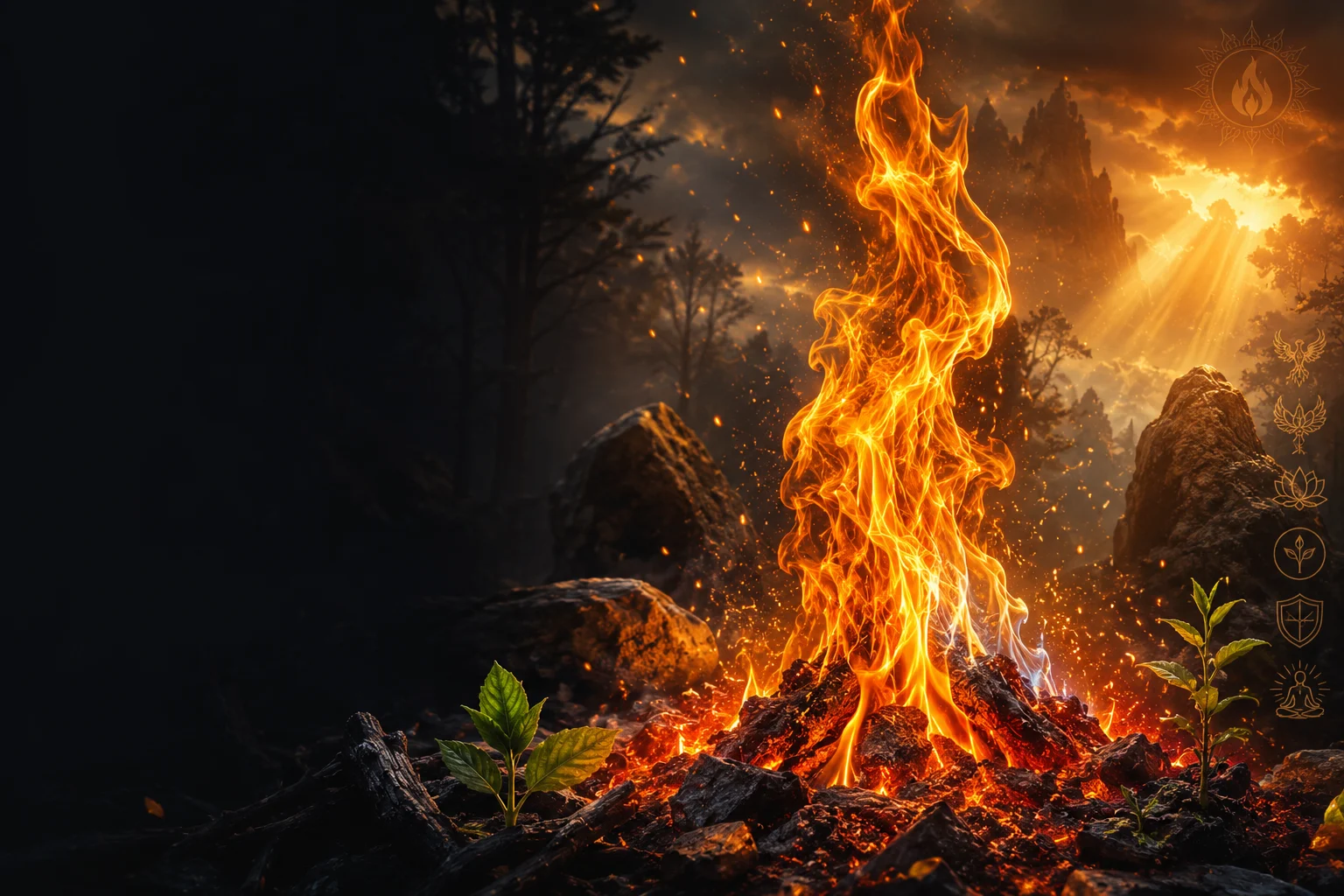
| Fire and ashes | Transformation, endings, rebirth |
| Sacred fire | Purification, devotion, spiritual connection |
| Sunrise-like flame | Renewal, inspiration, new beginnings |
In simple terms, fire symbolizes powerful change. It reminds us that something may need to be transformed, released, or renewed before growth can occur.
What Does Fire Symbolism Represent?
Fire can represent several important qualities and life experiences.
1. Transformation
One of the strongest meanings of fire is transformation. Fire changes the physical nature of whatever it touches, making it a natural symbol of personal growth and major life transitions.
This symbolism can apply to leaving an old habit behind, starting a new chapter, or becoming stronger after a difficult experience.
2. Passion and Desire
Fire is often associated with intense emotion. A burning flame can represent romantic passion, ambition, enthusiasm, creativity, and desire.
When someone says they have a “fire inside,” the phrase suggests determination and an unwillingness to give up.
3. Purification
Fire has long been associated with cleansing and purification. Symbolically, it can represent removing negativity, unhealthy attachments, fear, or emotional burdens.
This does not necessarily mean physical destruction. Instead, it can describe an inner process of becoming lighter and more focused.
4. Destruction
Fire can also symbolize destruction. When flames become uncontrollable, they can consume homes, forests, possessions, and entire landscapes.
In symbolism, this destructive quality may represent endings, conflict, anger, loss, or circumstances that have become impossible to control.
5. Renewal and Rebirth
Fire symbolism is not only about endings. It can also represent what comes after them.
The image of ashes giving way to new growth makes fire a powerful metaphor for rebirth, resilience, and renewal. Something may be lost, yet a new beginning can emerge from the experience.
6. Light and Illumination
Fire produces light in darkness, making it a natural symbol of knowledge, awareness, truth, guidance, and hope.
A small flame can therefore represent the idea that even a little light can make darkness easier to navigate.
7. Courage and Inner Strength
Fire can symbolize bravery, confidence, and determination. Its energy reflects the human ability to keep moving forward despite fear or difficulty.
This is why fire imagery frequently appears in stories about warriors, leaders, heroes, and people overcoming adversity.
Related fire symbolism keywords: fire spiritual meaning, fire symbolism in dreams, fire meaning in the Bible, fire symbolism in mythology, fire as transformation, fire spiritual awakening, and fire meaning in psychology.
Spiritual Meaning of Fire Symbolism
The spiritual meaning of fire is often connected with purification, divine presence, awakening, transformation, and illumination.
Across spiritual traditions, fire can represent a force that burns away what no longer serves us. It may symbolize the process of becoming more aware, disciplined, courageous, or spiritually connected.
Fire as Spiritual Awakening
A flame can represent a new awareness within a person. The phrase “inner fire” captures this idea: something inside awakens and creates motivation, purpose, or clarity.
Fire as Purification
Spiritually, fire may represent the removal of negative influences or attachments. It can symbolize emotional cleansing and the willingness to release an outdated version of oneself.
Fire as Divine Presence
In many religious traditions, extraordinary appearances of fire are connected with the sacred. Fire may indicate divine communication, protection, revelation, or a powerful spiritual presence.
Fire as Inner Light
A flame can also symbolize consciousness and wisdom. It represents the light that helps a person recognize truth when circumstances feel uncertain.
Ultimately, spiritual fire symbolism often asks us to consider what needs to be released, transformed, or awakened within our lives.
Biblical / Religious Meaning of Fire Symbolism
Fire has significant symbolic importance in the Bible and other religious traditions. Its meaning is not limited to one interpretation; depending on the passage or tradition, fire can represent God’s presence, judgment, purification, holiness, sacrifice, protection, or revelation.
In biblical narratives, fire sometimes appears as a manifestation of divine presence. The burning bush associated with Moses is one of the best-known examples.
Fire can also symbolize judgment. Its consuming quality provides a powerful image for divine justice and consequences.
At the same time, fire can represent purification. The metaphor of refining precious metal through heat reflects the idea that difficult experiences can test, strengthen, and purify a person.
Religious fire symbolism therefore contains an important duality: fire can comfort and guide, but it can also test and transform.
Outside Christianity, sacred fire also appears in several religious and cultural traditions. In Zoroastrianism, for example, fire holds an important sacred role and is associated with purity and divine light.
Fire Symbolism in History and Culture
Human civilization has depended on fire for survival, making it one of the oldest and most influential symbols in history.
Fire provided warmth, protection, cooking, light, and a way to shape materials. Because early communities gathered around flames, fire also became associated with family, storytelling, celebration, and social connection.
Fire in Ancient Mythology
Many mythological traditions feature powerful fire-related figures and stories.
In Greek mythology, Prometheus is famously associated with bringing fire to humanity. The story connects fire with knowledge, progress, creativity, and the consequences of challenging established boundaries.
In Hindu traditions, Agni is a major fire deity associated with sacrifice, communication between humans and gods, and sacred ritual.
Across different cultures, sacred flames have frequently represented life, divine power, renewal, and continuity.
Fire as a Symbol of Community
A shared fire has historically brought people together. Campfires, hearths, ceremonial flames, and communal fires all create spaces for gathering.
Because of this, fire can symbolize belonging, friendship, family, hospitality, and human connection.
Fire as Power
Civilizations also learned to use fire for metalworking, pottery, construction, and industry. This made fire a symbol of technological progress and human creativity.
Yet its danger remained equally important. The ability to control fire became a metaphor for controlling powerful forces.
Fire Symbolism in Literature and Art
Fire has been a powerful image in literature and art because it can communicate complex emotions without requiring many words.
A flame might represent love in one story and destruction in another. A burning building may suggest loss, while a candle may represent hope.
Writers often use fire to symbolize:
- Passion and romantic desire
- Anger and revenge
- Ambition and determination
- Spiritual awakening
- Destruction and loss
- Rebirth and transformation
- Knowledge and illumination
- Freedom and rebellion
Artists also use contrasts between fire and darkness to communicate hope, mystery, danger, or revelation.
The visual intensity of flames makes fire especially effective when an artist wants to show emotional conflict or dramatic change.
Dream Meaning of Fire Symbolism
Dreams involving fire can have many possible interpretations. The meaning usually depends on the dreamer’s emotions, the condition of the fire, and what happens around it.
Dreaming of a Calm Fire
A controlled fireplace or gentle flame may symbolize comfort, emotional warmth, security, creativity, or peaceful energy.
Dreaming of a Wildfire
A wildfire may represent overwhelming emotions, rapid change, conflict, or a situation that feels difficult to control.
Dreaming of a House on Fire
A burning house can symbolize major personal changes, family concerns, emotional upheaval, or the feeling that an important part of life is being transformed.
Dreaming of Putting Out a Fire
Extinguishing a fire may suggest resolving conflict, controlling intense emotions, overcoming a difficult situation, or preventing a problem from growing.
Dreaming of Being Surrounded by Fire
Being surrounded by flames can reflect feelings of pressure, fear, anger, or emotional intensity. However, if the dream feels peaceful rather than frightening, it may symbolize transformation or spiritual renewal.
Dream symbolism is highly personal, so the strongest interpretation usually comes from considering how the fire made you feel and what was happening in your waking life.
Modern Meaning of Fire Symbolism
Today, fire symbolism remains deeply relevant.
People commonly use fire to describe ambition, creativity, motivation, courage, and emotional intensity. Expressions such as “keep the fire alive” suggest maintaining passion and commitment.
Fire is also associated with resilience. The ability to recover after hardship is sometimes compared to rising from the ashes.
In modern psychology-inspired language, fire imagery may be used to describe emotional energy. Anger can “burn,” ambition can “fuel” someone, and passion can feel like an “inner fire.”
Fire also appears prominently in modern branding, entertainment, fashion, tattoos, social media imagery, and personal symbolism because it communicates energy and strength quickly.
A fire tattoo, for example, might represent transformation, survival, passion, independence, or a powerful personal chapter.
The Positive and Negative Sides of Fire Symbolism
Fire is particularly meaningful because it contains opposing qualities.
Positive fire symbolism includes:
- Passion
- Courage
- Creativity
- Hope
- Warmth
- Protection
- Transformation
- Renewal
- Spiritual illumination
Negative fire symbolism includes:
- Anger
- Destruction
- Conflict
- Jealousy
- Chaos
- Loss
- Danger
- Uncontrolled emotions
This duality is what makes fire such a rich symbol. It can give life and take it away, provide warmth and cause destruction, illuminate darkness and become dangerous when uncontrolled.
What Fire Can Teach Us Symbolically
Fire offers several powerful life lessons.
First, energy needs direction. A controlled flame can be useful, while an uncontrolled one can become destructive.
Second, change can be uncomfortable but necessary. Fire reminds us that transformation often involves letting go of something familiar.
Third, even darkness can contain the possibility of light. A small flame may not remove every problem, but it can provide enough illumination to take the next step.
Finally, fire represents resilience. Its symbolism encourages us to recognize that endings do not always mean the end of the story.
Frequently Asked Questions About Fire Symbolism
What is the main meaning of fire symbolism?
Fire symbolism primarily represents transformation, passion, purification, energy, destruction, and renewal. Its exact meaning depends on the context in which fire appears.
What does fire symbolize spiritually?
Spiritually, fire can symbolize purification, divine presence, awakening, illumination, courage, and transformation. It may represent the burning away of old patterns and the beginning of a new stage.
What does fire symbolize in dreams?
Fire in dreams can symbolize intense emotions, transformation, conflict, passion, or renewal. A calm flame may suggest comfort, while an uncontrolled fire can represent overwhelming circumstances.
What does fire symbolize in the Bible?
Biblical fire symbolism can represent divine presence, holiness, judgment, sacrifice, purification, and revelation. Its meaning varies according to the specific biblical context.
Is fire a positive or negative symbol?
Fire can represent both positive and negative forces. It may symbolize warmth, creativity, courage, and renewal, while also representing anger, destruction, danger, and loss.
Conclusion
Fire symbolism is ultimately a symbol of power and change. It represents the passion that drives us, the light that guides us, the challenges that test us, and the transformation that helps us grow.
Whether seen in a dream, religious story, work of art, or everyday life, fire reminds us that endings can create space for beginnings. Sometimes, the very process that changes us is also the process that reveals our inner strength.

I am Felix Thomas, Author at SymboJoy, passionate about helping people explore symbols, special characters, emojis, and creative text while making digital expression simple, useful, and enjoyable.