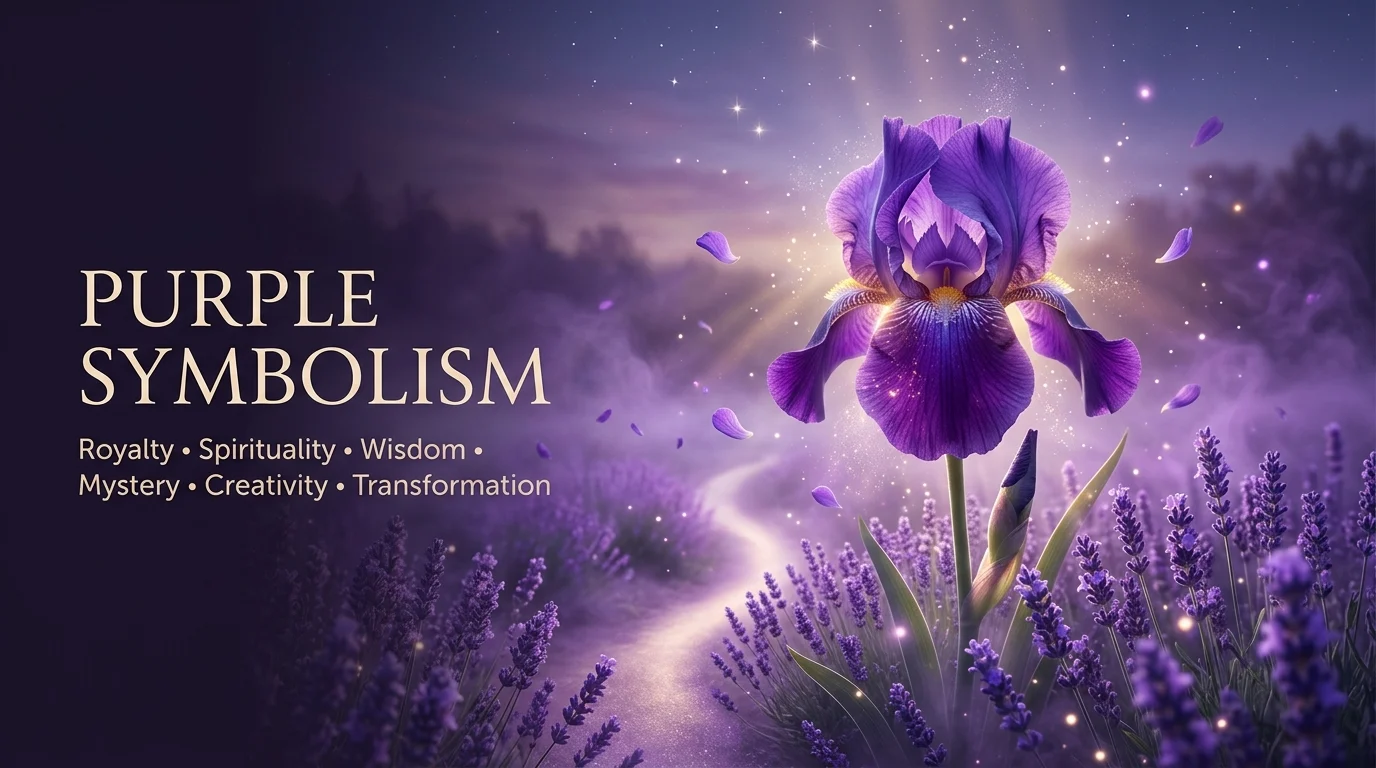
Purple symbolism is often associated with royalty, spirituality, mystery, wisdom, creativity, and transformation. As a color that blends the calm depth of blue with the energy of red, purple can represent both inner reflection and powerful expression.
Across history and cultures, purple has carried an air of rarity and prestige. Today, its meaning can range from spiritual awareness and imagination to luxury, individuality, and emotional depth.
Purple Symbolism Meaning (Clear Definition)
Purple symbolism represents royalty, dignity, spirituality, wisdom, creativity, mystery, transformation, and individuality.
The meaning of purple can change depending on its shade and context. Deep purple may suggest luxury, authority, or mystery, while lighter shades such as lavender can symbolize gentleness, peace, sensitivity, and healing.
Common purple symbolism meanings include:
- Royalty and luxury — Purple has long been connected with status, wealth, and prestige.
- Spirituality — It can represent higher awareness, contemplation, and connection with the sacred.
- Wisdom — Purple is often linked with insight, intuition, and deeper understanding.
- Mystery — Its unusual and rich appearance gives it an association with the unknown.
- Creativity — Purple can encourage imagination, originality, and artistic expression.
- Transformation — It may symbolize personal growth, change, and renewal.
- Individuality — Purple can represent independence and the courage to stand apart.
Because purple combines red and blue, it is sometimes interpreted as a symbolic balance between passion and calm, action and reflection, or physical and spiritual awareness.
What Does Purple Symbolism Represent?
Purple symbolism can carry several layers of meaning depending on where and how it appears.
| Symbolic Meaning | What Purple Can Represent |
|---|---|
| Royalty | Status, prestige, dignity, power |
| Spirituality | Higher awareness, sacred connection, reflection |
| Wisdom | Knowledge, intuition, insight |
| Mystery | The unknown, imagination, hidden meaning |
| Creativity | Artistic expression, originality, inspiration |
| Transformation | Growth, change, rebirth |
| Luxury | Elegance, richness, sophistication |
| Individuality | Uniqueness, independence, self-expression |
Purple and Royalty
One of the strongest associations of purple is royalty. Historically, certain purple dyes were difficult and expensive to produce, making richly colored purple fabrics symbols of wealth and social status.
This history helped establish purple as a color of authority, prestige, and exclusivity.
Purple and Spirituality
Purple can also represent the search for deeper meaning. Its rich, contemplative quality makes it especially common in spiritual settings, meditation imagery, religious artwork, and symbolic representations of higher consciousness.
Purple and Creativity
Artists, designers, and creative people may use purple because it feels unusual and imaginative. It can communicate originality without appearing as intense as some shades of red or as conventional as many neutral colors.
Spiritual Meaning of Purple Symbolism
The spiritual meaning of purple symbolism is often connected with intuition, higher consciousness, wisdom, spiritual growth, and inner transformation.
Purple may appear symbolically during periods when someone is questioning old beliefs, seeking deeper understanding, or becoming more aware of their inner life.
In spiritual traditions, purple is sometimes associated with:
- Intuition and inner guidance
- Meditation and contemplation
- Spiritual awakening
- Higher consciousness
- Wisdom and insight
- Transformation
- Connection with the sacred
Purple does not have one universal spiritual interpretation. Its meaning depends strongly on the person’s beliefs, cultural background, and personal experiences.
Purple as a Symbol of Transformation
Purple can symbolize the transition from one stage of life to another. It may represent leaving behind familiar patterns and developing a deeper sense of identity.
For this reason, purple is sometimes used to express rebirth, personal evolution, and spiritual renewal.
Biblical / Religious Meaning of Purple Symbolism
Purple has a notable place in biblical and Christian symbolism. It has historically been associated with royalty, dignity, wealth, and authority, partly because purple fabrics were considered valuable.
In Christian traditions, purple is particularly significant during certain periods of the liturgical calendar, including Advent and Lent. It can communicate preparation, reflection, repentance, solemnity, and spiritual expectation.
Purple also appears in biblical descriptions of luxurious garments and materials connected with status and kingship.
However, biblical symbolism should not be reduced to one fixed meaning. The significance of purple depends on the particular passage, historical context, and religious tradition being considered.
Purple Symbolism in History and Culture
Purple has fascinated civilizations for centuries because naturally produced purple dyes were historically rare and difficult to obtain.
One famous example is Tyrian purple, a prestigious dye associated with the ancient Mediterranean world. Its production involved extracting dye from certain sea snails, making the finished color exceptionally valuable.
Because of this scarcity, purple became connected with:
- Kings and rulers
- Wealth and social status
- Nobility
- Prestige
- Authority
- Ceremony
In later European history, purple continued to appear in royal clothing and formal settings.
Purple Across Different Cultures
The symbolism of purple is not identical everywhere.
In some cultures, purple is strongly associated with spirituality and mourning. Elsewhere, it can represent prosperity, celebration, dignity, or nobility.
This is an important reminder that color symbolism is shaped by history and culture rather than having one universal definition.
Purple Symbolism in Literature and Art
Purple is a powerful color in literature and visual art because it can suggest several emotions at once.
Writers may use purple imagery to create an atmosphere of:
- Mystery
- Romance
- Fantasy
- Spirituality
- Beauty
- Melancholy
- Imagination
- Transformation
In paintings, purple can make a scene feel dreamlike or otherworldly. A violet sky, purple flower, or deep purple garment can immediately draw attention and add emotional complexity.
Purple Flowers and Their Symbolism
Purple flowers are especially rich in symbolic meaning. Depending on the flower and cultural context, they can represent admiration, enchantment, dignity, remembrance, romance, or spiritual beauty.
Lavender, violet, iris, and purple roses can each carry different associations, so the specific flower matters when interpreting symbolism.
Dream Meaning of Purple Symbolism
Dreaming about purple can be interpreted in many ways, and there is no scientifically established universal meaning for a particular color in dreams.
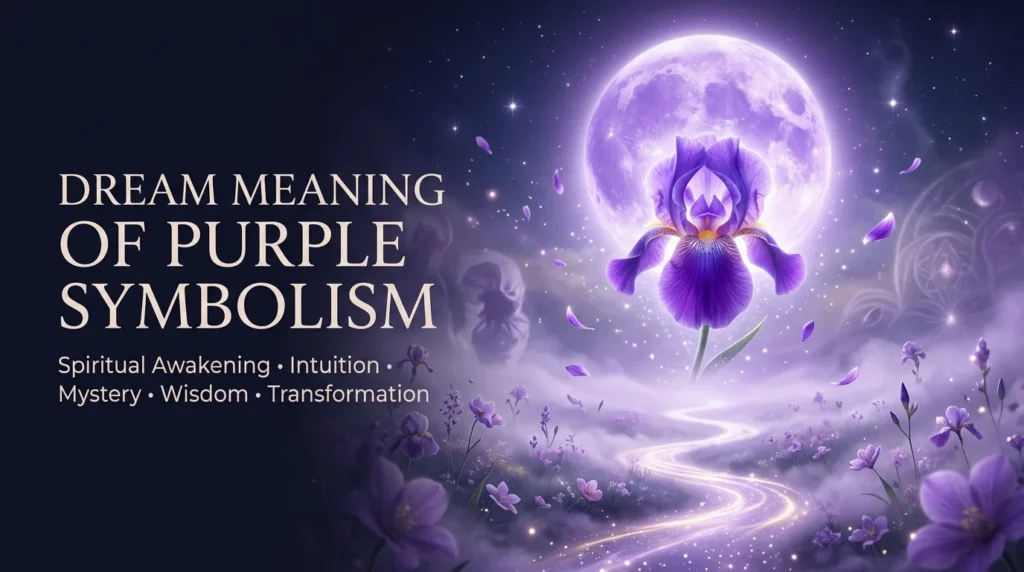
Symbolically, however, purple in a dream may suggest:
- A desire for deeper understanding
- Spiritual curiosity
- Creativity or imagination
- Personal transformation
- Mystery or uncertainty
- A need for emotional balance
- Feelings of confidence or individuality
The emotional atmosphere of the dream is particularly important.
For example, bright, beautiful purple may feel uplifting and inspiring, while dark or disturbing purple could reflect uncertainty, emotional intensity, or something mysterious in waking life.
Modern Meaning of Purple Symbolism
Today, purple symbolism extends beyond royalty and spirituality.
Modern audiences often associate purple with creativity, individuality, luxury, imagination, technology, self-expression, and emotional depth.
Purple is frequently used when a person or brand wants to appear distinctive rather than ordinary.
Purple in Modern Design
Different shades can communicate very different impressions:
- Deep purple: luxury, authority, mystery, sophistication
- Violet: spirituality, imagination, creativity
- Lavender: calmness, softness, elegance
- Lilac: youthfulness, tenderness, freshness
- Magenta-purple: confidence, energy, bold self-expression
This versatility makes purple useful in fashion, interiors, art, branding, celebrations, and personal expression.
What Does Dark Purple Symbolize?
Dark purple commonly symbolizes luxury, power, mystery, ambition, dignity, and sophistication. Its deeper tone can create a dramatic and authoritative impression.
What Does Lavender Symbolize?
Lavender often represents calmness, gentleness, grace, sensitivity, peace, and emotional softness. It generally feels lighter and more peaceful than deep purple.
Is Purple a Spiritual Color?
Yes, purple is widely used as a spiritual color in different traditions. It can symbolize wisdom, contemplation, intuition, spiritual awareness, and transformation, although its meaning varies between cultures and belief systems.
Why Is Purple Associated With Royalty?
Purple became associated with royalty largely because historically valuable purple dyes were difficult and expensive to produce. This scarcity made purple clothing a visible symbol of wealth, status, and power.
What Does Purple Symbolize Emotionally?
Emotionally, purple can represent imagination, depth, sensitivity, mystery, creativity, and individuality. Depending on the shade and context, it may feel peaceful and reflective or dramatic and powerful.
Conclusion
Purple symbolism brings together a fascinating mixture of royalty, spirituality, wisdom, creativity, mystery, and transformation. Its meaning changes across cultures, shades, personal experiences, and contexts, but its distinctive character remains remarkably powerful.
if you encounter purple in nature, art, dreams, clothing, religion, or everyday life, it often invites you to look beyond the obvious and explore something deeper.

I am Simon Michael, an author passionate about exploring symbols, their meanings, and cultural significance. I enjoy making symbolism simple, engaging, and meaningful for curious readers everywhere.