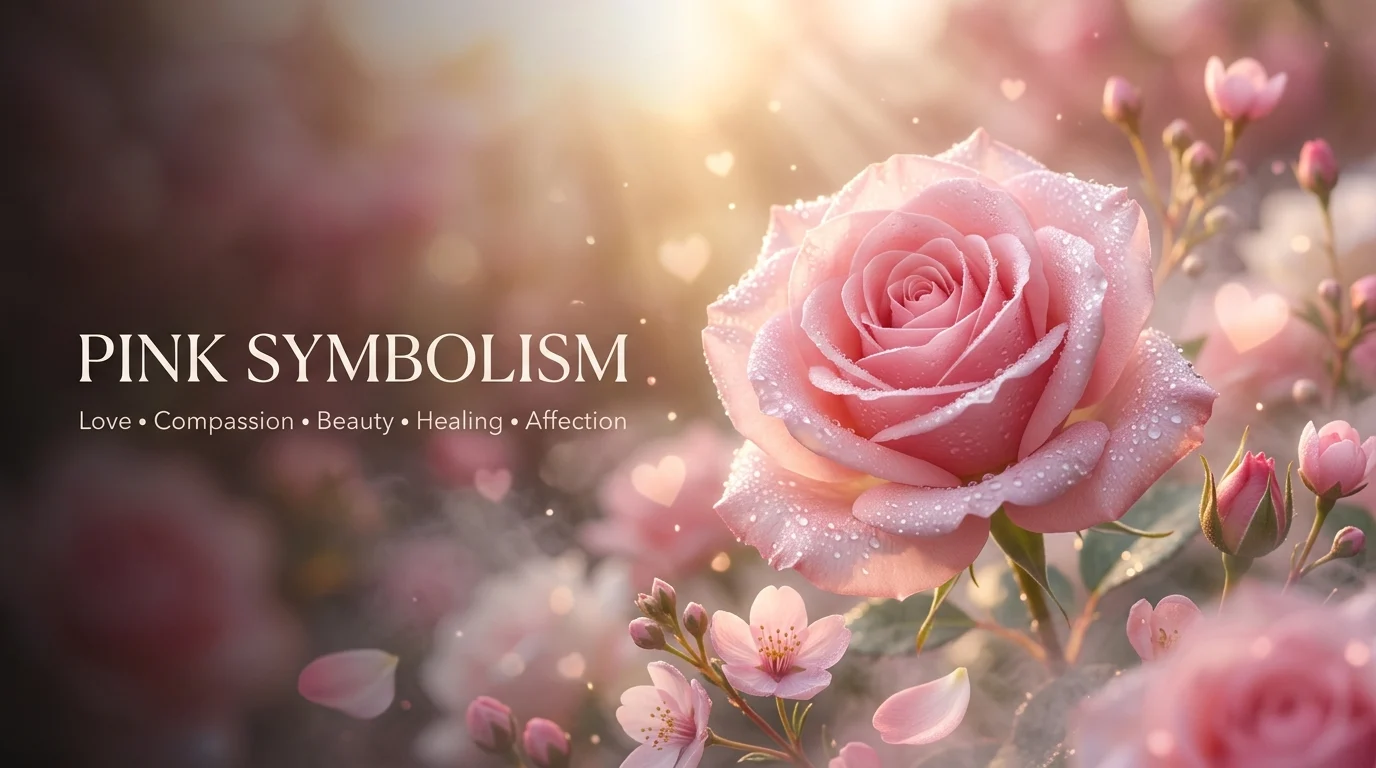
Pink symbolism is often associated with love, tenderness, compassion, innocence, beauty, peace, and emotional warmth. Unlike the intensity of red, pink carries a softer emotional energy that can suggest affection without aggression and strength expressed through gentleness.
The meaning of pink can change depending on its shade, cultural setting, personal experiences, and the object or situation in which it appears. From flowers and clothing to dreams, religious traditions, and modern design, pink has developed a rich symbolic language.
Pink Symbolism Meaning (Clear Definition)
Pink symbolism represents love, affection, compassion, gentleness, innocence, femininity, emotional healing, and kindness. It is commonly connected with the softer side of human emotion and the ability to care for ourselves and others.
Pink is created by combining red with white, which helps explain some of its traditional associations. Red is often linked with passion and desire, while white can represent purity and peace. Pink therefore occupies a middle ground between passionate love and gentle affection.
Common Meanings of Pink
| Pink Symbolism | Common Meaning |
|---|---|
| 💗 Love | Affection, romance, and emotional connection |
| 🌸 Gentleness | Kindness, softness, and sensitivity |
| 🕊️ Peace | Calmness, harmony, and emotional balance |
| 🌷 Compassion | Caring, empathy, and understanding |
| ✨ Innocence | Youthfulness, purity, and sincerity |
| 🌹 Beauty | Grace, elegance, and attraction |
| 💕 Healing | Emotional comfort and nurturing |
The shade also matters. Light pink can suggest innocence and tenderness, while bright pink may communicate confidence, energy, playfulness, and bold self-expression.
What Does Pink Symbolism Represent?
Pink symbolism represents a broad range of emotional and cultural ideas. Its most common associations include:
- Love and affection — especially gentle or caring forms of love.
- Compassion — empathy, understanding, and emotional support.
- Femininity — traditionally associated with feminine identity and beauty, although this association varies across cultures and time periods.
- Innocence — youth, sweetness, and vulnerability.
- Peace and calm — soft pink environments can create an impression of warmth and tranquility.
- Beauty and romance — pink flowers, gifts, and decorations frequently communicate affection.
- Emotional healing — pink can symbolize comfort after emotional difficulty.
- Playfulness — vivid shades can express fun, creativity, and youthful energy.
Pink does not always mean weakness. In many contexts, its symbolism suggests emotional strength, empathy, and the courage to remain gentle in a difficult world.
Spiritual Meaning of Pink Symbolism
Spiritually, pink symbolism is often connected with the heart, unconditional love, compassion, forgiveness, and emotional healing.
Pink can represent a loving energy that encourages people to soften resentment and approach relationships with greater understanding. It may symbolize the process of healing emotional wounds and becoming more open to connection.
In spiritual interpretations, pink may also suggest:
- Unconditional love
- Compassion for others
- Forgiveness
- Inner peace
- Emotional healing
- Self-love
- Tenderness
- Harmony
- Gratitude
- Spiritual comfort
For someone going through a period of emotional change, encountering pink may personally feel like a reminder to treat themselves with patience rather than criticism.
Pink and the Heart
Pink is frequently connected symbolically with the heart and emotional relationships. While different spiritual traditions interpret colors differently, pink commonly evokes the qualities of affection, empathy, acceptance, and nurturing.
Its softer appearance can represent love that is not based solely on passion, but also on care, patience, friendship, and emotional security.
Biblical / Religious Meaning of Pink Symbolism
Pink does not have one universal biblical meaning, and the Bible does not establish a simple color symbolism system in which pink always represents one particular idea.
However, colors associated with pink—particularly red and white—have important symbolism within Christian traditions. Red can be associated with blood, sacrifice, love, and life, while white can symbolize purity, holiness, and righteousness. Because pink combines visual qualities of these colors, some modern Christian interpretations associate it with joy, love, tenderness, hope, and spiritual preparation.
In some Christian traditions, rose or pink-colored vestments and candles are used on particular occasions to signify joy within a season of reflection or preparation. The meaning depends on the denomination and liturgical tradition.
More broadly, religious interpretations of pink may emphasize qualities such as:
- Love
- Compassion
- Joy
- Hope
- Humility
- Gentleness
- Spiritual renewal
It is important to distinguish these traditional practices from claims that pink has one fixed biblical definition.
Pink Symbolism in History and Culture
The cultural meaning of pink has changed significantly over time.
Today, pink is strongly associated with femininity in many societies, but this was not always the case. Historical attitudes toward pink have varied, and its relationship with gender developed gradually through fashion, marketing, social conventions, and popular culture.
During different periods, pink has represented luxury, romance, youth, elegance, innocence, and social identity.


Pink in Different Cultural Contexts
The symbolism of pink is not identical around the world.
In some cultures, pink is strongly connected with romance, femininity, and celebration. In others, particular shades can have associations with spirituality, childhood, beauty, or mourning.
Modern global culture has also expanded pink beyond traditional gender associations. Pink can now communicate confidence, rebellion, creativity, solidarity, and individuality.
This changing meaning demonstrates an important principle of symbolism: a color does not have one permanent meaning. Society continually reshapes the meanings we attach to it.
Pink Symbolism in Literature and Art
Artists and writers often use pink to create emotional contrast.
A soft pink landscape might communicate nostalgia, innocence, romance, or dreamlike beauty. A shocking neon pink may instead suggest rebellion, artificiality, excitement, or modernity.
In literature, pink can be used to describe:
- Romantic feelings
- Childhood memories
- Fragile beauty
- Innocence
- Nostalgia
- Emotional vulnerability
- Sensuality
- Hope
- Transformation
Pink becomes especially powerful when contrasted with another color. Pink and red may intensify romantic symbolism, while pink and black can create a dramatic contrast between softness and darkness.
In visual art, pink flowers, sunsets, fabrics, skin tones, and atmospheric light can evoke tenderness and emotional intimacy.
Dream Meaning of Pink Symbolism
Dreaming of pink may symbolize love, affection, emotional healing, tenderness, innocence, or a desire for greater emotional connection.
The exact interpretation depends on the dream’s context and your personal associations with the color.
Common Pink Dream Interpretations
Dreaming of pink flowers: May symbolize affection, beauty, romance, gratitude, or emotional growth.
Wearing pink clothing: Can represent self-expression, confidence, femininity, softness, or a desire to be emotionally open.
Seeing a bright pink color: May suggest excitement, creativity, playfulness, or strong emotional energy.
Seeing pale pink: Often evokes peace, innocence, comfort, or emotional vulnerability.
Receiving something pink: Could represent affection, appreciation, friendship, or a meaningful emotional connection.
Pink sky or pink light: May symbolize hope, transition, optimism, or a peaceful emotional phase.
Dream symbolism is personal rather than a fixed prediction of the future. The strongest interpretation usually comes from considering what happened in the dream and how you felt when you saw the pink color.
Modern Meaning of Pink Symbolism
In modern society, pink has become one of the most flexible symbolic colors.
It can represent traditional ideas such as romance, beauty, femininity, and tenderness, but it can also communicate confidence, activism, creativity, individuality, and social awareness.
Pink is widely used in branding, fashion, interior design, beauty products, digital media, and popular culture because it can produce very different emotional impressions depending on its shade.
Modern Pink Color Meanings
- Blush pink: Softness, elegance, romance, and calm
- Baby pink: Innocence, sweetness, and youth
- Rose pink: Love, gratitude, beauty, and affection
- Hot pink: Confidence, energy, boldness, and creativity
- Magenta-pink: Individuality, intensity, and artistic expression
- Dusty pink: Nostalgia, sophistication, warmth, and maturity
Modern pink symbolism increasingly challenges the idea that pink belongs exclusively to one gender. People use it to express personal identity, emotional openness, confidence, and creative freedom.
Pink Symbolism and Love
Pink is one of the most recognizable colors of affection.
While red often represents intense passion, pink can communicate a gentler kind of love. It is especially associated with caring relationships, appreciation, friendship, tenderness, and romantic affection.
A pink rose, for example, can convey admiration or gratitude rather than the intense romantic message traditionally associated with a red rose.
This makes pink a powerful symbol of love that emphasizes emotional connection rather than intensity alone.
Pink Symbolism and Emotional Healing
Another important association is emotional healing.
Pink’s soft visual character can represent comfort after sadness, kindness toward oneself, and the gradual rebuilding of emotional trust.
For this reason, pink can symbolize the idea that healing does not always require toughness. Sometimes healing begins with rest, compassion, forgiveness, and allowing yourself to feel.
Pink Symbolism in Nature
Nature provides many examples of pink symbolism through flowers, sunsets, clouds, minerals, birds, and other natural elements.


Pink flowers are particularly powerful symbols because they combine the natural beauty of flowers with the emotional associations of the color itself.
Pink roses commonly evoke affection, admiration, gratitude, and gentle romance. Cherry blossoms can suggest beauty, renewal, and the temporary nature of life, depending on cultural context.
Frequently Asked Questions About Pink Symbolism
What is the main meaning of pink symbolism?
The main meanings of pink symbolism include love, compassion, gentleness, affection, innocence, beauty, and emotional healing.
What does pink symbolize spiritually?
Spiritually, pink often symbolizes unconditional love, compassion, forgiveness, emotional healing, self-love, and inner peace.
What does pink symbolize in dreams?
Pink in dreams can represent affection, romance, emotional healing, innocence, hope, or a desire for greater emotional connection. The meaning depends strongly on the dream’s context and your feelings.
What does pink symbolize in love?
Pink symbolizes gentle affection, admiration, tenderness, romance, friendship, and caring love. It often expresses a softer form of romantic feeling than deep red.
Is pink a symbol of femininity?
Pink has become strongly associated with femininity in many modern cultures, but this association is historically and culturally variable. Today, pink can also represent confidence, creativity, individuality, and emotional expression.
Conclusion
Pink symbolism is ultimately a language of the heart. It can express love without intensity, strength without harshness, and beauty without perfection.
Whether you encounter pink in nature, art, clothing, dreams, spirituality, or everyday life, its message often centers on compassion, affection, hope, and emotional connection. Its greatest symbolic lesson may be that gentleness is not weakness—it can be one of the most meaningful forms of strength.

I am Luna Grace, an author passionate about exploring the meanings, history, and symbolism behind everyday signs. I enjoy sharing thoughtful insights that help readers understand symbols and their deeper significance.