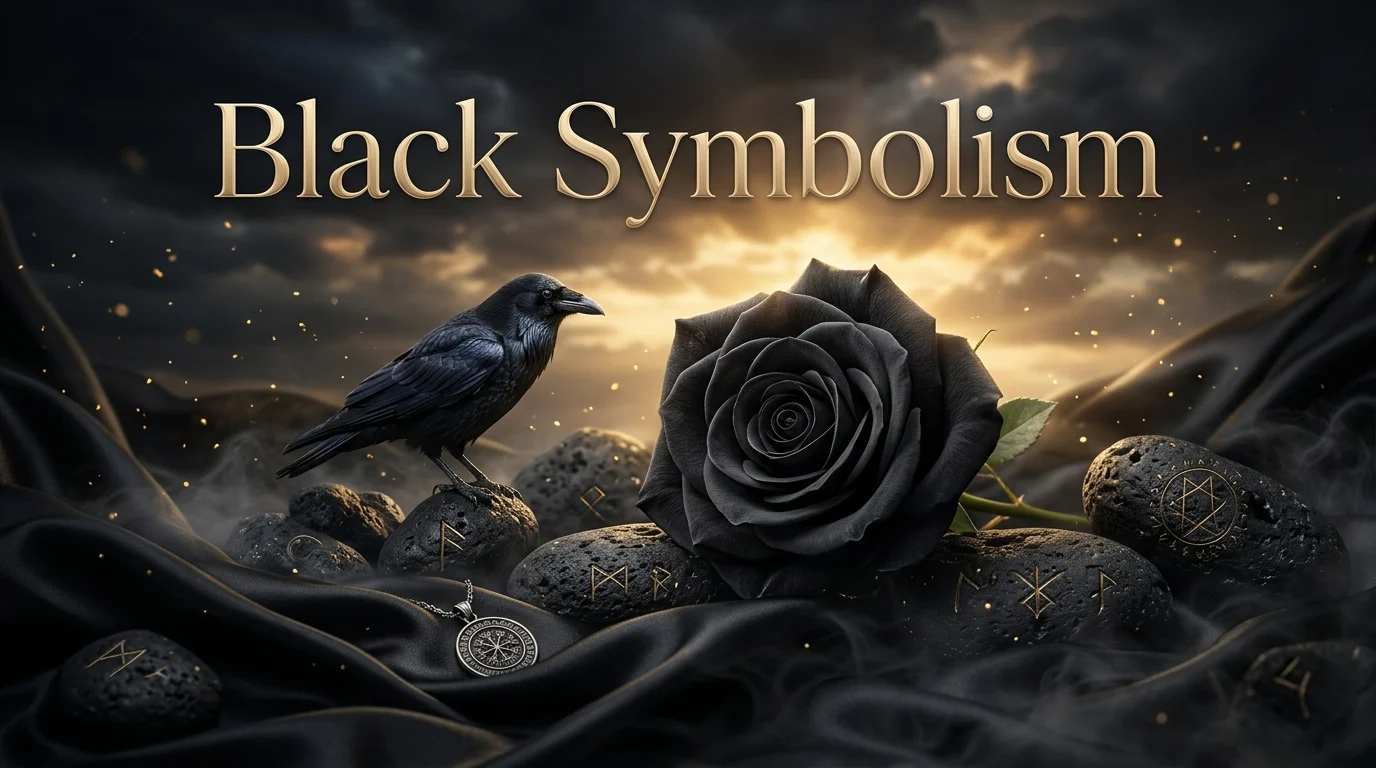
Black symbolism is rich, complex, and often deeply emotional. Across different cultures and periods, black has represented mystery, power, elegance, protection, grief, transformation, authority, and the unknown.
Unlike colors with a single widely accepted meaning, black can communicate opposite ideas depending on the situation. It may symbolize darkness and loss, but it can also represent strength, sophistication, independence, and spiritual depth.
Understanding black symbolism means looking beyond the color itself and considering the culture, context, emotion, and personal experience connected to it.
Black Symbolism Meaning (Clear Definition)
Black symbolism refers to the meanings and ideas people associate with the color black. Common associations include power, mystery, protection, elegance, authority, mourning, secrecy, independence, and transformation.
Black absorbs light rather than reflecting it, which has helped give the color a natural connection with darkness, the hidden, and the unknown. At the same time, its visual simplicity can communicate confidence and sophistication.

Common Symbolic Meanings of Black
| Symbolic Meaning | What It Can Represent |
|---|---|
| Mystery | The unknown, hidden knowledge, and unanswered questions |
| Power | Authority, confidence, strength, and control |
| Protection | Boundaries, defense, and emotional shielding |
| Mourning | Grief, remembrance, loss, and solemnity |
| Elegance | Sophistication, luxury, refinement, and timeless style |
| Transformation | Endings, change, rebirth, and personal growth |
| Independence | Self-reliance, individuality, and freedom |
| Spirituality | The unseen, contemplation, depth, and mystery |
Because symbolism depends heavily on context, black does not automatically mean something negative.
What Does Black Symbolism Represent?
Black can represent several powerful themes, including strength, mystery, authority, protection, grief, and transformation.
1. Mystery and the Unknown
Black is strongly connected with darkness, making it a natural symbol of things that cannot easily be seen or understood.
It can represent hidden truths, secrets, intuition, unexplored possibilities, and the mysteries of life.
2. Power and Authority
Black often communicates strength without requiring bright or dramatic colors. Formal clothing, uniforms, and ceremonial objects frequently use black to create an impression of authority and seriousness.
For this reason, black symbolism can represent confidence, leadership, discipline, and control.
3. Protection and Boundaries
In symbolic traditions, darkness can sometimes represent a protective space away from external attention.
Black may therefore symbolize emotional boundaries, personal privacy, resilience, and the ability to protect oneself from unwanted influences.
4. Mourning and Grief
One of the most familiar meanings of black is mourning. In many societies, black clothing has been associated with funerals, remembrance, and respect for the deceased.
This association gives black a solemn and reflective quality.
5. Elegance and Sophistication
Black is also strongly associated with luxury and refined style. A simple black dress, suit, vehicle, or interior can communicate timeless elegance.
Here, black symbolism moves away from darkness and toward confidence, simplicity, and sophistication.
6. Transformation and New Beginnings
Black can symbolize an ending, but an ending does not necessarily mean destruction.
Sometimes darkness represents the period before change—the quiet stage in which something new is forming. In this sense, black can symbolize transformation, inner growth, and the closing of one chapter before another begins.
Spiritual Meaning of Black Symbolism
The spiritual meaning of black symbolism often relates to mystery, the unseen world, introspection, protection, and transformation.
Black can represent the unknown aspects of existence and the inner journey of discovering what lies beneath the surface.
In spiritual reflection, darkness is not always portrayed as something to fear. It can also represent silence, rest, contemplation, and the space in which personal transformation takes place.
Black as a Symbol of Protection
Some spiritual and cultural traditions associate dark colors with protection and boundaries. Symbolically, black can represent creating distance from harmful influences and maintaining emotional strength.
Black as Inner Reflection
Black can encourage a person to look inward. It may symbolize the shadow side of personality—the fears, doubts, memories, and emotions that people sometimes avoid confronting.
Facing these hidden parts can become an important step toward self-awareness.
Black and Transformation
Black may also represent the symbolic death of an old identity, habit, or phase of life.
This interpretation does not necessarily refer to physical death. Instead, it can describe emotional transformation, personal growth, and leaving behind something that no longer fits.
Biblical / Religious Meaning of Black Symbolism
The meaning of black in religious traditions varies according to scripture, denomination, historical period, and cultural interpretation.
In the Bible, darkness can sometimes be associated with judgment, sorrow, mourning, uncertainty, or the absence of light. However, darkness is not always presented simply as evil, and interpretations should take the specific passage and context into account.
In Christian traditions, black has also become associated with mourning, repentance, humility, and solemnity, particularly in certain religious and liturgical settings.
Other religious and spiritual traditions may interpret black differently. In some contexts, it can symbolize wisdom, mystery, spiritual depth, protection, or the unknowable nature of the divine.
Therefore, there is no single universal religious meaning of black.
Black Symbolism in History and Culture
Throughout history, black has carried different meanings depending on geography, social customs, and historical circumstances.
In some societies, black clothing became closely associated with mourning and formal occasions. In other settings, it represented social status, authority, or religious devotion.
During different periods of European history, dark clothing could communicate seriousness, modesty, wealth, or social position. Black dyes and fabrics were sometimes expensive or difficult to produce consistently, giving certain forms of black clothing an association with status.
In modern Western culture, black is strongly connected with funerals and mourning, but it is equally connected with fashion, professionalism, luxury, and individuality.
Cultural context matters enormously. A symbol that represents grief in one society may represent celebration, power, or spiritual protection in another.
Black Symbolism in Literature and Art
Artists and writers have long used black to communicate complex emotions and ideas.
In literature, black may symbolize death, fear, secrecy, loneliness, rebellion, mystery, or the unknown. It can create an atmosphere before a reader even understands what is happening.
In visual art, black provides contrast and depth. Artists may use it to emphasize light, create dramatic shadows, or draw attention to particular forms.
Black can also represent emotional intensity. A predominantly dark artwork may evoke solitude, grief, uncertainty, or contemplation, while a strong contrast between black and white can suggest opposing forces such as light and darkness, truth and uncertainty, or life and death.
Modern artists often challenge traditional interpretations by using black as a symbol of identity, empowerment, resistance, beauty, and individuality.
Dream Meaning of Black Symbolism
Dreams involving the color black can have many interpretations, and there is no universal dream dictionary that can determine exactly what a dream means.
The emotional atmosphere of the dream is often more useful than the color itself.
Common Interpretations of Black in Dreams
- Black clothing: May reflect seriousness, independence, privacy, mourning, or a desire for control.
- A black animal: Could symbolize instinct, mystery, fear, protection, or an unknown situation.
- A dark room: May represent uncertainty, hidden emotions, or something you do not yet understand.
- Black sky: Can suggest emotional heaviness, uncertainty, or a major transition.
- Black objects: Their meaning may depend on what the object represents personally.
- Black and white together: May symbolize contrast, balance, opposing choices, or conflicting emotions.
The best interpretation usually comes from asking: How did the blackness make you feel?
Fear may point toward uncertainty, while calmness could suggest acceptance, protection, or inner reflection.
Modern Meaning of Black Symbolism
Today, black has perhaps one of the broadest symbolic ranges of any color.
In fashion, it can represent elegance, confidence, minimalism, and sophistication. In branding and design, black is often used to create a sense of authority, luxury, seriousness, or modernity.
Black clothing can also communicate individuality and independence. Someone may choose black because it feels understated, powerful, practical, or expressive.
In social and cultural movements, black has sometimes become a visual language for identity, resistance, solidarity, and empowerment.
This makes modern black symbolism especially interesting: it can represent both restraint and rebellion, simplicity and power, grief and beauty.
Is Black a Positive or Negative Symbol?
Black can be either positive or negative depending on context.
Negative associations may include death, fear, sadness, isolation, secrecy, and darkness. Positive associations can include strength, elegance, protection, independence, sophistication, and transformation.
The surrounding circumstances determine which meaning is most appropriate.
What Does Wearing Black Symbolize?
Wearing black can symbolize many different things, including confidence, sophistication, independence, seriousness, privacy, or personal style.
For some people, black clothing feels powerful and professional. For others, it provides comfort, simplicity, or a sense of emotional distance.
There is no single psychological meaning behind wearing black because personal intention matters.
What Does a Black Flower Symbolize?
Black flowers are often associated with mystery, transformation, farewell, rebirth, individuality, and unconventional beauty.
Naturally occurring truly black flowers are rare, which contributes to their unusual and mysterious appearance. In floral symbolism, very dark flowers can represent the ending of one phase and the beginning of another.
What Does Black Symbolize Spiritually?
Spiritually, black can symbolize the unknown, introspection, protection, hidden wisdom, transformation, and the deeper parts of the human experience.
Rather than representing only darkness, it can also suggest the quiet space where reflection and change occur.
FAQs About Black Symbolism
What is the main meaning of black symbolism?
Black commonly symbolizes mystery, power, protection, mourning, elegance, authority, and transformation. Its meaning changes according to cultural and personal context.
Is black a symbol of strength?
Yes. Black can symbolize strength, authority, confidence, independence, and resilience, particularly when used in clothing, design, or visual symbolism.
What does black symbolize spiritually?
Spiritually, black may represent mystery, introspection, protection, hidden knowledge, transformation, and the unknown.
Why is black associated with mourning?
Black became associated with mourning in many cultures because its subdued appearance communicates solemnity, grief, respect, and remembrance.
Is black symbolism always negative?
No. Black has both positive and negative associations. Alongside grief and darkness, it can represent elegance, protection, power, independence, sophistication, and personal transformation.
Conclusion
Black symbolism is powerful because it refuses to have just one meaning. It can represent darkness and mystery, but also strength, elegance, protection, independence, and transformation.
Whether seen in clothing, art, dreams, spirituality, religion, or everyday life, black often invites deeper reflection. Its message depends not only on the color itself, but on the story, emotion, and context surrounding it.

I am Luna Grace, an author passionate about exploring the meanings, history, and symbolism behind everyday signs. I enjoy sharing thoughtful insights that help readers understand symbols and their deeper significance.