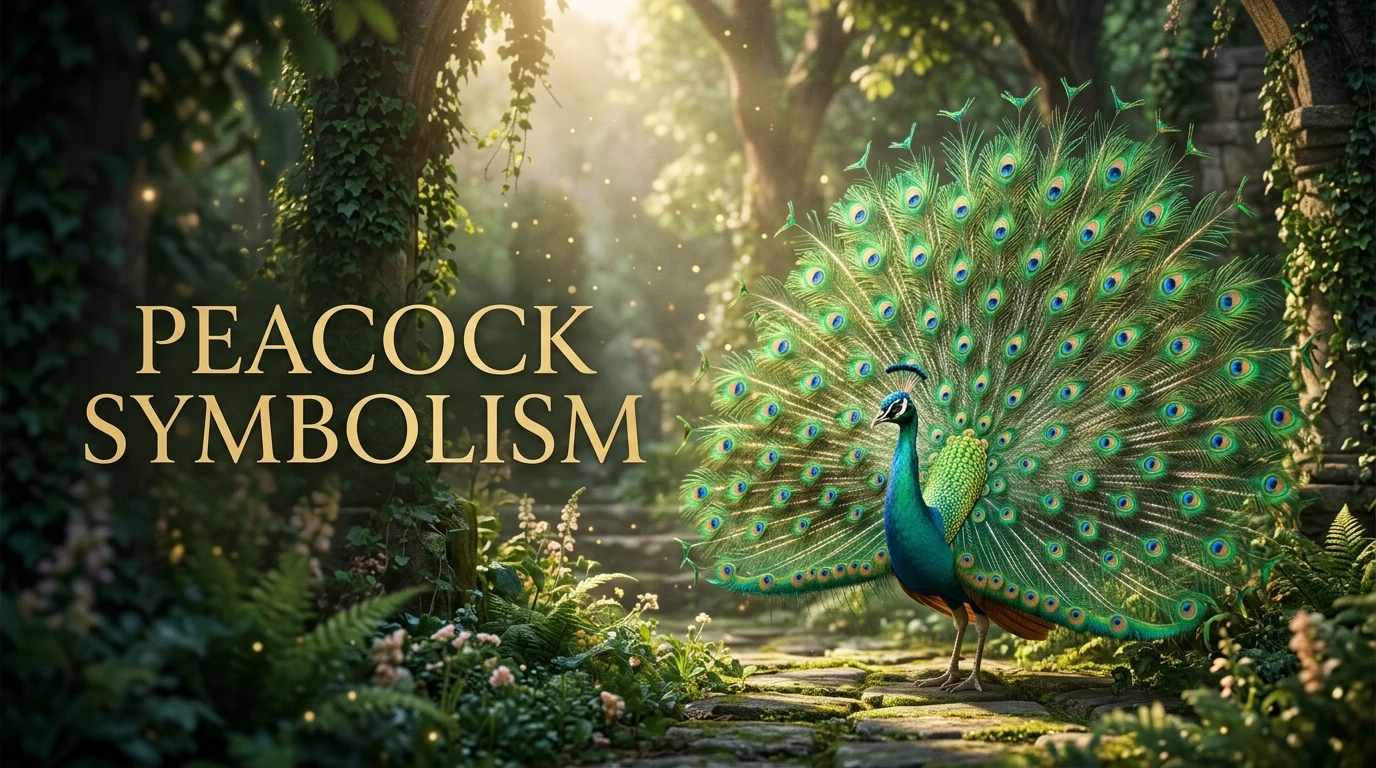
Peacock symbolism is deeply connected to beauty, confidence, pride, renewal, wisdom, and spiritual awakening. With its brilliant feathers and striking appearance, the peacock has fascinated people for centuries, appearing in ancient myths, religious traditions, royal imagery, and modern art.
The peacock is more than a symbol of physical beauty. Its colorful feathers can represent self-expression, individuality, and the courage to be seen. In different cultures, the bird also carries meanings of immortality, protection, prosperity, and spiritual insight.
Understanding peacock symbolism can help you explore what this remarkable bird represents in nature, spirituality, dreams, history, and everyday life.
Peacock Symbolism Meaning (Clear Definition)
Peacock symbolism refers to the meanings associated with the peacock’s colorful feathers, distinctive appearance, courtship display, and presence in cultural and spiritual traditions.
The peacock commonly symbolizes:
- Beauty: Appreciating elegance, color, and individuality.
- Confidence: Expressing yourself without hiding your strengths.
- Pride: Recognizing personal achievements while remaining humble.
- Renewal: Embracing change, growth, and new beginnings.
- Wisdom: Seeing beyond appearances and seeking deeper understanding.
- Immortality: Representing eternal life and spiritual continuity in some traditions.
- Prosperity: Associating beauty and abundance with good fortune.
The meaning depends on the context. A peacock displaying its feathers may suggest confidence and self-expression, while a peacock appearing in a religious artwork may communicate a more specific spiritual or cultural message.
What Does Peacock Symbolism Represent?
Peacock symbolism represents several interconnected ideas, especially the relationship between outward beauty and inner strength.

1. Beauty and Elegance
The peacock is widely admired for its iridescent blue, green, and bronze feathers. Its appearance makes it a natural symbol of elegance, attraction, and artistic beauty.
In symbolic interpretations, the peacock reminds us that beauty can be a form of expression rather than simply something to admire.
2. Confidence and Self-Expression
A peacock spreading its tail is an unmistakable image of visibility. It can symbolize the confidence to show your personality, talents, and individuality.
This meaning is particularly relevant when you are learning to express yourself instead of constantly comparing yourself with others.
3. Pride and Self-Respect
Peacocks are associated with pride because of their impressive appearance and dramatic displays.
Positive pride can represent self-respect, dignity, and satisfaction in your achievements. However, the same symbol can also warn against vanity, arrogance, or becoming overly concerned with appearances.
4. Renewal and Rebirth
Peacocks naturally replace their feathers through molting. This process can inspire symbolic associations with renewal, personal development, and letting go of the past.
The bird can therefore represent the possibility of beginning again and allowing yourself to grow into a new version of yourself.
5. Wisdom and Awareness
The eye-like patterns on peacock tail feathers have inspired associations with observation, awareness, and insight.
In symbolic interpretations, these patterns may represent the ability to notice details, understand different perspectives, and develop a deeper awareness of life.
6. Prosperity and Good Fortune
In some cultural traditions, peacocks are connected with royalty, abundance, and good fortune.
Their colorful appearance and association with luxury make them an enduring symbol of wealth, celebration, and refinement.
Spiritual Meaning of Peacock Symbolism
Spiritually, peacock symbolism is often associated with transformation, divine beauty, protection, and the development of inner awareness.

Peacock as a Symbol of Spiritual Awakening
The peacock’s striking appearance can represent the discovery of beauty and meaning in everyday life.
Its symbolism may encourage you to become more aware of your thoughts, actions, and surroundings. Rather than looking only at external appearances, you can use the bird as a reminder to explore your inner values.
Peacock Feathers and Protection
Peacock feathers are used decoratively and symbolically in different traditions. Their eye-like markings have sometimes been interpreted as representations of watchfulness or protection.
In spiritual interpretations, a peacock feather may serve as a reminder to remain mindful, protect your peace, and approach life’s challenges with awareness.
These are symbolic beliefs, not evidence that feathers provide supernatural protection.
Peacock and Personal Transformation
The peacock’s association with renewal makes it a meaningful symbol of personal transformation.
It can represent moving beyond old habits, learning from difficult experiences, and developing the confidence to embrace change.
Its symbolism offers a simple message: growth does not require you to abandon your individuality.
Peacock and Inner Beauty
The bird’s extraordinary appearance is often connected with the idea of revealing your inner qualities.
In this interpretation, true beauty involves kindness, integrity, creativity, and confidence rather than physical appearance alone.
Biblical / Religious Meaning of Peacock Symbolism
Peacocks have different meanings across religious and spiritual traditions. Their symbolism should be understood within the context of each tradition rather than treated as universal.
Peacock Symbolism in Christianity
In Christian art, the peacock has historically been associated with immortality, resurrection, and eternal life.
One explanation involves ancient beliefs that peacock flesh did not decay, a belief that contributed to the bird’s association with immortality in historical symbolism. The peacock’s seasonal renewal of feathers also made it a suitable image for spiritual renewal.
Peacocks appear in some early Christian decorative art, including mosaics and church imagery, where their beauty could communicate ideas about paradise and eternal life.
However, the peacock is not a central symbol explicitly explained throughout the Bible. Its Christian meaning largely developed through historical interpretation and artistic tradition.
Peacock Symbolism in Hinduism
In Hindu traditions, the peacock has important associations with divine figures.
The bird is especially associated with Kartikeya, also known as Murugan or Skanda, who is often depicted riding a peacock. In this context, the peacock is connected with divine power, courage, and the overcoming of negative forces.
Peacocks are also associated with Krishna, who is frequently represented wearing a peacock feather in his crown.
The feather can evoke beauty, divine love, and the joyful character of Krishna’s imagery.
Peacock Symbolism in Buddhism
In some Buddhist traditions and artistic interpretations, peacocks are associated with wisdom and the transformation of negative qualities.
Their symbolism can be connected with the idea of turning difficult experiences into opportunities for understanding and spiritual growth.
The precise meaning varies across Buddhist cultures, artworks, and teachings.
Peacock Symbolism in History and Culture
Throughout history, peacocks have been admired for their unusual appearance and have acquired meanings connected with royalty, luxury, spirituality, and artistic expression.

Peacock Symbolism in Ancient Traditions
In ancient Greek mythology, the peacock was associated with Hera, the queen of the gods.
According to a familiar myth, the eyes on the peacock’s feathers were connected with Argus, a many-eyed guardian. This story helped establish associations between the peacock’s feather patterns and watchfulness.
The bird subsequently became a recognizable motif in classical and later European art.
Peacock Symbolism in Indian Culture
The Indian peacock has a particularly important cultural presence.
The Indian peafowl is India’s national bird, and the species is celebrated for its striking appearance and place in the country’s natural and cultural heritage.
Peacocks appear in Indian textiles, paintings, architecture, decorative arts, and religious imagery. They can represent beauty, celebration, grace, and divine association, depending on the context.
Peacock Symbolism in Royalty
Peacocks have long been used in royal and aristocratic decoration.
Their elaborate feathers, brilliant colors, and association with luxury made them suitable motifs for palaces, textiles, jewelry, and ceremonial objects.
In royal imagery, a peacock can communicate prestige, dignity, wealth, and refined taste.
Peacock Symbolism in Persian and Other Artistic Traditions
Peacocks appear in Persian-inspired decorative arts and in a range of regional artistic traditions.
Their symmetrical feather displays and brilliant colors make them especially suited to intricate patterns, garden imagery, and representations of paradise.
Across these traditions, the bird can convey beauty and abundance, although the meanings are not identical everywhere.
Peacock Symbolism in Literature and Art
In literature and art, the peacock is a versatile symbol because its appearance can suggest both positive qualities and human weaknesses.
The Peacock as a Symbol of Beauty
Artists frequently use the peacock to represent elegance, visual richness, and the wonders of the natural world.
Its colorful feathers offer a striking contrast with ordinary surroundings, making it an effective subject in paintings, poetry, decorative designs, and photography.
The Peacock as a Symbol of Vanity
In fables and moral writing, the peacock can represent excessive pride or concern with appearance.
Its beautiful feathers may be contrasted with qualities such as humility, practical wisdom, or kindness.
This interpretation creates a useful distinction between healthy self-confidence and vanity.
The Peacock as a Symbol of Paradise
In some religious and decorative artwork, peacocks appear in gardens and lush landscapes associated with paradise.
Their colorful feathers and graceful presence help communicate ideas of abundance, harmony, and spiritual beauty.
The Peacock in Modern Visual Art
Contemporary artists and designers often use peacock imagery to explore identity, individuality, glamour, and self-expression.
The bird’s dramatic shape and distinctive colors make it suitable for fashion, illustration, interior decoration, and symbolic branding.
Dream Meaning of Peacock Symbolism
Dreaming of a peacock can be interpreted in different ways depending on the dream’s emotional atmosphere, the bird’s behavior, and your personal associations.
Dream meanings are subjective and are not scientifically established predictions.
|
Peacock dream
|
Possible symbolic interpretation
|
| — | — |
|
A peacock spreading its feathers
|
Confidence, visibility, self-expression
|
|
A colorful peacock
|
Creativity, beauty, individuality
|
|
A white peacock
|
Peace, purity, spiritual reflection
|
|
A peacock feather
|
Awareness, protection, personal meaning
|
|
A peacock walking calmly
|
Dignity, patience, self-assurance
|
|
A peacock chasing you
|
Anxiety about attention or social expectations
|
|
A peacock losing feathers
|
Change, vulnerability, renewal
|
|
A peacock in a garden
|
Growth, harmony, appreciation of beauty
|
Dreaming of a Peacock Spreading Its Feathers
A peacock displaying its feathers may symbolize a desire to be recognized or appreciated.
It could also reflect growing confidence in your abilities or a wish to express your personality more openly.
Dreaming of a White Peacock
A white peacock may evoke peace, purity, spiritual reflection, or a desire for a fresh start.
Its meaning depends on your personal feelings about the bird and the dream’s surrounding events.
Dreaming of Peacock Feathers
Peacock feathers may symbolize beauty, attention, awareness, or something meaningful that you want to preserve.
Consider whether the feather appeared as a gift, something you discovered, or something you lost.
Dreaming of a Peacock Chasing You
A chasing peacock might represent discomfort with attention, pressure to maintain an image, or concerns about pride and social expectations.
The dream may offer an opportunity to reflect on situations in which you feel watched or judged.
Modern Meaning of Peacock Symbolism
Today, peacock symbolism is especially relevant to individuality, creativity, confidence, and the freedom to express yourself.
Peacock Symbolism in Fashion
Peacock colors and feather patterns are frequently used in fashion and accessories.
Their vivid appearance can suggest glamour, creativity, confidence, and a willingness to stand out.
In clothing and design, peacock imagery often communicates a bold visual identity.
Peacock Symbolism in Personal Growth
As a personal symbol, the peacock can remind you to recognize your strengths without measuring your worth entirely through other people’s opinions.
It can represent becoming comfortable with your individuality and developing the confidence to share your talents.
Peacock Symbolism in Tattoos
Peacock tattoos can communicate different meanings depending on their design and the wearer’s personal intentions.
Common interpretations include:
- Confidence and self-expression.
- Beauty and elegance.
- Spiritual awareness.
- Renewal and transformation.
- Pride and personal achievement.
- Prosperity and good fortune.
A peacock feather tattoo may emphasize awareness, individuality, or a personal connection to a particular cultural or spiritual tradition.
Peacock Symbolism in Relationships
In relationships, the peacock can symbolize attraction, admiration, romance, and the desire to be appreciated.
It can also suggest the importance of balancing personal confidence with humility and genuine emotional connection.
The symbol may encourage people to appreciate one another’s individuality rather than expecting them to fit a particular image.
7 Key Symbolic Meanings of the Peacock

1. Beauty
Appreciating elegance, creativity, and the richness of individuality.

2. Confidence
Having the courage to express your personality and abilities.

3. Wisdom
Seeking insight, awareness, and a deeper understanding of life.
4. Renewal
Embracing change and making room for personal growth.

5. Prosperity
Representing abundance, luxury, and good fortune in some traditions.

6. Dignity
Recognizing your worth while respecting the value of others.

7. Spirituality
Connecting beauty, renewal, and awareness with deeper meaning.
Frequently Asked Questions
1. What does a peacock symbolize spiritually?
A peacock commonly symbolizes spiritual awakening, renewal, beauty, and awareness. In particular traditions, it can also represent protection, immortality, or divine association.
2. Is a peacock a symbol of good luck?
In some cultural interpretations, peacocks are associated with prosperity, abundance, and good fortune. However, beliefs about luck vary by culture and personal tradition.
3. What does a peacock feather symbolize?
A peacock feather can symbolize beauty, confidence, awareness, and spiritual meaning. In Hindu traditions, Krishna’s peacock feather is particularly associated with divine beauty and love.
4. What does a peacock symbolize in Christianity?
In historical Christian art, the peacock can symbolize immortality, resurrection, paradise, and eternal life. These meanings developed through artistic and cultural traditions rather than being a central biblical teaching.
5. What does it mean when you see a peacock?
Symbolically, seeing a peacock may remind you of confidence, individuality, beauty, or personal transformation. The meaning you attach to the experience depends on your beliefs, circumstances, and personal associations.
Conclusion
Peacock symbolism brings together beauty, confidence, wisdom, renewal, and spiritual significance. From ancient mythology and religious art to modern fashion and personal expression, the peacock continues to represent the power of individuality and the attraction of transformation.
Its most enduring lesson is that you can recognize your own beauty and strengths while remaining humble, thoughtful, and open to growth.

I am Simon Michael, an author passionate about exploring symbols, their meanings, and cultural significance. I enjoy making symbolism simple, engaging, and meaningful for curious readers everywhere.