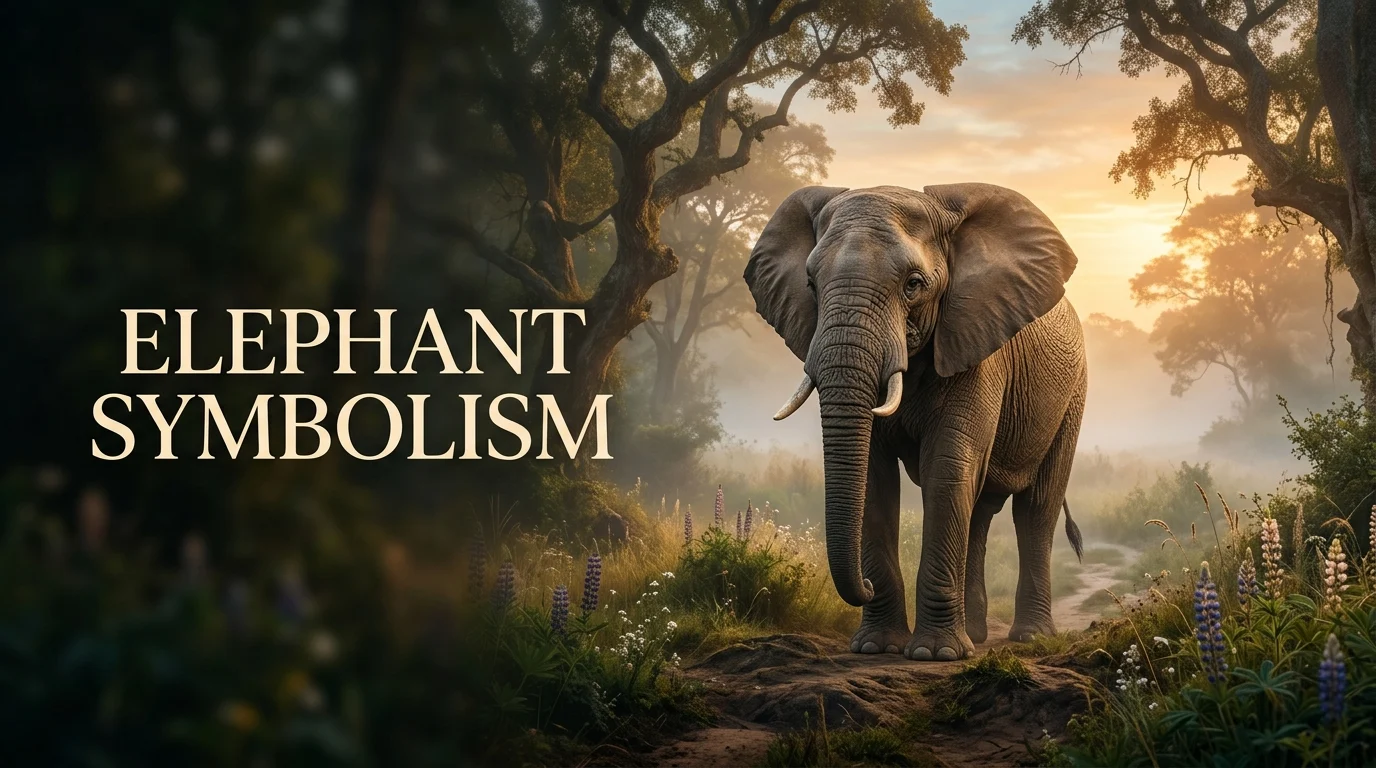
Elephants have fascinated people for thousands of years because of their remarkable strength, intelligence, memory, and close family bonds. Elephant symbolism often represents wisdom, strength, patience, loyalty, protection, prosperity, and emotional resilience. Across cultures, the elephant can symbolize both physical power and a calm, thoughtful approach to life.
Whether you encounter an elephant in a dream, artwork, spiritual practice, or everyday life, its symbolism often points toward inner strength and the importance of moving forward with patience.
Elephant Symbolism Meaning (Clear Definition)
Elephant symbolism represents strength, wisdom, patience, loyalty, protection, family, prosperity, and perseverance. Because elephants are powerful yet generally peaceful animals, they are often seen as symbols of controlled strength and gentle confidence.
The most common meanings associated with elephants include:
| Symbolic Meaning | What It Represents |
|---|---|
| Strength | Inner power and resilience |
| Wisdom | Experience, knowledge, and thoughtful decisions |
| Patience | Moving through life without unnecessary haste |
| Loyalty | Strong family and social bonds |
| Protection | Security and guardianship |
| Prosperity | Abundance, success, and good fortune |
| Memory | Remembering experiences and lessons |
| Perseverance | Continuing despite difficulties |
At its deepest level, elephant symbolism suggests that true strength does not always need to be loud. Sometimes strength is simply having the patience to keep going.
What Does Elephant Symbolism Represent?
Elephants represent several powerful qualities that make them meaningful symbols around the world.
Strength and Power
An elephant’s enormous physical strength naturally connects it with power and endurance. Symbolically, this strength can represent the ability to overcome obstacles without being controlled by fear.
Wisdom and Intelligence
Elephants are widely admired for their intelligence and complex social behavior. Because of this, elephant symbolism is often connected with wisdom, learning, experience, and thoughtful decision-making.
Patience
Elephants move with deliberate confidence rather than unnecessary urgency. Their symbolism can encourage people to slow down, remain calm, and trust the process.
Family and Loyalty
Elephant herds have strong social relationships, and females commonly maintain close family groups. This makes the elephant a powerful symbol of family, loyalty, community, and emotional connection.
Protection
The protective nature of elephants toward members of their herd has made them symbols of guardianship. Seeing an elephant symbolically may represent a desire to protect the people or values that matter most.
Prosperity and Good Fortune
In many traditions, elephants are associated with abundance, success, and good fortune. Elephant imagery is therefore commonly used in homes, businesses, celebrations, and spiritual objects.
Spiritual Meaning of Elephant Symbolism
Spiritually, the elephant often represents grounded strength, wisdom, protection, patience, and spiritual growth.
An elephant can serve as a reminder to remain steady when life becomes uncertain. Its enormous physical presence combined with its calm nature creates a meaningful contrast: you can be powerful without being aggressive.
Elephant symbolism may also represent:
- Inner strength during difficult periods
- Patience when results take time
- Wisdom gained through life experience
- Protection from emotional or spiritual challenges
- Grounding and connection with the present moment
- Family bonds and emotional support
- Perseverance through major life changes
For some people, encountering elephant imagery at an important moment feels like a reminder to trust their own strength and continue moving forward.
Biblical / Religious Meaning of Elephant Symbolism
Elephants are not among the central animals of the Bible, so there is no single universal biblical meaning of the elephant.
However, elephants have important symbolic and religious associations in several traditions. In Hinduism, Ganesha, the elephant-headed deity, is associated with wisdom, learning, prosperity, and the removal of obstacles. Ganesha
In Buddhist traditions, elephants can symbolize mental strength, patience, stability, and spiritual discipline. A calm and trained elephant has sometimes been used as an analogy for a disciplined mind.
These traditions demonstrate why elephant imagery can carry meanings of wisdom, spiritual strength, protection, and overcoming obstacles.
Elephant Symbolism in History and Culture
Elephants have played important roles in human history for centuries.
In South and Southeast Asia, elephants have been associated with royalty, religion, ceremonial traditions, and political power. Their size and strength made them symbols of authority and prestige.
In parts of Africa, elephants have become powerful cultural symbols connected with nature, community, survival, and the importance of protecting wildlife.
Across different cultures, elephant imagery has appeared in:
- Religious sculptures and temples
- Royal ceremonies
- Architecture and decorative art
- Jewelry and household objects
- Traditional paintings
- Cultural festivals
- Folklore and storytelling
Although interpretations differ, recurring themes include strength, wisdom, protection, prosperity, and community.
Elephant Symbolism in Literature and Art
Elephants frequently appear in literature and visual art as symbols of memory, wisdom, strength, and emotional depth.
Because elephants are associated with remarkable memory, writers may use them to explore themes of the past, remembrance, grief, family history, or experience.
In art, an elephant can communicate different ideas depending on its surroundings. An elephant surrounded by flowers may suggest peace and prosperity, while an elephant walking through a wilderness landscape may emphasize endurance and freedom.
Artists may also use elephants to contrast physical power with gentleness. This makes the animal especially effective when expressing the idea that strength and compassion can exist together.
Dream Meaning of Elephant Symbolism
Dreaming about an elephant may symbolize strength, wisdom, family, protection, or a major challenge that requires patience.
The meaning can change depending on what happens in the dream.
- A peaceful elephant: Inner stability, wisdom, or emotional strength
- A charging elephant: Feeling overwhelmed by a powerful situation
- A baby elephant: New beginnings, vulnerability, or family development
- A herd of elephants: Family, community, and belonging
- A friendly elephant: Support, protection, and trust
- An injured elephant: Emotional pain, vulnerability, or concern for someone
- Riding an elephant: Confidence, control, achievement, or leadership
- A white elephant: Spiritual significance, rarity, purity, or good fortune
Dream symbolism is personal rather than absolute. Your feelings during the dream and your current circumstances can be more meaningful than any fixed interpretation.
Modern Meaning of Elephant Symbolism
Today, elephant symbolism remains popular because its qualities connect strongly with modern life.
The elephant can represent the ability to remain calm under pressure, protect meaningful relationships, and learn from difficult experiences.
It is also widely associated with mindfulness, emotional intelligence, family values, environmental awareness, and resilience.
For someone going through a challenging period, the elephant can serve as a simple reminder:
You do not have to rush to prove your strength. Quiet persistence can be powerful.
Elephant Symbolism in Everyday Life
People may choose elephant imagery for:
- Home decorations
- Jewelry and tattoos
- Artwork
- Gifts
- Personal spiritual symbols
- Business and leadership imagery
- Wildlife and conservation themes
The meaning depends on personal context, but strength, wisdom, protection, and good fortune remain among the most common interpretations.
Frequently Asked Questions About Elephant Symbolism
What is the main meaning of elephant symbolism?
The main meaning of elephant symbolism is strength, wisdom, patience, loyalty, protection, and perseverance. It often represents powerful energy guided by calmness and experience.
What does an elephant symbolize spiritually?
Spiritually, an elephant can symbolize inner strength, grounding, wisdom, protection, patience, and overcoming obstacles. Its calm power can represent emotional and spiritual stability.
Is seeing an elephant a sign of good luck?
In several cultural traditions, elephants are associated with prosperity, abundance, protection, and good fortune. However, whether an elephant represents luck personally depends on the context and cultural tradition.
What does an elephant symbolize in dreams?
An elephant in a dream may represent strength, wisdom, family, protection, or an important challenge. The elephant’s behavior and your emotions in the dream can change the interpretation.
What does a baby elephant symbolize?
A baby elephant often symbolizes innocence, new beginnings, vulnerability, growth, and strong family connections. It can also represent something in your life that needs patience and protection.
Conclusion
Elephant symbolism is ultimately a powerful reminder of strength guided by wisdom. From ancient traditions to modern life, elephants represent patience, loyalty, protection, prosperity, family, and resilience.
Their message is simple but meaningful: move forward with confidence, protect what matters, learn from the past, and never underestimate the power of quiet strength.

I am Simon Michael, an author passionate about exploring symbols, their meanings, and cultural significance. I enjoy making symbolism simple, engaging, and meaningful for curious readers everywhere.