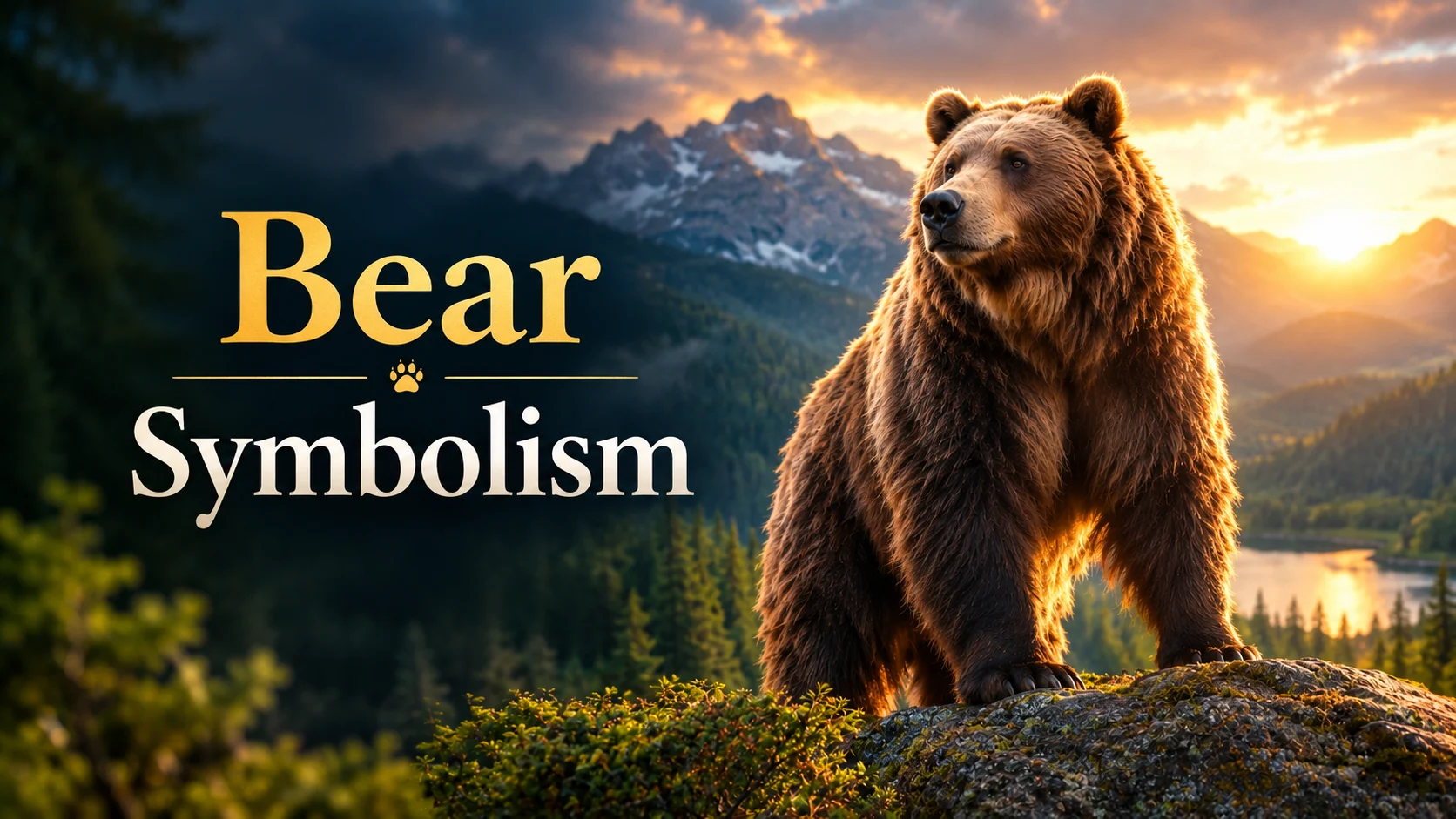
Bear symbolism is deeply connected to strength, courage, protection, independence, and wisdom. Across different cultures and spiritual traditions, the bear represents the power to overcome challenges, the importance of trusting your instincts, and the ability to find balance between action and rest. Its powerful presence and solitary nature make it a meaningful symbol of resilience, confidence, and personal transformation.
Whether you encounter a bear in nature, dream about one, or feel drawn to its symbolism, understanding its different meanings can offer a fresh perspective on your own life.
Bear Symbolism Meaning (Clear Definition)
Bear symbolism represents physical strength, inner courage, protection, independence, confidence, and renewal. As an hero associated with both power and peaceful solitude, the bear symbolizes knowing when to stand your ground and when to step back and recover.
The bear’s behavior offers several symbolic interpretations:
- Strength: The ability to face difficulties and overcome obstacles.
- Courage: Confidence to confront uncertainty and fear.
- Protection: Defending loved ones, personal boundaries, and what matters.
- Independence: Trusting yourself and following your own path.
- Wisdom: Learning through experience and observation.
- Renewal: Rest, recovery, and preparing for a new chapter.
The meaning of a bear can change depending on its appearance, behavior, cultural context, and the circumstances in which it is encountered.
What Does Bear Symbolism Represent?
Bears represent a combination of physical power and emotional depth. Their symbolism is not limited to aggression or dominance; it also includes patience, nurturing, solitude, and self-awareness.
Here are seven important meanings associated with bears.
1. Strength and Resilience
The bear is widely recognized as a symbol of strength. Its powerful body and ability to navigate challenging environments make it an image of resilience and determination.
Symbolically, a bear can represent the strength you discover when life becomes difficult. It reminds you that setbacks do not have to define your future.
2. Courage and Confidence
A bear can symbolize the courage to face situations that seem intimidating. Its commanding presence is often associated with confidence and standing firm in your decisions.
In everyday life, this meaning can encourage you to speak honestly, establish boundaries, and approach difficult responsibilities with determination.
3. Protection and Motherhood
A mother bear caring for her cubs is a familiar symbol of parental protection and devotion.
Bear symbolism can therefore represent looking after family, defending vulnerable people, and creating a safe environment for those you love.
It can also remind you that protection includes emotional support, patience, and dependable care.
4. Independence and Self-Reliance
Many bears spend significant periods alone, making them natural symbols of independence and self-reliance.
In symbolic interpretations, the bear encourages you to become comfortable with your own company, trust your judgment, and make decisions without constantly seeking approval.
Independence, however, does not mean refusing help. It can also mean knowing when to rely on others.
5. Wisdom and Intuition
Bears are often associated with awareness and instinct. Their ability to respond to their surroundings has inspired interpretations involving practical wisdom and trusting your inner judgment.
Bear symbolism can encourage you to observe carefully, recognize patterns, and avoid rushing into decisions.
6. Solitude and Inner Reflection
A bear’s solitary behavior can represent the value of spending time alone.
Solitude creates opportunities to reflect, understand your emotions, and reconnect with your priorities. The bear reminds us that stepping away from constant activity can be an important part of personal growth.
7. Rest and Renewal
The bear’s seasonal behavior, particularly hibernation in many species, is closely associated with rest, recovery, and renewal.
Symbolically, the bear represents the importance of conserving energy, allowing yourself to recover, and preparing for future challenges.

Bear symbolism brings together strength, confidence, protection, and the wisdom of knowing when to rest.
Spiritual Meaning of Bear Symbolism
The spiritual meaning of bear symbolism is often associated with inner strength, grounding, intuition, personal boundaries, and transformation.
In contemporary spiritual interpretations, the bear can represent a connection between the physical and emotional aspects of life. Its strength symbolizes the ability to remain grounded, while its periods of rest suggest the importance of spiritual reflection.
Bear as a Symbol of Inner Strength
Spiritually, the bear can represent the strength that comes from within rather than from external recognition.
It encourages you to develop confidence in your abilities, remain steady during difficult periods, and recognize your own capacity for change.
Bear as a Symbol of Grounding
Because bears are powerful terrestrial hero , they can symbolize a strong connection to the earth and the physical world.
This interpretation emphasizes stability, practical decisions, and being present instead of becoming overwhelmed by uncertainty.
Bear as a Symbol of Intuition
The bear can also represent instinctive awareness and listening to your inner voice.
In spiritual reflection, this symbolism may encourage you to pay attention to your feelings while balancing intuition with careful thought and real-world evidence.
Bear as a Symbol of Transformation
The bear’s seasonal rhythms provide a meaningful image of change.
Its symbolism can represent a period of withdrawal followed by renewed activity. It suggests that personal transformation does not always happen through constant effort; sometimes it begins with rest, reflection, and patience.
Bear as a Symbol of Boundaries
A bear can symbolize the importance of knowing your limits and protecting your personal space.
This meaning encourages you to recognize when to say no, preserve your energy, and stand up for your values without unnecessary conflict.
Biblical / Religious Meaning of Bear Symbolism
In the Bible, bears appear in several passages, often representing strength, danger, wildness, and the seriousness of certain situations. Their meaning depends on the passage rather than a single universal interpretation.
Bears in the Bible
In 1 Samuel 17, David describes protecting his father’s sheep from a lion and a bear. The account presents the bear as a dangerous hero and highlights David’s experience confronting threats.
In 2 Kings 2, bears appear in the account involving Elisha and a group of youths. This passage is commonly discussed in relation to divine judgment and the seriousness of the narrative.
In Hosea 13, a bear is used in a forceful comparison to communicate judgment and danger.
These passages show that biblical bear imagery is not always positive. Unlike some modern spiritual interpretations, biblical references frequently emphasize the bear’s power as a potentially dangerous wild hero.
Bear Symbolism in Christianity
In Christian interpretation, bears do not have one fixed symbolic meaning across all traditions.
Depending on the passage and interpretive approach, the hero may be discussed in connection with danger, strength, judgment, or the unpredictability of the natural world.
It is important to distinguish these scriptural contexts from modern symbolic interpretations of bears as protectors, spiritual guides, or representations of inner strength.
Bear Symbolism in History and Culture
Bears have held important places in the stories, traditions, and artistic expressions of different societies. Their cultural meanings vary considerably, reflecting local environments, beliefs, and relationships with wildlife.
Bear Symbolism in Indigenous Cultures
Bears have spiritual and cultural significance in some Indigenous communities, including certain North American traditions.
In particular communities, bears may be associated with healing, protection, strength, leadership, or relationships between humans and the natural world. However, these meanings are not universal across Indigenous peoples.
Different nations and communities have their own stories, ceremonies, and protocols surrounding bears. Their specific cultural meanings should be understood within the relevant tradition rather than reduced to a single generalized interpretation.
Bear Symbolism in Celtic Traditions
Bears have associations with strength and authority in some discussions of ancient European symbolism.
The Celtic-associated figure Artio, known from inscriptions and artistic representations, is linked to a bear goddess in Gallo-Roman religious contexts.
Artio’s imagery is often interpreted in connection with bears, nature, and abundance, although surviving evidence does not establish one complete or uniform Celtic belief about bear symbolism.
Bear Symbolism in Ancient and European Traditions
In different European traditions, bears have appeared in stories about wilderness, royal power, courage, and the relationship between civilization and nature.
In medieval and later heraldic imagery, bears sometimes represented strength, endurance, and courage. Their meaning depended on the particular family, region, or emblem.
Bear Symbolism in Japanese Culture
In Japan, bears appear in folklore, regional traditions, and relationships with the natural environment.
The Ainu people of northern Japan have historically maintained significant cultural and spiritual relationships with bears, including the iomante ceremony, associated with the sending off of a bear’s spirit.
This practice has its own cultural context and should not be treated as interchangeable with modern spiritual ideas about hero guides.
Bear Symbolism in Literature and Art
Bears have appeared in literature, painting, sculpture, folklore, and popular storytelling as symbols of both danger and affection.
Their meaning often changes depending on whether the bear is presented as a wild hero , a powerful opponent, a parent, or a friendly character.
Bears as Symbols of Power
In traditional stories and visual art, bears can represent physical power and the untamed natural world.
A bear standing upright or confronting another hero may symbolize dominance, courage, or the formidable strength of nature.
Bears as Symbols of Nurturing and Comfort
In children’s literature and illustrations, bears frequently appear as gentle, comforting, and dependable characters.
Stories featuring teddy bears have also made the hero an enduring symbol of childhood, emotional security, affection, and companionship.
Bears as Symbols of Wilderness
In nature writing and environmental art, bears often represent the wild landscapes they inhabit.
They can symbolize ecological richness, the importance of conservation, and the need to respect hero that cannot be fully controlled or domesticated.
Bears in Modern Storytelling
Modern books, films, and animation use bears in many different roles, including heroes, comic characters, guardians, and symbols of personal discovery.
This variety reflects the bear’s broad cultural associations: it can be intimidating and protective, solitary and affectionate, powerful and playful.
Dream Meaning of Bear Symbolism
Dreaming about a bear can be interpreted in several ways, depending on the dream’s emotional atmosphere, the hero behavior, and your personal experiences.
There is no scientifically established universal meaning for a bear dream. The following are common symbolic interpretations that can be used for personal reflection.
|
Bear dream
|
Possible symbolic meaning
|
| — | — |
|
A peaceful bear
|
Confidence, calmness, or emotional stability
|
|
An aggressive bear
|
Fear, conflict, or feeling threatened
|
|
A bear chasing you
|
Avoidance of a difficult situation
|
|
A mother bear with cubs
|
Protection, family, or responsibility
|
|
A sleeping bear
|
Rest, patience, or a need for recovery
|
|
A friendly bear
|
Trust, companionship, or acceptance
|
|
A bear in the forest
|
Independence, instincts, or exploration
|
Dreaming of a Friendly Bear
A friendly bear may symbolize a growing sense of confidence, security, or comfort with your own strength.
Consider whether you are becoming more comfortable expressing yourself or trusting someone in your life.
Dreaming of an Aggressive Bear
An aggressive bear may reflect feelings of pressure, anger, fear, or vulnerability.
Rather than assuming the dream predicts an event, consider whether something in your waking life feels difficult to confront.
Dreaming of a Bear Chasing You
A bear chasing you may symbolize a situation or emotion you feel unable to escape.
The dream can be an opportunity to consider whether you are avoiding a conversation, responsibility, or personal concern.
Dreaming of a Sleeping Bear
A sleeping bear may symbolize a need for rest or a period of waiting before taking action.
It can also serve as a reminder that not every problem requires an immediate response.
Modern Meaning of Bear Symbolism
Today, bear symbolism appears in personal development, popular culture, sports, fashion, and spiritual discussions.
The bear’s modern meaning often combines traditional associations with contemporary ideas about confidence, emotional resilience, and self-care.
Bear Symbolism in Personal Growth
In personal development, the bear can represent learning to trust yourself and responding to challenges with patience.
Its symbolism supports three practical ideas:
- Recognize your strengths instead of focusing only on limitations.
- Set healthy boundaries while respecting other people’s needs.
- Make time for recovery so you can maintain your energy.
Bear Symbolism in Tattoos
Bear tattoos can communicate different personal meanings, depending on the design and the wearer’s intentions.
Common interpretations include strength, family protection, independence, courage, resilience, and a connection to nature.
A bear with cubs may emphasize family devotion, while a bear in a forest may represent solitude or a personal relationship with wilderness.
Bear Symbolism as a Spirit hero
In contemporary spiritual practices, some people use the term bear spirit hero to describe a symbolic connection with qualities such as strength, protection, intuition, and grounding.
This usage should be distinguished from specific Indigenous traditions, which have their own cultural meanings and practices.
For personal reflection, the bear can serve as a reminder to balance courage with gentleness and independence with connection.
Bear Symbolism in Everyday Life
The bear can also offer a practical metaphor for navigating everyday challenges.
It represents knowing when to take action, when to protect your time, when to ask for support, and when to step back and recharge.
Its symbolism is especially relevant when you are managing responsibilities, making a major decision, or trying to regain a sense of stability.
Frequently Asked Questions
1. What Does a Bear Symbolize Spiritually?
A bear commonly symbolizes inner strength, protection, grounding, intuition, and renewal in contemporary spiritual interpretations. It can represent the importance of trusting yourself while making room for rest and reflection.
2. Is a Bear a Symbol of Good Luck?
In some personal and cultural interpretations, bears are associated with protection, strength, and favorable qualities. However, a bear is not universally considered a symbol of good luck, and meanings differ between traditions.
3. What Does a Bear Symbolize in Dreams?
A bear in a dream may symbolize strength, fear, independence, protection, or the need for rest. Its possible meaning depends on what happens in the dream and how you feel during it.
4. What Does a Mother Bear Symbolize?
A mother bear commonly symbolizes nurturing, family devotion, courage, and protective instincts. It can represent the desire to keep loved ones safe while providing them with care and support.
5. What Does a Bear Tattoo Symbolize?
A bear tattoo often represents strength, resilience, independence, courage, or family protection. The specific meaning depends on the design and the personal significance the wearer gives it.
Conclusion
Bear symbolism represents the powerful balance between strength and gentleness, independence and protection, and action and rest. Across different cultural settings and modern interpretations, the bear offers a meaningful image of courage, resilience, and self-awareness. Its symbolism reminds us that real strength is not only about facing challenges but also about knowing when to pause, recover, and move forward with purpose.

I am Simon Michael, an author passionate about exploring symbols, their meanings, and cultural significance. I enjoy making symbolism simple, engaging, and meaningful for curious readers everywhere.