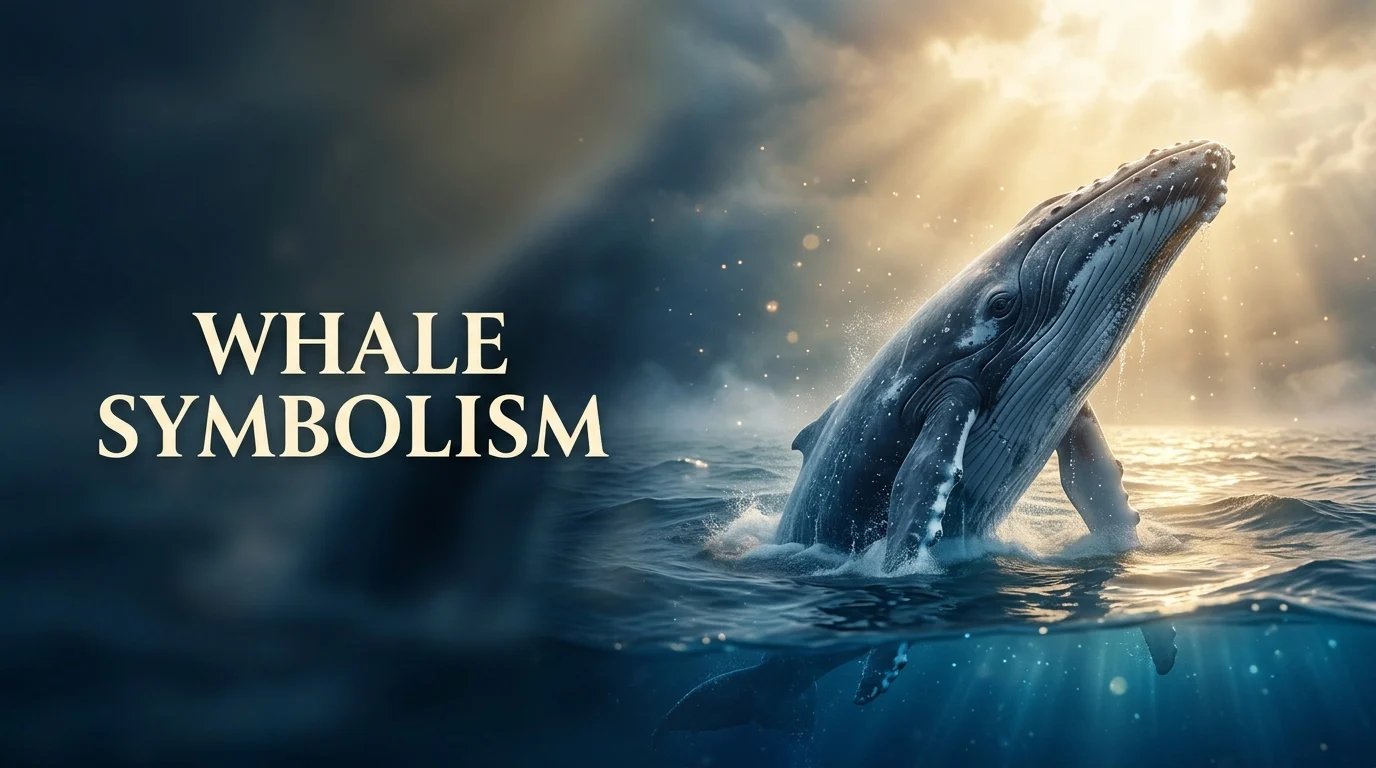
Whales have fascinated humans for centuries with their enormous size, intelligence, mysterious songs, and peaceful presence beneath the ocean’s surface. Whale symbolism is often connected with emotional depth, wisdom, intuition, strength, protection, communication, and spiritual transformation. Because whales move through vast and largely unseen waters, they can also represent the hidden parts of life—our emotions, memories, inner knowledge, and subconscious mind.
Whether you encounter a whale in a dream, artwork, story, or meaningful personal experience, its symbolism often invites you to slow down, listen inwardly, and recognize the strength that comes from emotional depth.
Whale Symbolism Meaning (Clear Definition)
Whale symbolism represents emotional depth, wisdom, strength, protection, communication, intuition, and a deep connection with the natural world.
Whales are among the largest animals on Earth, yet many species display remarkably calm and social behavior. This contrast between immense physical power and gentle movement makes the whale a powerful symbol of quiet strength.
In symbolic traditions, the ocean represents the unknown, emotions, and the subconscious. A whale moving through these deep waters can therefore symbolize the ability to navigate difficult emotions while remaining grounded.
Common Whale Symbolism Meanings
- Wisdom – knowledge gained through experience and time.
- Emotional depth – understanding powerful feelings beneath the surface.
- Strength – immense inner and physical power.
- Protection – guardianship and a sense of safety.
- Intuition – trusting feelings and inner guidance.
- Communication – meaningful expression and connection with others.
- Transformation – moving through major emotional or spiritual changes.
- Peace – calmness, patience, and harmony.
- Freedom – living according to your natural rhythm.
What Does Whale Symbolism Represent?
Whale symbolism can represent several different qualities depending on the context.
Wisdom and Ancient Knowledge
Because whales are long-lived, intelligent, and deeply connected to the ancient rhythms of the ocean, they are often associated with wisdom.
A whale can symbolize learning from experience rather than rushing toward immediate answers.
Emotional Depth
The whale’s home is the deep ocean, making it a natural symbol for emotions and the subconscious.
Seeing a whale symbolically may encourage you to explore feelings that have remained beneath the surface.
Strength and Resilience
Whales demonstrate enormous strength without constantly displaying aggression. Their symbolism can therefore represent quiet power—the ability to remain strong without needing to prove yourself.
Protection and Guidance
In many symbolic interpretations, a whale can appear as a guardian figure. Its immense presence may represent emotional protection, reassurance, or guidance during uncertain periods.
Communication
Whales communicate through complex sounds and songs across great distances. This makes them a meaningful symbol of communication, listening, connection, and the importance of expressing what lies within.
Spiritual Meaning of Whale Symbolism
Spiritually, whale symbolism is often associated with inner wisdom, emotional healing, intuition, spiritual awareness, and connection with something greater than yourself.
The whale’s relationship with the ocean creates a powerful spiritual image. The ocean can represent the vastness of existence, while the whale represents an individual journey through that vast unknown.
Whale as a Spiritual Symbol
A whale may symbolize:
- Deep spiritual awareness
- Inner peace
- Emotional healing
- Intuition and inner guidance
- Connection with nature
- Protection during difficult transitions
- Discovering hidden truths
- Trusting your personal journey
The whale can also remind you that not everything meaningful needs to happen quickly. Some forms of growth happen quietly, beneath the surface, before becoming visible.
Biblical / Religious Meaning of Whale Symbolism
Whales and large sea creatures have religious significance in several traditions, although their exact interpretation varies.
In Christianity, the most famous biblical association is the story of Jonah, who was swallowed by a great sea creature after attempting to escape his divine calling. Although the biblical text refers to a “great fish” rather than specifically identifying it as a whale, later Christian tradition commonly associated the creature with a whale.
This story has led to symbolic interpretations involving:
- Repentance
- Obedience
- Spiritual transformation
- Divine protection
- Second chances
- Facing one’s responsibilities
- Emerging from a difficult period changed
The whale-like sea creature in the Jonah story can therefore be interpreted as a symbol of a profound spiritual transition rather than simply a frightening obstacle.
Whale Symbolism in History and Culture
Whales have played important roles in the traditions and stories of coastal and ocean-connected cultures around the world.
For Indigenous peoples of the Pacific Northwest, whales have appeared in cultural traditions, stories, art, and spiritual narratives. In some traditions, whales are associated with family, community, strength, abundance, and the ocean.
Across maritime cultures, whales have also represented the mystery and power of the sea. Sailors historically viewed enormous marine creatures with a mixture of wonder, fear, respect, and curiosity.
In modern environmental culture, whales have increasingly become symbols of ocean conservation, ecological awareness, and humanity’s responsibility toward marine life.
Their symbolism has therefore expanded from mythology and spirituality to include environmental stewardship.
Whale Symbolism in Literature and Art
Whales have inspired writers, painters, filmmakers, musicians, and artists because they naturally represent the mystery of the unknown.
One of the most famous examples is Herman Melville’s Moby-Dick, where the white whale becomes a complex symbol that can be interpreted through themes of obsession, nature, fate, mystery, and humanity’s struggle against forces larger than itself.
In visual art, whales are often portrayed beneath enormous oceans or beneath star-filled skies. These images emphasize their connection with mystery, solitude, freedom, and the vastness of existence.
Whale imagery can also communicate a powerful contrast: something enormous moving peacefully through an environment that humans cannot completely control or understand.
Dream Meaning of Whale Symbolism
Dreaming about a whale can have different meanings depending on your emotions and the whale’s behavior.
Because dreams are highly personal, there is no single interpretation that applies to everyone. However, whale dreams are commonly associated with emotions, intuition, personal strength, and major life changes.
Common Whale Dreams and Their Meanings
Seeing a whale:
May symbolize emotional awareness, wisdom, or an important realization emerging into consciousness.
Swimming with a whale:
Can represent harmony with your emotions, personal growth, or a desire for deeper connection.
A whale underwater:
May suggest that important feelings or thoughts are still beneath the surface.
A whale attacking:
Could reflect overwhelming emotions, pressure, fear, or a situation that feels too powerful to control.
A whale breaching the water:
May symbolize an emotional breakthrough, revelation, or hidden truth becoming visible.
A whale in calm water:
Often suggests emotional peace, acceptance, and inner stability.
A dead whale:
May symbolize the end of an emotional chapter, loss, or the need to release something from the past.
Modern Meaning of Whale Symbolism
Today, whale symbolism extends beyond mythology and spirituality.
Whales have become powerful symbols of environmental protection, ocean conservation, biodiversity, and respect for wildlife. Their presence in popular culture often reminds people of the fragile relationship between humanity and the natural world.
On a personal level, whale symbolism can also represent the importance of slowing down.
Modern life often rewards constant movement and immediate responses. The whale offers a different image: move with purpose, remain connected to your inner world, and recognize that genuine strength can be calm.
Whale Symbolism: Key Meanings at a Glance
| Symbolic Meaning | What It Represents |
|---|---|
| Wisdom | Experience, knowledge, and inner understanding |
| Strength | Quiet power and resilience |
| Emotional Depth | Deep feelings and subconscious awareness |
| Protection | Safety, guidance, and guardianship |
| Intuition | Trusting inner knowledge |
| Communication | Connection, expression, and listening |
| Transformation | Growth and major life changes |
| Peace | Calmness, patience, and acceptance |
| Freedom | Independence and natural movement |
| Conservation | Respect for nature and marine life |
Frequently Asked Questions About Whale Symbolism
What does a whale symbolize spiritually?
Spiritually, a whale can symbolize wisdom, emotional depth, intuition, protection, healing, and connection with the natural world. It may encourage deeper self-awareness and trust in inner guidance.
What does seeing a whale symbolize?
Seeing a whale may symbolize a period of emotional growth, inner strength, or an important realization. The meaning depends strongly on the circumstances and your personal feelings toward the whale.
What does a whale represent in dreams?
A whale in a dream can represent deep emotions, intuition, personal strength, transformation, or something hidden beneath the surface. A calm whale may suggest peace, while an aggressive whale may reflect overwhelming emotions.
What does a whale symbolize in Christianity?
Whales are commonly associated with the story of Jonah, although the biblical account describes a great fish rather than explicitly identifying it as a whale. The story is often interpreted through themes of repentance, obedience, transformation, and second chances.
What does a whale symbolize in modern culture?
In modern culture, whales often symbolize strength, intelligence, emotional depth, freedom, and environmental conservation. They are also powerful reminders of humanity’s connection to the oceans.
Conclusion
Whale symbolism carries a powerful message of wisdom, emotional depth, strength, protection, intuition, and transformation. Whether viewed through spirituality, dreams, history, literature, or modern environmental awareness, the whale represents something greater than physical power.
Its deepest lesson may be simple: true strength does not always need to be loud. Sometimes it moves quietly through the deepest waters, guided by wisdom and inner peace.