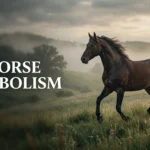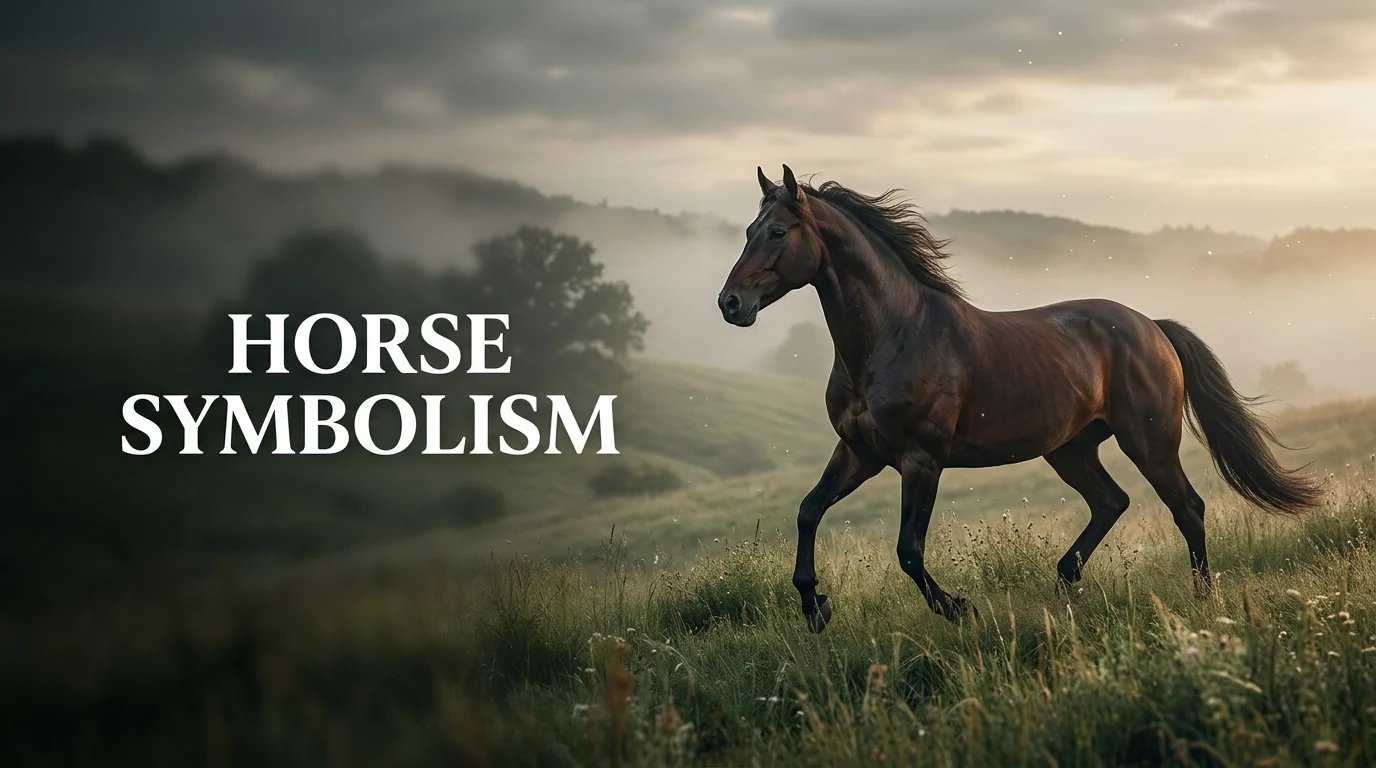
Horse symbolism has fascinated people for thousands of years. Across cultures, the horse is often associated with freedom, strength, movement, courage, independence, and personal power. Because horses carry people forward physically and symbolically, they can represent progress, adventure, ambition, and the ability to overcome obstacles.
The meaning of a horse can change depending on its color, behavior, setting, and the culture in which it appears. A wild horse may symbolize freedom, while a calm white horse can suggest peace, purity, or spiritual guidance.
Horse Symbolism Meaning (Clear Definition)
Horse symbolism represents freedom, strength, endurance, courage, independence, and forward movement. It can also symbolize passion, adventure, confidence, and the power to follow one’s own path.
Horses are powerful animals, but they are also highly sensitive and responsive. This combination gives them a rich symbolic meaning: controlled power rather than strength alone.
Common meanings associated with horses include:
| Symbolic Meaning | What It Represents |
|---|---|
| Freedom | Independence and breaking away from limitations |
| Strength | Physical, emotional, and inner power |
| Courage | Facing challenges with confidence |
| Endurance | Patience and the ability to keep going |
| Movement | Progress, change, and new journeys |
| Passion | Energy, desire, and enthusiasm |
| Independence | Self-reliance and personal choice |
| Spiritual guidance | Intuition, connection, and transformation |
The horse’s symbolism is especially powerful because it combines energy with direction. A horse running freely can represent unrestricted potential, while a trained horse may symbolize discipline and purposeful action.
What Does Horse Symbolism Represent?
Horse symbolism can represent several important qualities in life.
Freedom and Independence
A horse running across an open field naturally evokes a sense of freedom. For this reason, horses often symbolize the desire to live independently and make one’s own decisions.
Strength and Power
Horses have remarkable physical strength. Symbolically, this can represent inner strength, resilience, confidence, and the ability to carry heavy responsibilities.
Courage and Confidence
Throughout history, horses have carried warriors, travelers, and explorers. Their association with difficult journeys makes them a symbol of courage and bravery.
Movement and Progress
A horse is rarely associated with standing still. Its movement can represent personal growth, progress, change, and moving toward a new chapter.
Passion and Energy
A powerful horse can symbolize raw energy and enthusiasm. In a personal context, this may represent ambition, motivation, creativity, or strong emotions.
Endurance
Horses can travel long distances and endure demanding conditions. Their symbolism therefore includes patience, perseverance, stamina, and determination.
Spiritual Meaning of Horse Symbolism
Spiritually, the horse is often viewed as a symbol of freedom, life force, intuition, and personal transformation.
A horse may represent the journey of the soul or the movement from one stage of life to another. Its strength can symbolize the inner energy needed to face uncertainty.
In spiritual traditions, horses are sometimes associated with:
- Freedom of the spirit
- Personal transformation
- Inner strength
- Intuition
- Life energy
- Spiritual journeys
- Protection and guidance
- Connection with nature
A horse appearing repeatedly in someone’s spiritual reflections may be interpreted as an invitation to move forward, trust inner instincts, or release unnecessary limitations.
The spiritual meaning depends heavily on context. A peaceful horse may suggest harmony, while a frightened or uncontrollable horse could symbolize emotional energy that needs attention.
Biblical / Religious Meaning of Horse Symbolism
Horses have significant symbolism in the Bible, although their meaning varies according to the passage.
One of the best-known examples appears in the Book of Revelation, where horses and their riders are connected with major prophetic events. The four horsemen are traditionally associated with conquest, war, famine, and death.
However, horses are not exclusively symbols of destruction. Throughout biblical literature, horses can also represent strength, warfare, movement, authority, and earthly power.
The famous imagery of the white horse in Revelation has also contributed to the broader religious association between a white horse and victory, righteousness, or divine judgment.
Because biblical symbolism is highly contextual, the meaning of a horse should be understood according to the specific passage rather than assigned one universal interpretation.
Horse Symbolism in History and Culture
Horses have played an enormous role in human civilization. They transformed transportation, agriculture, warfare, trade, communication, and exploration.
Because of this historical relationship, horses became powerful cultural symbols.
In many ancient societies, horses were connected with warriors, kings, heroes, the sun, travel, and supernatural forces.
In Greek mythology, the winged horse Pegasus became a symbol associated with inspiration and poetic imagination.
In Celtic traditions, horses held important cultural and mythological associations, including connections with sovereignty and supernatural forces.
In many Indigenous cultures of North America, horses eventually became important symbols of mobility, strength, hunting, warfare, and freedom, although traditions differ substantially among nations and communities.
In modern Western culture, the wild horse has especially strong associations with independence and untamed freedom.
Horse Symbolism in Literature and Art
Horses appear frequently in literature, painting, sculpture, mythology, film, and other forms of art.
Authors often use horses to represent a character’s personality or journey. A wild horse may reflect an independent character, while a loyal horse can symbolize companionship and trust.
In visual art, horses can communicate movement and emotional intensity through their posture, muscles, direction, and surroundings.
Common artistic interpretations include:
- Running horse: Freedom and ambition
- White horse: Purity, victory, spirituality, or transformation
- Black horse: Mystery, power, uncertainty, or the unknown
- Wild horse: Independence and untamed energy
- Horse and rider: Partnership, control, trust, or leadership
- Horse in battle: Courage, conflict, and sacrifice
- Peaceful horse: Harmony and emotional balance
The horse therefore works as more than an animal in art. It can become a visual representation of the human journey.
Dream Meaning of Horse Symbolism
Dreaming about a horse can have different meanings depending on what the animal is doing and how you feel during the dream.
A running horse may symbolize freedom, progress, ambition, or a strong desire to move forward.
A calm horse can represent emotional balance, confidence, trust, or peaceful energy.
A wild horse may suggest independence and the desire to escape restrictions.
Riding a horse may symbolize control, direction, and confidence in your journey. If the horse is difficult to control, the dream may reflect feelings of uncertainty or powerful emotions.
A white horse may represent hope, spiritual growth, peace, or a new beginning, while a black horse can symbolize mystery, hidden emotions, or an unknown situation.
Dream interpretation is personal rather than scientific. The strongest clue is often how the horse made you feel in the dream.
Modern Meaning of Horse Symbolism
Today, horse symbolism continues to appear in fashion, tattoos, jewelry, branding, films, social media, and personal artwork.
The modern horse is especially associated with:
- Freedom
- Adventure
- Self-confidence
- Independence
- Personal growth
- Resilience
- Leadership
- Connection with nature
A horse tattoo, for example, may represent someone’s love of freedom or their determination to overcome a difficult period.
The symbolism can also be deeply personal. For one person, a horse may represent childhood memories. For another, it may represent independence, healing, travel, or the courage to begin again.
What Does a White Horse Symbolize?
A white horse commonly symbolizes purity, peace, victory, hope, spiritual transformation, or divine power. Its meaning can change depending on the religious, cultural, or artistic context.
What Does a Black Horse Symbolize?
A black horse can represent mystery, strength, independence, the unknown, or hidden emotions. In some traditions, it may also have darker associations, so context matters.
What Does a Horse Symbolize Spiritually?
Spiritually, a horse can symbolize freedom, life energy, transformation, intuition, and the courage to move forward. It may represent an inner journey or a desire to live more authentically.
What Does It Mean to Dream About a Horse?
Dreaming about a horse may reflect themes such as freedom, confidence, emotional energy, progress, or independence. The horse’s behavior and your emotions during the dream are important when interpreting its possible meaning.
Why Is the Horse a Symbol of Freedom?
The horse’s ability to run quickly across open landscapes has made it a natural symbol of freedom and independence. Its historical role in travel and exploration strengthened this association.
Conclusion
Horse symbolism is ultimately about power in motion. It can represent freedom, courage, endurance, passion, independence, and the determination to keep moving forward.
Whether seen in mythology, religion, dreams, art, or everyday life, the horse reminds us that strength is not only about standing firm. Sometimes, strength means having the courage to choose a direction and begin the journey.