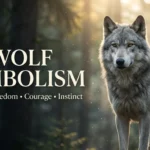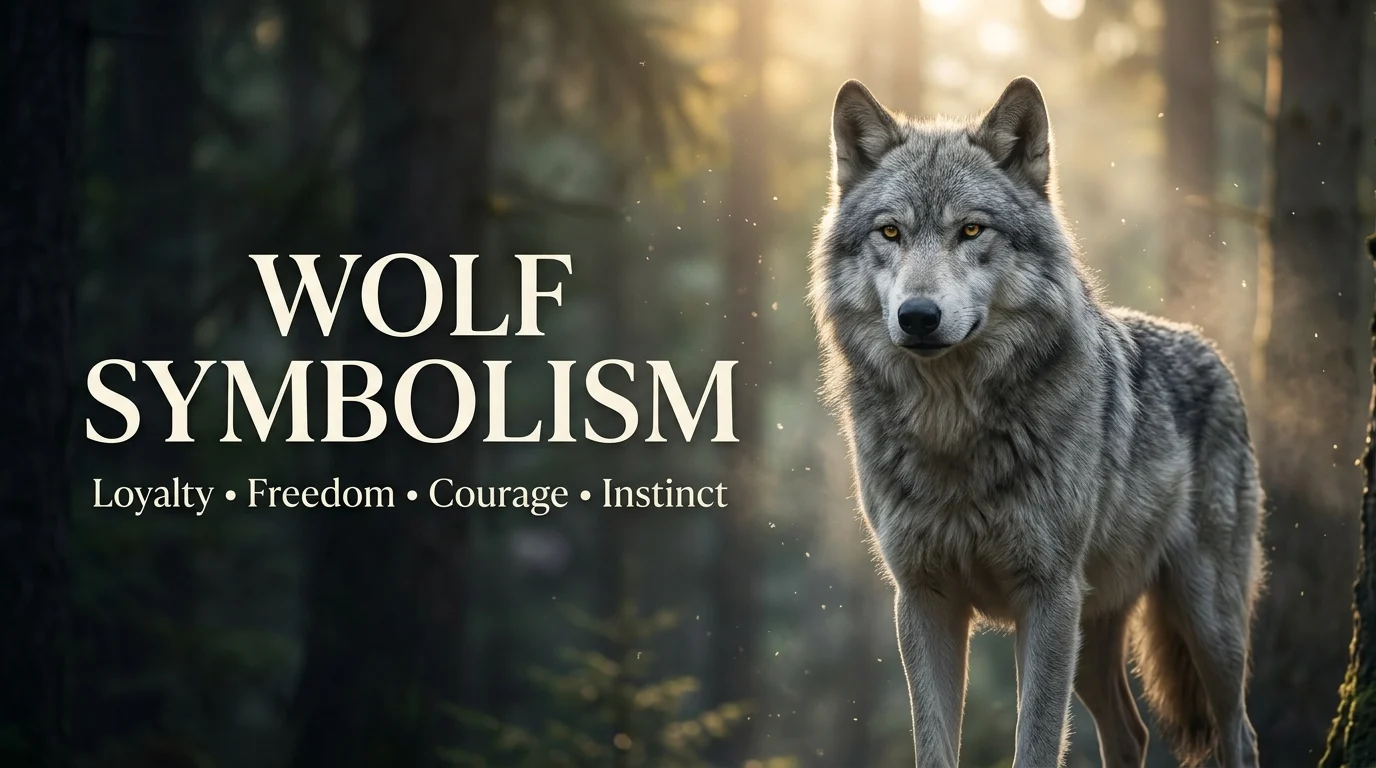
Wolf symbolism represents loyalty, freedom, instinct, courage, protection, and the powerful connection between individuality and community. Throughout history, wolves have inspired both admiration and fear, appearing in myths, spiritual traditions, folklore, and literature as symbols of strength, intelligence, and independence.
The wolf is a fascinating symbol because it represents two seemingly opposite qualities: the desire to live freely and the importance of belonging. Its meaning often depends on the culture, story, or personal experience through which it is understood.
Wolf Symbolism Meaning (Clear Definition)
Wolf symbolism is the representation of instinct, loyalty, independence, resilience, protection, and social connection through the image of a wolf. It can symbolize trusting your intuition while remaining connected to people who matter to you.
Wolves are social icon that live and cooperate in family groups. Their natural behavior has helped make them enduring symbols of teamwork, devotion, communication, and survival.
At the same time, the wolf’s ability to travel, hunt, and adapt has made it an emblem of freedom, self-reliance, and personal strength.
What Does Wolf Symbolism Represent?
Wolf symbolism can represent several meaningful qualities, depending on the context.
| Symbolic meaning | What it represents |
|---|---|
| Loyalty | Devotion, trust, and commitment to loved ones |
| Freedom | Independence, exploration, and living authentically |
| Instinct | Intuition, awareness, and trusting your inner voice |
| Courage | Facing uncertainty and overcoming challenges |
| Protection | Defending family, community, and personal boundaries |
| Intelligence | Adaptability, observation, and strategic thinking |
| Community | Cooperation, belonging, and shared responsibility |
1. Loyalty and Devotion
Wolves are strongly associated with loyalty because they often form enduring social bonds and cooperate in raising their young. In symbolism, the wolf can represent standing beside loved ones through difficult times.
It may also remind you that meaningful relationships require trust, patience, and mutual responsibility.
2. Freedom and Independence
The image of a wolf moving through a wilderness often represents freedom and independence. It symbolizes the desire to explore unfamiliar paths, make personal decisions, and live according to your own values.
A wolf can represent the courage to be yourself without constantly seeking approval.
3. Instinct and Intuition
Wolves are associated with sharp senses, environmental awareness, and responsive behavior. Symbolically, they represent the ability to recognize opportunities, notice warning signs, and listen to your instincts.
The wolf encourages a balance between intuition and thoughtful judgment.
4. Courage and Resilience
The wolf’s ability to survive in challenging environments has made it a symbol of perseverance. It represents facing uncertainty, adapting to difficult circumstances, and continuing forward when life becomes demanding.
Its symbolism is not about never feeling afraid. It is about responding to challenges with awareness and determination.
5. Family and Community
Wolves are also powerful symbols of belonging. Their cooperative social behavior represents the importance of family, friendship, teamwork, and shared responsibility.
The wolf reminds us that independence and connection do not have to be opposites.
Spiritual Meaning of Wolf Symbolism
Spiritually, wolf symbolism is often associated with intuition, personal transformation, inner wisdom, protection, and the search for purpose.
In contemporary spiritual interpretations, the wolf may appear as a symbol of learning to trust yourself while finding your place in the wider world.
Common spiritual meanings of the wolf include:
- Inner wisdom: Paying attention to your instincts and experiences.
- Spiritual protection: Feeling supported, guided, or secure during uncertain times.
- Personal transformation: Leaving old habits behind and developing greater confidence.
- Authenticity: Embracing your individuality rather than hiding your true nature.
- Connection: Recognizing the importance of relationships and belonging.
Wolf as a Spirit icon
In some contemporary spiritual practices, the wolf is described as a spirit icon associated with independence, loyalty, and intuition.
People who identify with wolf symbolism may interpret it as a reminder to trust their judgment, establish healthy boundaries, and nurture meaningful relationships.
These interpretations are personal and vary across spiritual traditions; they are not universal beliefs.
Wolf as a Symbol of Inner Strength
The wolf can represent strength that comes from knowing yourself. Rather than relying entirely on outside approval, its symbolism encourages self-awareness, emotional resilience, and thoughtful decisions.
A wolf’s strength can also symbolize knowing when to stand alone and when to accept support.
Biblical / Religious Meaning of Wolf Symbolism
In the Bible, wolves often symbolize danger, deception, aggression, and threats to a community’s spiritual well-being. Their meaning is generally different from the positive interpretations found in some modern spiritual traditions.
One notable example appears in Matthew 7:15, where Jesus warns about false prophets who come in sheep’s clothing but are inwardly ravenous wolves.
In this context, the wolf represents someone whose outward appearance conceals harmful intentions.
Wolves as Symbols of Spiritual Danger
In biblical imagery, wolves can represent:
- False teachers who mislead others.
- Threats to vulnerable members of a community.
- Destructive behavior hidden behind a respectable appearance.
- The need for discernment and spiritual awareness.
Acts 20:29 also uses the image of fierce wolves to describe dangers facing a community after the departure of its leaders.
The Wolf and the Lamb
Isaiah 11:6 describes a peaceful vision in which the wolf lives with the lamb. This image is commonly interpreted as a symbol of peace, harmony, and the transformation of relationships between creatures traditionally understood as predator and prey.
The passage offers a contrasting image to the Bible’s other depictions of wolves as threats.
These biblical meanings should be distinguished from contemporary interpretations of wolves as symbols of freedom, loyalty, and personal growth.
Wolf Symbolism in History and Culture
Wolves have appeared in the mythology, folklore, and cultural traditions of many societies. Their symbolism has never been entirely consistent: some traditions associate them with guardianship and origins, while others portray them as dangerous or deceptive.
1. Roman Mythology

One of the best-known wolf stories comes from ancient Rome. According to Roman tradition, the twins Romulus and Remus were abandoned and suckled by a she-wolf.
The story became an important part of Rome’s legendary origins. The she-wolf is consequently associated with nurturing, survival, protection, and the city’s founding story.
2. Norse Mythology

In Norse mythology, wolves appear in several important stories. Fenrir, a powerful mythological wolf, is associated with destruction and the events of Ragnarök.
Other wolves, such as Geri and Freki, are associated with Odin.
These stories show how wolves can represent both formidable power and an important connection to the divine and the mythological world.
3. Indigenous Cultural Traditions
Wolves appear in the stories and cultural practices of various Indigenous peoples, particularly in parts of North America. Their meanings differ substantially between nations and communities.
In some traditions, wolves are associated with family, cooperation, hunting knowledge, or relationships with the natural world. These meanings should be understood within the specific community and tradition rather than treated as a single universal Indigenous belief.
4. European Folklore
In many European folktales, wolves are portrayed as dangerous icon that threaten people, livestock, or travelers.
Stories such as Little Red Riding Hood helped establish the wolf as a symbol of deception, danger, and the fear of the unfamiliar.
Other stories use wolves to explore the boundaries between civilization and wilderness.
Wolf Symbolism in Literature and Art
Wolves are recurring figures in literature and art because they can represent contrasting human qualities. A writer or artist might use a wolf to symbolize courage and loyalty in one story, then danger or isolation in another.
The Wolf as a Symbol of Freedom
In literature, wolves often represent life beyond social expectations. Their association with wilderness makes them useful symbols for characters who reject conformity or search for independence.
A wolf in a story may reflect a character’s desire to discover who they really are.
The Wolf as a Symbol of Danger
In fairy tales and traditional stories, wolves frequently serve as threatening figures. They may represent deception, greed, predatory behavior, or the risks of trusting strangers.
Their threatening role can also help stories explore fear, vulnerability, and the importance of judgment.
The Wolf as a Symbol of Loyalty
In more contemporary storytelling, wolves often represent friendship, family, and group identity.
A wolf pack may serve as a metaphor for people who support each other, protect their community, and work toward a shared purpose.
Wolves in Visual Art

Artists often use the wolf’s appearance and surroundings to communicate symbolic meaning.
- A lone wolf may suggest independence, solitude, or self-discovery.
- A wolf with its pack may represent family, loyalty, or cooperation.
- A wolf under the moon may evoke mystery, intuition, or the unknown.
- A wolf in a forest may represent wilderness, freedom, or a connection to nature.
The setting, expression, posture, and other visual details all influence how the wolf is understood.
Dream Meaning of Wolf Symbolism
Dreams about wolves can have different meanings depending on your emotions, experiences, and the events in the dream. There is no scientifically established universal meaning for a particular wolf dream.
Symbolically, wolves in dreams are sometimes associated with independence, relationships, fear, intuition, and personal boundaries.
| Wolf dream | Possible symbolic interpretation |
|---|---|
| A friendly wolf | Trust, companionship, or acceptance |
| A howling wolf | Communication, longing, or self-expression |
| A wolf chasing you | Anxiety, avoidance, or a perceived threat |
| A lone wolf | Independence, solitude, or self-discovery |
| A wolf pack | Belonging, teamwork, or social relationships |
| A protective wolf | Security, loyalty, or a desire for support |
| A white wolf | Purity, renewal, or spiritual reflection |
Dreaming of a Friendly Wolf
A friendly wolf may symbolize a desire for trustworthy relationships or greater confidence in your instincts.
If the dream feels peaceful, you might reflect on where you currently experience trust and emotional security.
Dreaming of a Wolf Chasing You
A wolf chasing you may symbolize something you feel pressured by or want to avoid. It can be a useful prompt to consider whether a situation in your waking life feels intimidating or unresolved.
The dream does not prove that danger is approaching.
Dreaming of a Howling Wolf
A howling wolf may represent communication, loneliness, or the desire to be heard.
Consider whether you have been holding back your thoughts or wishing to reconnect with someone.
Dreaming of a Wolf Pack
A wolf pack may symbolize family, friendship, and your relationship with a group.
Depending on the dream’s atmosphere, it might reflect comfort in belonging or concern about social expectations.
Modern Meaning of Wolf Symbolism
In modern culture, wolf symbolism is frequently associated with confidence, authenticity, resilience, leadership, and the balance between individuality and community.
Wolves appear in fashion, tattoos, logos, popular entertainment, and personal artwork because their image communicates strength and a connection to the natural world.
1. Wolf Tattoos and Personal Identity
Wolf tattoos often represent personal values, life experiences, or qualities someone wants to express.
Common interpretations include:
- Lone wolf: Independence, self-reliance, and individuality.
- Wolf pack: Family, friendship, and loyalty.
- Howling wolf: Freedom, communication, and self-expression.
- Wolf eyes: Awareness, intuition, and determination.
- White wolf: Renewal, clarity, and spiritual reflection.
- Black wolf: Mystery, resilience, and the unknown.
A tattoo’s meaning is ultimately personal, shaped by the wearer’s experiences and intentions.
2. The Lone Wolf Symbol
The lone wolf has become a recognizable modern symbol of independence and nonconformity. It often represents someone who prefers making their own decisions and following a distinctive path.
However, independence does not have to mean isolation. The symbol can also invite reflection on the difference between healthy solitude and feeling disconnected from others.
3. The Wolf as a Leadership Symbol
Wolf imagery is sometimes used to communicate leadership, confidence, strategic thinking, and responsibility.
The symbolism of a wolf pack can also suggest cooperative leadership rather than simply dominance. Its broader message is that effective groups depend on communication, relationships, and shared effort.
4. The Wolf as a Symbol of Personal Growth
The wolf can represent the process of discovering your values, facing uncertainty, and becoming more comfortable with who you are.
Its modern symbolism encourages a combination of courage and self-awareness: being willing to explore independently while recognizing the importance of connection and support.
Frequently Asked Questions About Wolf Symbolism
1. What is the main meaning of wolf symbolism?
Wolf symbolism most commonly represents loyalty, freedom, instinct, courage, protection, and community. Its interpretation varies depending on cultural traditions and personal associations.
2. What does a wolf symbolize spiritually?
Spiritually, wolves are often associated with intuition, inner wisdom, personal transformation, and protection. In contemporary spiritual interpretations, they can also represent finding a balance between independence and belonging.
3. What does a lone wolf symbolize?
A lone wolf commonly symbolizes independence, self-reliance, individuality, and the courage to follow your own path. It can also represent solitude and the desire for personal space.
4. What does a wolf symbolize in the Bible?
In biblical imagery, wolves generally symbolize danger, deception, false teaching, and threats to a community. Isaiah 11:6 also uses the wolf and lamb together in a vision of peace and harmony.
5. What does it mean to dream about a wolf?
Dreaming about a wolf may invite reflection on your relationships, independence, fears, or intuition. The possible meaning depends on the dream’s details and your personal feelings rather than a universal dream interpretation.
Conclusion
Wolf symbolism brings together freedom, loyalty, courage, instinct, and the importance of belonging. From ancient mythology to modern tattoos, the wolf represents different aspects of human experience, including the desire to live authentically and protect meaningful relationships.
Its most enduring symbolic lesson is the balance between standing confidently on your own and recognizing the strength that comes from connection.

I am Simon Michael, an author passionate about exploring symbols, their meanings, and cultural significance. I enjoy making symbolism simple, engaging, and meaningful for curious readers everywhere.