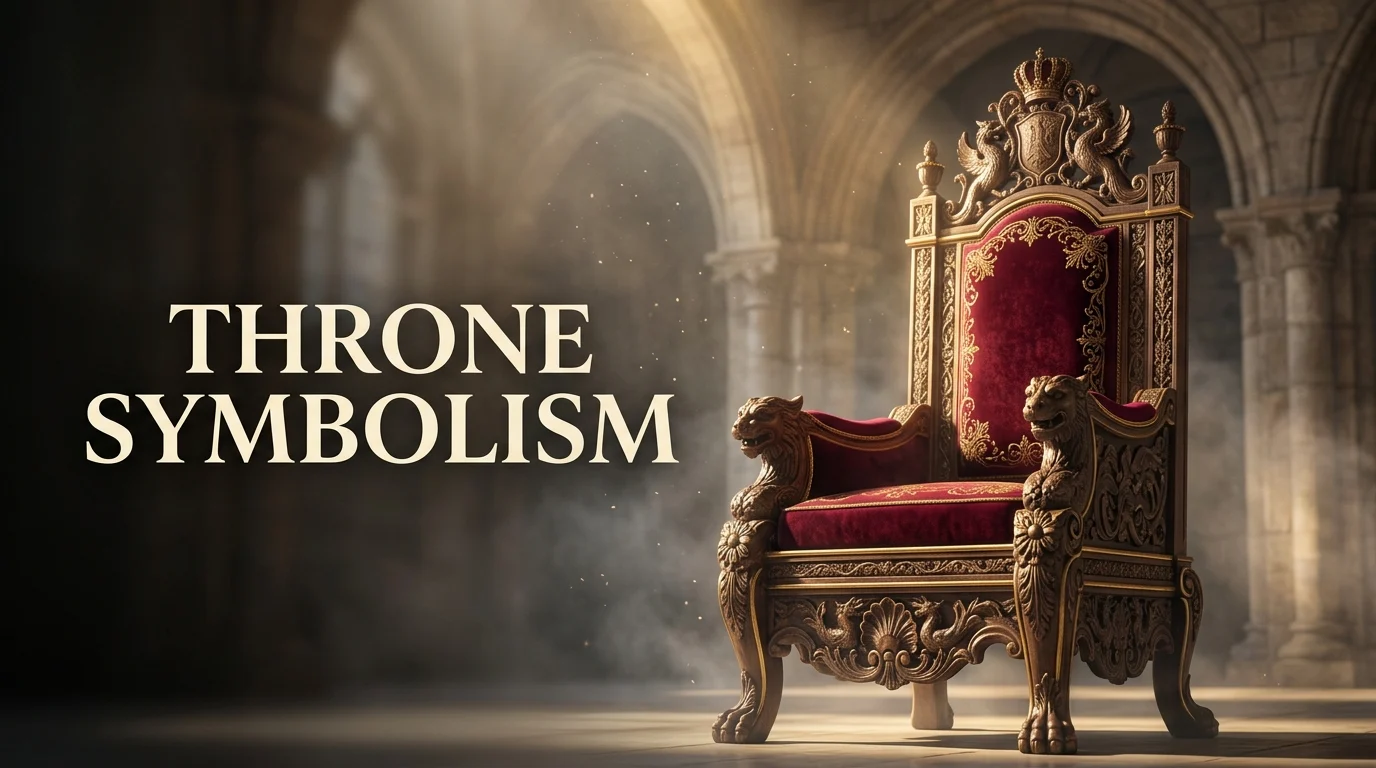
Throne symbolism is closely associated with power, authority, leadership, dignity, status, and responsibility. Across history and cultures, the throne has represented far more than a luxurious seat. It often symbolizes the person or force that holds influence, makes important decisions, or occupies a position of honor.
A throne can also carry deeper meanings. It may represent divine authority, sovereignty, wisdom, ambition, justice, control, or responsibility. In dreams and art, its meaning can change depending on who sits on it, where it appears, and how you feel when you see it.
Throne Symbolism Meaning (Clear Definition)
The simplest definition of throne symbolism is:
A throne symbolizes authority, power, leadership, sovereignty, honor, and the responsibility that comes with having influence.
Historically, thrones were used by monarchs, rulers, religious leaders, and other figures of high status. Their elevated position visually separated the person sitting on the throne from everyone else.
Because of this, a throne commonly represents:
- Power — the ability to influence or command.
- Authority — recognized control or leadership.
- Sovereignty — independence and supreme rule.
- Status — social importance and prestige.
- Leadership — responsibility for others.
- Wisdom — judgment and decision-making.
- Justice — the power to establish order and fairness.
- Responsibility — the burden that accompanies authority.
The symbolism can be positive or negative. A throne may represent noble leadership and wisdom, but it can also symbolize arrogance, domination, obsession with status, or an unhealthy desire for control.
What Does Throne Symbolism Represent?
Throne symbolism represents different ideas depending on the cultural or personal context.
1. Power and Authority
Perhaps the most recognizable meaning of a throne is power. A person sitting on a throne is traditionally someone whose decisions can affect many others.
This makes the throne a powerful visual symbol of command and influence.
2. Leadership
A throne can represent leadership rather than simple dominance. In this interpretation, sitting on a throne means accepting responsibility for a community, kingdom, family, or institution.
The symbol therefore asks an important question: What will you do with the power you have?
3. Royalty and Status
Crowns and thrones frequently appear together because both are connected with monarchy and social hierarchy.
The throne represents the position itself, while the crown often represents the authority or identity of the ruler.
4. Wisdom and Judgment
A throne can symbolize wisdom because rulers traditionally had to make difficult decisions.
In literature and religious imagery, a throne may therefore represent someone who possesses the authority to judge, guide, or establish order.
5. Ambition
Seeing a throne can also suggest ambition and the desire for success.
In a positive sense, it may symbolize striving toward an important goal. In a darker interpretation, it can represent an excessive hunger for recognition, wealth, or control.
Symbolic Meanings of a Throne
| Symbolic Meaning | What It Represents |
|---|---|
| Power | Influence and control |
| Authority | The right to lead or command |
| Leadership | Responsibility for others |
| Royalty | Nobility and high social status |
| Wisdom | Judgment and thoughtful decisions |
| Justice | Order and fairness |
| Ambition | Desire to achieve a powerful position |
| Responsibility | The obligations that come with authority |
| Sovereignty | Independent or supreme rule |
Spiritual Meaning of Throne Symbolism
Spiritually, a throne can symbolize divine authority, higher consciousness, sacred power, and spiritual sovereignty.
Unlike ordinary furniture, a throne often suggests that something has been elevated above the ordinary. It can therefore represent a sacred presence or a higher spiritual principle.
A throne may symbolize:
- Divine power
- Spiritual authority
- Inner strength
- Higher wisdom
- Sacred order
- Enlightenment
- Protection
- Judgment
- Spiritual responsibility
There is also an inward interpretation. The throne can represent the center of your inner world—the place where your deepest values, beliefs, or sense of purpose reside.
From this perspective, asking “Who sits on the throne?” becomes symbolic. Is it wisdom, fear, ego, love, ambition, or compassion?
Biblical / Religious Meaning of Throne Symbolism
Throne imagery is especially significant in the Bible and other religious traditions.
In biblical language, a throne can symbolize God’s sovereignty, authority, kingship, judgment, and eternal rule. The imagery emphasizes that divine authority is greater than human political power.
The Bible also uses throne imagery in visions and descriptions of heavenly authority. For example, the Book of Revelation contains vivid descriptions of a throne associated with divine majesty and worship.
In Christianity, the throne can therefore represent:
- God’s sovereignty
- Divine judgment
- Heavenly authority
- Majesty
- Eternal kingship
- Sacred order
In other religious and cultural traditions, thrones can similarly symbolize divine or sacred authority, although their specific meanings and imagery vary considerably.
Throne Symbolism in History and Culture
Thrones have existed in many societies as visible expressions of political and religious authority.
Ancient rulers often used elevated seats to communicate their special position. The height, decoration, materials, and surrounding ceremonial objects could reinforce the ruler’s status.
Gold, precious stones, elaborate carvings, animal motifs, and rich fabrics were frequently associated with royal imagery. These details transformed an ordinary seat into a visual declaration of wealth and authority.
Thrones Across Cultures
Different cultures have given throne imagery their own meanings.
Ancient civilizations: Thrones could communicate royal power, divine association, and political legitimacy.
European monarchies: Thrones became important ceremonial symbols of kingship, succession, and royal authority.
Asian traditions: Royal and imperial seats could symbolize sovereignty, cosmic order, and the ruler’s relationship with society and tradition.
Religious traditions: Thrones can represent divine authority, sacred judgment, and heavenly rule.
The exact symbolism depends on the historical period and culture, so a throne should not always be interpreted using a single universal meaning.
Throne Symbolism in Literature and Art
Artists and writers have long used thrones as visual and literary symbols.
A throne can immediately communicate that a character possesses authority. Because of this, it frequently appears in stories involving kings, queens, emperors, gods, rulers, and powerful supernatural beings.
In literature, the throne may symbolize:
- The struggle for power
- Succession
- Political ambition
- Leadership
- Responsibility
- Corruption
- Justice
- The rise or fall of a ruler
A vacant throne can be particularly meaningful. It may suggest lost power, an uncertain future, death, absence, or an opportunity waiting to be claimed.
A broken throne can symbolize the collapse of authority or the end of a powerful institution.
Artists may also deliberately place a throne in an enormous or empty environment to emphasize loneliness. This creates an important contrast: possessing great power does not necessarily mean experiencing happiness or connection.
Dream Meaning of Throne Symbolism
Dreaming about a throne can relate to authority, ambition, self-confidence, recognition, or your relationship with control.
The specific meaning depends heavily on the dream’s context.
Sitting on a Throne
Sitting on a throne may symbolize confidence, achievement, leadership, or a desire to be respected.
It can also suggest that you are taking greater responsibility in your waking life.
Seeing an Empty Throne
An empty throne may represent an opportunity, missing leadership, uncertainty, or a position that has not yet been filled.
Seeing Someone Else on a Throne
This may reflect how you perceive that person’s influence or authority. It could also represent your feelings about power, comparison, admiration, or competition.
A Broken Throne
A damaged or broken throne may symbolize a loss of control, changing circumstances, the end of an old identity, or the collapse of an established source of authority.
Dream interpretation is personal rather than scientific, so the emotions and circumstances surrounding the dream are important.
Modern Meaning of Throne Symbolism
Today, throne symbolism extends far beyond literal royalty.
A throne may represent success, influence, leadership, personal achievement, confidence, or social recognition.
Modern culture also uses throne imagery in branding, entertainment, fashion, tattoos, gaming, and popular storytelling. Someone may use a throne as a statement of self-confidence or as a metaphor for becoming the best in a particular field.
At the same time, modern interpretations often question traditional ideas about power.
A throne can represent the responsibility of leadership rather than simply the privilege of being in charge. It may remind us that authority requires judgment, accountability, and humility.
Throne Symbolism in Tattoos
A throne tattoo may express different personal ideas, including:
- Personal power
- Leadership
- Ambition
- Independence
- Self-confidence
- Royal identity
- Achievement
- Strength
- Respect
Adding symbols such as a crown, lion, sword, flowers, or wings can significantly change the overall meaning.
Frequently Asked Questions About Throne Symbolism
What is the main meaning of throne symbolism?
Throne symbolism primarily represents power, authority, leadership, sovereignty, status, and responsibility. Its meaning can become positive or negative depending on the context.
What does a throne symbolize spiritually?
Spiritually, a throne can represent divine authority, sacred power, higher wisdom, spiritual sovereignty, and the center of one’s inner values.
What does a throne symbolize in the Bible?
In biblical symbolism, the throne is strongly associated with God’s sovereignty, kingship, divine authority, judgment, and heavenly majesty.
What does dreaming about a throne mean?
A throne in a dream may symbolize authority, ambition, recognition, leadership, or control. Its interpretation depends on who occupies the throne and how you feel during the dream.
What does an empty throne symbolize?
An empty throne can symbolize absent leadership, lost authority, an opportunity for advancement, uncertainty, or a position waiting to be claimed.
Conclusion
Throne symbolism ultimately goes beyond wealth and royalty. It represents the complex relationship between power and responsibility, authority and wisdom, ambition and humility. Whether found in religious imagery, ancient history, literature, dreams, or modern culture, the throne invites us to consider not only who holds power, but how that power is used.

I am Luna Grace, an author passionate about exploring the meanings, history, and symbolism behind everyday signs. I enjoy sharing thoughtful insights that help readers understand symbols and their deeper significance.