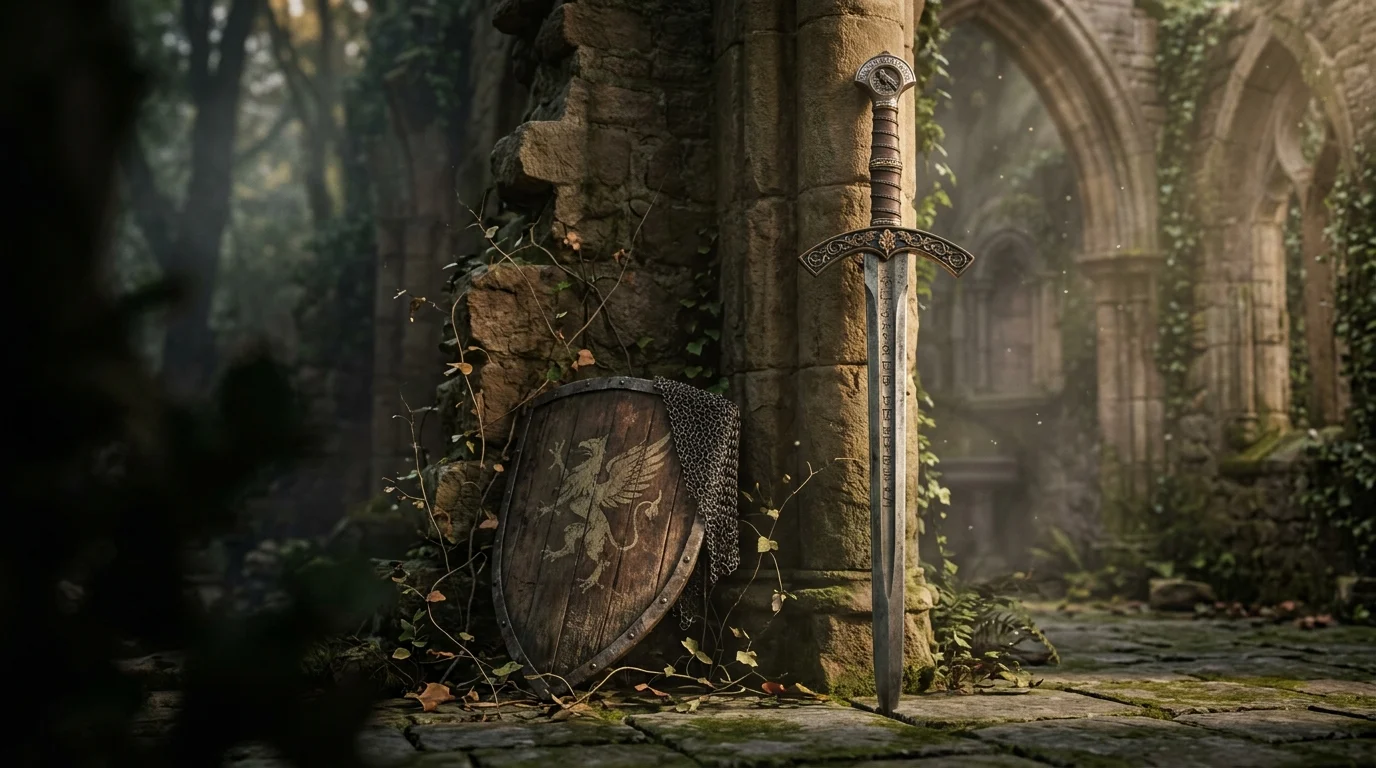
Sword symbolism often represents strength, courage, protection, justice, authority, and the ability to cut through confusion. Across centuries, the sword has been more than a weapon—it has become a powerful symbol of truth, honor, sacrifice, leadership, and transformation.
From ancient warriors and royal ceremonies to myths, religious traditions, literature, and modern storytelling, the sword can carry both protective and destructive meanings. Its interpretation often depends on how the sword appears, who holds it, and the situation surrounding it.
Sword Symbolism Meaning (Clear Definition)
Sword symbolism is the use of a sword to represent ideas such as power, courage, justice, protection, truth, authority, conflict, and transformation.
Because a sword has two sides and a sharp edge, it can symbolize the ability to make difficult decisions, establish boundaries, or separate truth from falsehood.
Common meanings of sword symbolism include:
| Symbolic Meaning | What It Represents |
|---|---|
| Strength | Inner power and resilience |
| Courage | Facing fear and challenges |
| Protection | Defending yourself or others |
| Justice | Fairness, judgment, and moral responsibility |
| Truth | Cutting through deception or confusion |
| Authority | Leadership, command, and responsibility |
| Conflict | Struggle, opposition, or difficult choices |
| Transformation | Ending one phase and beginning another |
The sword therefore has a dual nature: it can represent defense and destruction, justice and violence, wisdom and power.
What Does Sword Symbolism Represent?
A sword can represent several interconnected ideas depending on its context.
Strength and Courage
A sword is frequently associated with bravery. Historically, warriors carried swords into dangerous situations, making the object a natural symbol of courage and determination.
Symbolically, holding a sword can suggest that someone is ready to face challenges rather than avoid them.
Protection and Defense
A sword can represent the responsibility to protect people, principles, or personal boundaries.
In symbolic imagery, a sword held upright may communicate readiness, vigilance, and guardianship.
Justice and Judgment
The sword is also strongly connected with justice. Its sharp edge can symbolize decisive judgment—the separation of right from wrong or truth from falsehood.
This interpretation appears in many artistic representations of justice, authority, and moral judgment.
Truth and Clarity
Because a sword cuts through objects, it can metaphorically represent cutting through confusion, lies, or uncertainty.
In this sense, sword symbolism may suggest a desire for honesty and clear thinking.
Power and Authority
A sword has historically been associated with rulers, military leaders, knights, and officials. As a result, it can symbolize authority and the responsibility that comes with power.
Its meaning is not simply “having power,” but also deciding how that power should be used.
Conflict and Struggle
Not every sword represents victory. Sometimes it symbolizes conflict, confrontation, anger, or an important battle in life.
A sword appearing in symbolic imagery can therefore represent an external struggle or an internal conflict involving difficult choices.
Spiritual Meaning of Sword Symbolism
Spiritually, a sword can symbolize discernment, truth, protection, courage, spiritual strength, and separation from negative influences.
A sword may represent the inner ability to distinguish what supports your growth from what holds you back.
Spiritual sword symbolism can represent:
- Truth — recognizing what is genuine.
- Discernment — understanding what deserves your attention.
- Protection — guarding your values and spiritual boundaries.
- Courage — moving forward despite fear.
- Release — cutting away unhealthy attachments.
- Transformation — ending an old chapter.
- Spiritual strength — remaining firm during adversity.
A sword can therefore become a metaphor for an inner strength that helps a person make clear and purposeful decisions.
Biblical / Religious Meaning of Sword Symbolism
The sword has significant symbolic meaning in biblical traditions. In Christianity, it can represent God’s word, spiritual truth, judgment, authority, and spiritual struggle.
One well-known example appears in Ephesians 6:17, where the “sword of the Spirit” is associated with the word of God. In this context, the sword is not primarily about physical violence; it represents a spiritual instrument.
Sword imagery also appears elsewhere in biblical literature, sometimes in connection with judgment, protection, conflict, or divine authority.
In broader religious traditions, swords may similarly symbolize moral courage, defense of sacred principles, spiritual discipline, or the struggle between opposing forces. However, meanings vary considerably between religions and historical contexts.
Sword Symbolism in History and Culture
The sword has held an important place in cultures around the world.
In ancient societies, swords could signify military status, social position, leadership, and personal honor. Because producing a quality sword required skill and valuable materials, some swords also became prestigious objects.
During the medieval period in Europe, the sword became strongly associated with knights, chivalry, loyalty, courage, and noble service.
In Japan, the katana became closely connected with samurai culture and has been interpreted through ideas of discipline, craftsmanship, duty, and identity.
Across different cultures, ceremonial swords have also been used to represent authority. A sword presented during an initiation, ceremony, or coronation can symbolize responsibility rather than simply warfare.
Sword Symbolism in Literature and Art
Swords are powerful storytelling symbols because they immediately communicate conflict, courage, authority, and choice.
In literature, a sword may become an extension of a character’s identity. A heroic sword can represent honor or responsibility, while a cursed sword may represent temptation, destruction, or the consequences of power.
Myths and legends frequently use magical or legendary swords to distinguish heroes, kings, or chosen figures.
In visual art, the sword may appear beside rulers, saints, warriors, angels, or personifications of justice. Its position can change the meaning: an upright sword may suggest readiness or authority, while a broken sword can represent defeat, sacrifice, peace, or the end of conflict.
Dream Meaning of Sword Symbolism
Dreaming about a sword can have different meanings depending on the emotions and circumstances within the dream.
A sword may symbolize personal strength, confrontation, protection, difficult decisions, or the need to establish boundaries.
Common interpretations include:
- Holding a sword: confidence, responsibility, or readiness to confront a challenge.
- Seeing a sword: awareness of conflict or an important decision.
- Fighting with a sword: confrontation, competition, or an internal struggle.
- A broken sword: lost confidence, disappointment, or the end of a struggle.
- A shining sword: clarity, courage, truth, or renewed purpose.
- Being threatened by a sword: vulnerability, fear, or perceived conflict.
- Finding a sword: discovering personal strength or a new sense of purpose.
Dream symbolism is highly personal. Your emotions, experiences, and cultural background can influence what the sword means to you.
Modern Meaning of Sword Symbolism
Today, sword symbolism appears far beyond historical warfare.
Swords are common in movies, fantasy stories, video games, tattoos, jewelry, logos, ceremonies, and personal artwork. Modern interpretations often focus on strength, independence, courage, justice, personal boundaries, and overcoming adversity.
For some people, a sword tattoo may represent surviving a difficult period. For others, it can symbolize discipline, protection, honor, or determination.
A sword pointing upward can suggest ambition or readiness, while a sheathed sword may communicate controlled power and restraint.
The modern meaning is often less about physical combat and more about how a person handles power, challenges, truth, and personal responsibility.
Sword Symbolism and Personal Growth
The sword can also serve as a meaningful metaphor for personal development.
Life often requires people to decide what to keep and what to let go. In this sense, the sword’s ability to cut can symbolize removing distractions, unhealthy patterns, fear, or uncertainty.
Its protective quality can represent healthy boundaries, while its association with courage can remind us that growth sometimes requires difficult choices.
The deeper lesson is not simply to become stronger, but to learn when strength should be used with wisdom and restraint.
FAQs About Sword Symbolism
What is the main meaning of sword symbolism?
Sword symbolism commonly represents strength, courage, protection, justice, truth, authority, and conflict. Its meaning changes according to cultural and personal context.
What does a sword symbolize spiritually?
Spiritually, a sword can represent truth, discernment, protection, courage, spiritual strength, and the ability to separate oneself from harmful influences.
What does a sword symbolize in the Bible?
In biblical symbolism, the sword can represent God’s word, spiritual struggle, judgment, authority, and truth. The “sword of the Spirit” is specifically associated with the word of God in Ephesians 6:17.
What does dreaming about a sword mean?
A sword in a dream may symbolize strength, confrontation, protection, difficult decisions, or personal boundaries. The dream’s emotional context is important when interpreting it.
What does a broken sword symbolize?
A broken sword can represent defeat, lost power, sacrifice, the end of conflict, or a transition away from struggle. Its meaning depends on the surrounding imagery and circumstances.
Conclusion
Sword symbolism carries a powerful message of strength, courage, truth, protection, justice, and responsibility. Whether it appears in religion, history, dreams, art, or modern culture, the sword often reflects the challenges involved in using power wisely.
Ultimately, the sword can remind us that true strength is not only the ability to fight—it is also the wisdom to know what is worth defending, what must be released, and when restraint is the greatest form of courage.