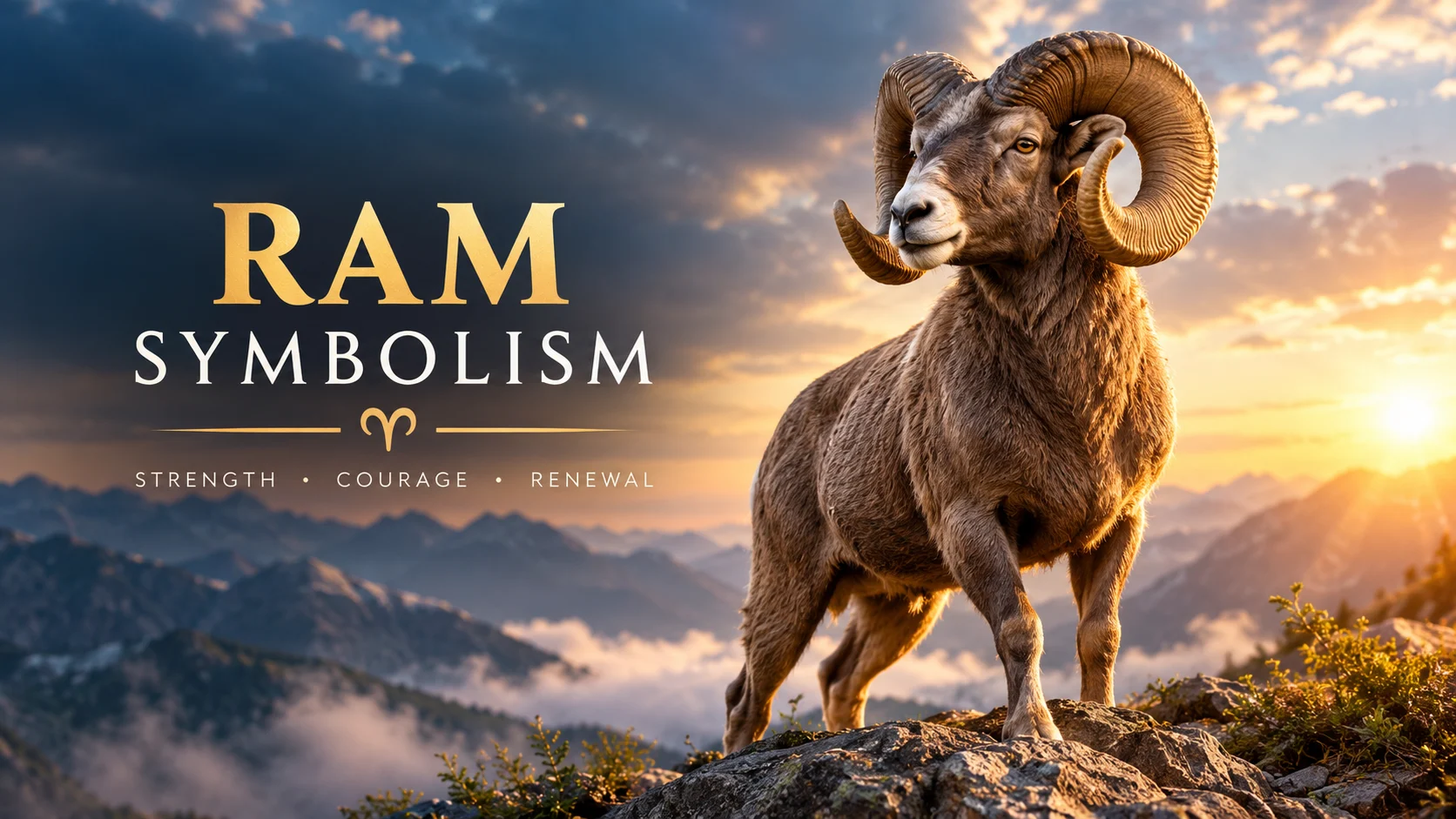
Ram symbolism represents strength, courage, determination, leadership, and the willingness to overcome obstacles. Known for its powerful horns, confident stance, and fearless nature, the ram has long been associated with masculine energy, protection, fertility, and new beginnings. Across different cultures and spiritual traditions, this remarkable animal symbolizes the power to move forward even when the path seems difficult.
Understanding ram symbolism can offer insight into personal growth, spiritual awakening, cultural traditions, and the lessons we draw from the natural world. Whether you encounter a ram in a dream, see it in artwork, or feel drawn to its powerful image, its symbolism often points toward confidence, resilience, and the courage to trust your own direction.
Ram Symbolism Meaning (Clear Definition)
Ram symbolism refers to the qualities and ideas associated with the ram, including courage, strength, leadership, determination, fertility, and renewal. Its horns and ability to confront challenges make it a powerful symbol of persistence and personal authority.
The ram is also connected with beginnings and forward movement. Rather than waiting for circumstances to change, its symbolic energy encourages people to take initiative and pursue their goals.
However, the ram can represent both positive and challenging qualities. Its determination may reflect admirable perseverance, but it can also symbolize stubbornness, impatience, or unnecessary confrontation.
The central meaning of the ram is simple: have the courage to move forward, but use your strength with wisdom.
What Does Ram Symbolism Represent?
Ram symbolism carries several important meanings that can apply to everyday life, personal development, and spiritual reflection.

1. Strength and Power
The ram’s muscular body and impressive horns represent physical strength, inner power, and the ability to face demanding situations. It reminds us that true strength involves both action and self-control.

2. Courage and Fearlessness
A ram can symbolize the courage to face uncertainty instead of allowing fear to determine your choices. It encourages standing firm in your values and protecting what matters.

3. Determination and Perseverance
Rams are associated with persistence and forward movement. Symbolically, they encourage you to keep working toward meaningful goals, even when progress requires patience.

4. Leadership and Confidence
The ram represents independence, assertiveness, and the willingness to take responsibility. It reminds you to trust your judgment without dismissing the advice of others.

5. Fertility and Abundance
In agricultural and pastoral settings, sheep and rams have been associated with reproduction, livestock wealth, and prosperity. Their symbolism can reflect growth, nourishment, and the continuation of life.

6. Renewal and New Beginnings
The ram’s association with spring, vitality, and the zodiac sign Aries makes it a symbol of fresh starts. It encourages taking the first step toward a new opportunity.
Symbolic Meanings of the Ram at a Glance
| Symbolic quality | Meaning |
|---|---|
| Strength | Inner power and resilience |
| Courage | Facing challenges with confidence |
| Leadership | Taking initiative and responsibility |
| Determination | Remaining committed to a goal |
| Fertility | Growth, creativity, and abundance |
| Protection | Defending boundaries and loved ones |
| Renewal | Beginning a new chapter |
| Stubbornness | The need for flexibility and patience |
These meanings can overlap, and the most relevant interpretation depends on the cultural setting or personal experience.
Spiritual Meaning of Ram Symbolism
Spiritually, the ram often represents courage, vitality, personal authority, and the strength to move through difficult experiences. Its presence in spiritual imagery can encourage people to reconnect with their purpose and act with greater confidence.
The Ram as a Symbol of Inner Strength
The ram reminds us that strength is not simply about overpowering others. It can mean remaining calm under pressure, keeping promises, and continuing to grow through adversity.
If the ram feels meaningful to you, consider whether you are being encouraged to trust your abilities or stand up for something important.
The Ram and Spiritual Awakening
In modern spiritual interpretations, the ram may symbolize awakening to your own potential. Its forward-moving nature can represent the moment when reflection turns into action.
This symbolism may feel especially relevant when you are making a major decision, changing direction, or leaving behind an unhelpful pattern.
The Ram as a Symbol of Protection
The ram’s horns can represent defense, boundaries, and the determination to protect what is valuable. Spiritually, this may serve as a reminder to protect your peace and establish healthy limits.
Protection does not always require confrontation. Sometimes, the strongest response is to step away from a situation that no longer serves you.
The Shadow Side of Ram Energy
Not every aspect of ram symbolism is positive. Its association with force and persistence can also highlight the dangers of pride, aggression, and inflexibility.
The deeper spiritual lesson is to balance courage with compassion. Strength becomes more meaningful when it is guided by wisdom.
Biblical and Religious Meaning of Ram Symbolism
The ram holds an important place in several biblical narratives and religious traditions. Its meaning varies according to the story, but sacrifice, provision, devotion, and divine intervention are recurring themes.
The Ram in the Story of Abraham and Isaac
One of the most significant biblical references appears in Genesis 22. In the story, Abraham is tested, and a ram caught by its horns in a thicket is provided as a substitute sacrifice for Isaac.
This account gives the ram a strong association with divine provision, substitution, and God’s provision at a moment of crisis.
For many readers, the ram in this passage also represents the possibility of an unexpected way forward when a situation appears impossible.
The Ram in Daniel’s Vision
In Daniel 8, a ram with two horns appears in a vision. The biblical text later identifies the ram with the kings of Media and Persia.
Here, the ram symbolizes political power, authority, and the rise of kingdoms. Its meaning is different from the ram in Genesis because it belongs to a prophetic vision about historical empires.
The Ram as a Sacrificial Animal
Rams also appear in biblical descriptions of offerings and religious ceremonies. In these settings, they can represent dedication, atonement, and the seriousness of religious commitment.
The exact meaning depends on the particular passage and its ritual context.
Ram Symbolism in Other Religious Traditions
Ram imagery also appears in ancient Egyptian religion, where ram-associated deities could be connected with fertility, creative power, and kingship. In ancient Greek mythology, the golden ram associated with Phrixus and the Golden Fleece became part of a famous heroic legend.
These traditions demonstrate that ram symbolism extends beyond a single religious interpretation. It can communicate sacrifice, creation, power, or protection depending on the culture.
Ram Symbolism in History and Culture
Throughout history, the ram has been important to communities that raised sheep for food, clothing, and other essential resources. Its cultural significance developed from both practical experience and its distinctive physical characteristics.
Ancient Egypt: Fertility and Divine Power
In ancient Egypt, certain deities were represented with ram features or associated with rams. Khnum, for example, was commonly depicted with a ram’s head and was connected with creation and the shaping of human life.
Ram imagery could therefore express creative power, fertility, and divine authority.
Ancient Greece: The Golden Ram
In Greek mythology, the ram associated with the Golden Fleece rescued Phrixus and Helle from danger. The fleece later became the object of the quest undertaken by Jason and the Argonauts.
This story connects the ram with rescue, extraordinary journeys, and the pursuit of a valuable goal.
Aries and the Spring Season
In Western astrology, Aries is represented by the ram and is traditionally associated with initiative, courage, independence, and energetic beginnings.
Aries begins the tropical zodiac cycle and is linked with the start of spring in the Northern Hemisphere. This association reinforces the ram’s symbolic relationship with vitality and renewal.
Astrological meanings are cultural and interpretive traditions rather than scientifically established personality traits.
Rams in Agricultural Communities
For pastoral societies, rams have been associated with breeding, livestock wealth, and the continuation of herds. They could represent prosperity because healthy animals supported a community’s material well-being.
Their strength and distinctive horns also made them natural symbols of status, endurance, and masculine power.
Ram Symbolism in Literature and Art
In literature and visual art, the ram can communicate strength, conflict, sacrifice, ambition, and renewal. Artists and writers often use its physical power to express qualities that are difficult to convey through words alone.
The Ram as a Symbol of Power
A ram with prominent horns can represent authority and confidence. In a painting, sculpture, or emblem, it may suggest a leader who is willing to defend a position or confront an opponent.
Depending on the context, this strength can appear admirable or intimidating.
The Ram as a Symbol of Conflict
Rams are known for forceful clashes, especially during competition between males. As a literary symbol, this behavior can represent stubborn disagreements, rivalry, pride, or the struggle for dominance.
A ram in a story may therefore challenge readers to consider whether determination is helping a character or preventing them from changing.
The Ram as a Symbol of Sacrifice
Religious artwork may use a ram to evoke the biblical account of Abraham and Isaac. In such images, the animal can symbolize provision, substitution, and the interruption of a tragic outcome.
The symbolism becomes especially powerful when the ram appears in a scene involving uncertainty, faith, or moral testing.
The Ram in Modern Visual Design
Ram horns appear in jewelry, sculpture, decorative motifs, logos, and fantasy imagery. Their curved shape can communicate strength, individuality, and a bold personality.
Artists may also use a ram’s silhouette to create a sense of mystery or ancient power. The meaning depends on the accompanying colors, setting, and visual details.
Dream Meaning of Ram Symbolism
Dreaming about a ram can be interpreted as a reflection of courage, ambition, stubbornness, or a challenge that requires you to stand your ground. Dream interpretations are subjective, so the details of the dream and your personal associations matter.
Here are several common symbolic interpretations.
| Ram dream | Possible interpretation |
|---|---|
| Seeing a strong ram | Confidence, resilience, or personal power |
| A ram charging at you | Conflict, pressure, or a challenge you are avoiding |
| A peaceful ram | Stability, self-assurance, or balanced strength |
| A ram with large horns | Protection, authority, or strong boundaries |
| A white ram | Peace, hope, or spiritual clarity |
| A black ram | Mystery, hidden fears, or unexplored aspects of yourself |
| A ram climbing a mountain | Persistence and progress toward a difficult goal |
| A flock of sheep with a ram | Community, responsibility, or leadership |
What Does It Mean When a Ram Chases You in a Dream?
A charging or chasing ram may reflect a disagreement, a demanding responsibility, or a situation that feels confrontational. It may be useful to consider whether you are avoiding a necessary conversation or reacting too defensively to someone else’s behavior.
What Does a White Ram Mean in a Dream?
A white ram may symbolize hope, peace, purity, or a fresh beginning. These meanings are interpretive rather than universal, and your feelings during the dream can help shape its personal significance.
Is Dreaming About a Ram a Good Sign?
A ram dream can feel encouraging when it reflects confidence, progress, or the ability to overcome obstacles. If the dream is frightening or aggressive, it may instead invite reflection on stress, anger, or unresolved conflict rather than predict a future event.
Modern Meaning of Ram Symbolism
Today, ram symbolism remains relevant in personal development, branding, astrology, and popular culture. Its central themes of courage, independence, and forward movement make it an enduring image of determination.
The Ram as a Personal Symbol
Some people identify with the ram because it reflects their desire to lead, overcome obstacles, or remain committed to their values.
As a personal emblem, the ram can serve as a reminder to take responsibility for your choices while remaining open to new information.
Ram Symbolism in Leadership
The ram’s confident image makes it a useful metaphor for leadership. It represents the willingness to make decisions, face difficult conversations, and take initiative when others hesitate.
However, good leadership requires more than forcefulness. The ram’s challenging side reminds leaders to listen, adapt, and avoid confusing stubbornness with strength.
The Ram as a Symbol of Personal Growth
Personal growth often requires courage to leave familiar routines and explore new possibilities. The ram captures this process through its association with initiative and perseverance.
Its symbolism encourages you to:
- Take the first step toward a meaningful goal.
- Protect your time, values, and personal boundaries.
- Stay committed without ignoring useful feedback.
- Face challenges with patience rather than aggression.
- Recognize when persistence is helpful and when a new approach is needed.
Ram Symbolism in Branding and Identity
Organizations and sports teams may use ram imagery to communicate strength, competitiveness, confidence, and resilience. The animal’s recognizable horns and powerful profile can create a bold visual identity.
In these settings, the ram often represents collective determination and the desire to overcome competition.
Ultimately, the modern ram is a symbol of purposeful strength: the ability to move forward while remaining thoughtful about where you are going.
Frequently Asked Questions About Ram Symbolism
1. What is the main meaning of ram symbolism?
Ram symbolism primarily represents strength, courage, determination, leadership, and new beginnings. It can also symbolize protection, fertility, and the need to balance confidence with humility.
2. What does a ram symbolize spiritually?
Spiritually, a ram can represent inner strength, personal authority, resilience, and the courage to pursue your purpose. Some interpretations also associate it with protection and spiritual renewal.
3. What does a ram symbolize in the Bible?
In Genesis 22, a ram is provided as a substitute sacrifice for Isaac, connecting the animal with divine provision and substitution. In Daniel 8, the ram represents the kings of Media and Persia.
4. What does it mean to dream about a ram?
Dreaming about a ram may symbolize confidence, ambition, conflict, or a challenge that requires determination. The meaning depends on the ram’s behavior, your emotions, and the circumstances of the dream.
5. What does a ram symbolize in astrology?
In Western astrology, the ram represents Aries, a zodiac sign traditionally associated with courage, initiative, independence, and energetic beginnings. These associations belong to astrological tradition rather than scientifically proven personality descriptions.
Conclusion: The Deeper Meaning of Ram Symbolism
Ram symbolism reminds us that courage, determination, and strength can help us move through life’s challenges. From biblical stories and ancient mythology to modern art and personal growth, the ram represents the power to take action and stand firm in what matters.
Its deeper lesson is about balance: be bold enough to begin, patient enough to persevere, and wise enough to recognize when a different path is needed. Like the ram, you can meet challenges with confidence while allowing wisdom and compassion to guide your strength.

I am Simon Michael, an author passionate about exploring symbols, their meanings, and cultural significance. I enjoy making symbolism simple, engaging, and meaningful for curious readers everywhere.


