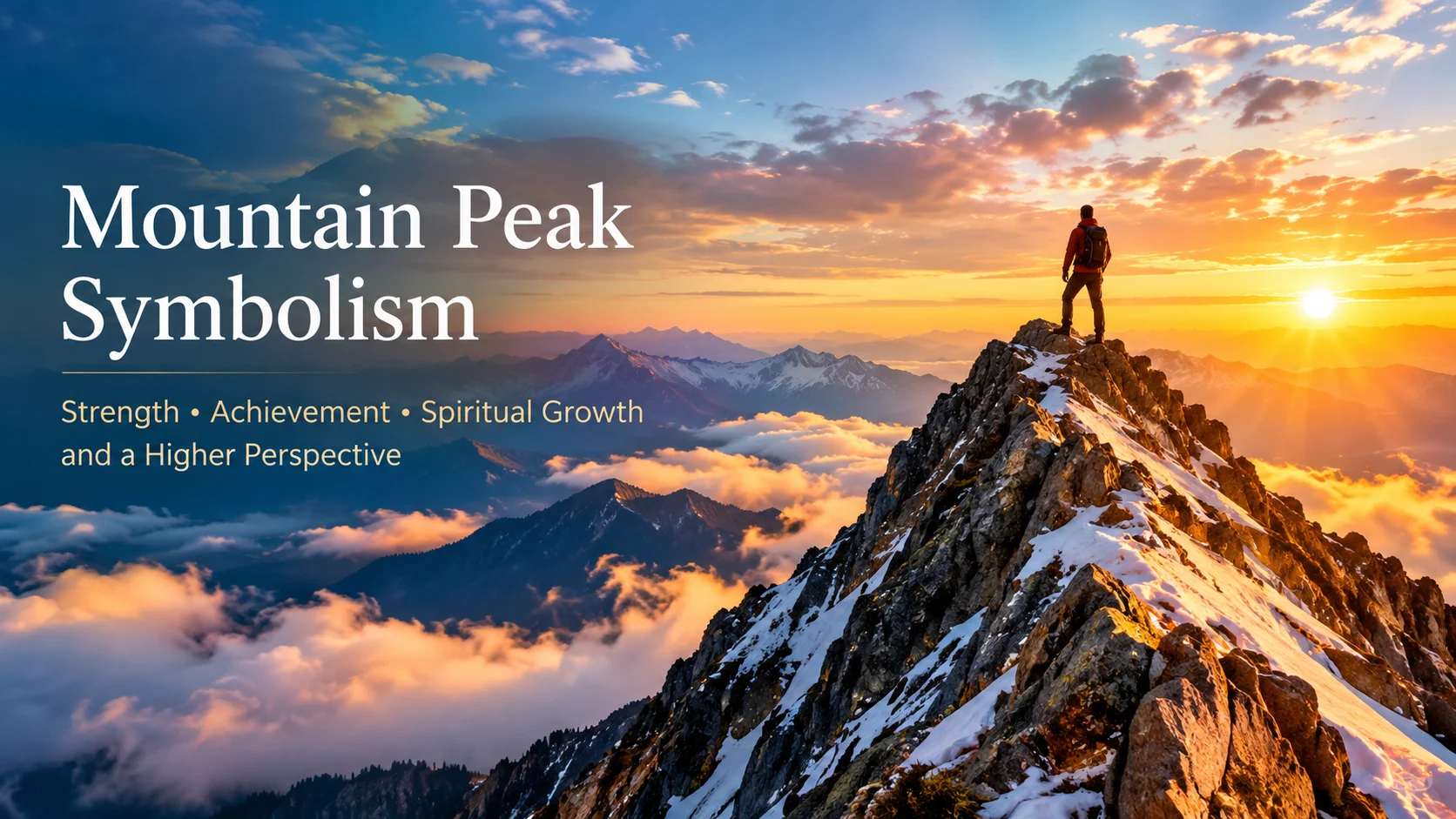
Mountain peak symbolism represents achievement, perseverance, spiritual awakening, ambition, and the courage to overcome life’s challenges. Rising above valleys and clouds, a mountain peak often symbolizes reaching a higher level of understanding, discovering inner strength, and gaining a clearer perspective on life.
From ancient spiritual traditions to modern literature, mountain summits have inspired people to look beyond everyday struggles and pursue meaningful goals. if you see a mountain peak in a dream, admire it in nature, or encounter it in a painting, its symbolism can offer powerful insights into personal growth and transformation.
Understanding mountain peak symbolism helps reveal why these natural landmarks represent some of humanity’s deepest hopes, struggles, and aspirations.
Mountain Peak Symbolism Meaning (Clear Definition)
Mountain peak symbolism is the use of a mountain’s highest point to represent achievement, strength, ambition, enlightenment, and the completion of a difficult journey. It reflects the idea that reaching meaningful goals requires patience, determination, and the willingness to face obstacles.
A mountain peak stands above the surrounding landscape, making it a natural symbol of rising beyond limitations. Its height can represent personal excellence, while the challenging climb represents the effort needed to achieve something worthwhile.
The meaning may change depending on the context. A sunlit summit might symbolize hope and success, while a distant peak hidden in clouds could represent mystery, uncertainty, or an aspiration that remains out of reach.
At its heart, mountain peak symbolism reminds us that the journey toward a goal can be just as meaningful as reaching the destination.
What Does Mountain Peak Symbolism Represent?
Mountain peaks carry several interconnected meanings. Their symbolism often reflects the challenges people face and the rewards they discover through persistence.

1. Achievement and Success
The summit represents reaching an important goal after sustained effort. It can symbolize career success, personal milestones, or the satisfaction of overcoming a difficult challenge.

2. Strength and Resilience
Mountains endure powerful winds, changing temperatures, and harsh conditions. Their peaks can symbolize the ability to remain steady during difficult periods.

3. Spiritual Awakening
A summit rising above the clouds can represent a shift in awareness, a deeper connection with nature, or a search for spiritual truth.

4. Perseverance and Determination
The climb toward a peak represents the patience and discipline required to pursue long-term ambitions, even when progress feels slow.

5. Perspective and Clarity
Looking across the landscape from a high point can symbolize seeing the bigger picture, understanding past experiences, and making wiser decisions.
Mountain Peak Symbolism at a Glance
| Symbolic meaning | What it represents |
|---|---|
| Achievement | Reaching an important goal |
| Strength | Inner stability and endurance |
| Spiritual growth | Greater awareness and understanding |
| Ambition | The desire to reach one’s potential |
| Perseverance | Continuing despite obstacles |
| Freedom | Independence and liberation |
| Perspective | Seeing life from a broader viewpoint |
| Isolation | Solitude, reflection, or loneliness |
| Transformation | Becoming stronger through challenges |
These meanings are not universal rules. Personal experiences, cultural traditions, and the surrounding imagery can influence how a mountain peak is interpreted.
Spiritual Meaning of Mountain Peak Symbolism
Spiritually, mountain peak symbolism often represents the journey toward higher consciousness, inner peace, and a deeper understanding of existence.
Because mountain summits rise above ordinary surroundings, they are frequently associated with the movement from confusion toward clarity. The ascent can represent a gradual process of releasing distractions and discovering what truly matters.
1. Reaching Higher Consciousness
A mountain peak can symbolize a higher state of awareness. Reaching the summit may represent understanding yourself more clearly, recognizing unhelpful patterns, or developing a more thoughtful relationship with the world.
This interpretation emphasizes inner development rather than superiority over others.
2. Connecting With the Divine
In many spiritual traditions, mountains are places where people seek revelation, guidance, or communion with the sacred. Their height and relative isolation can create a sense of reverence and separation from ordinary concerns.
A mountain peak may therefore symbolize a desire to connect with something greater than oneself.
3. Finding Inner Peace
The stillness of a mountain summit can represent calmness after a period of struggle. Imagining yourself standing above a sea of clouds may reflect a wish to step back from stress and approach life’s difficulties with greater patience.
4. Overcoming Spiritual Challenges
The steep path to a summit can symbolize the work involved in developing wisdom, compassion, and self-discipline. Spiritual growth is rarely immediate, and the mountain reminds us that meaningful change often happens through repeated effort.
5. Discovering Your Life Purpose
A distant summit can represent a goal that gives direction to your life. It may encourage you to examine your values, recognize your abilities, and choose a path that feels meaningful.
Ultimately, the spiritual message of a mountain peak is that growth requires both aspiration and humility. Reaching higher does not mean avoiding hardship; it means learning from the journey.
Biblical / Religious Meaning of Mountain Peak Symbolism
In biblical and religious traditions, mountains frequently serve as settings for revelation, prayer, divine encounters, and moments of profound transformation. Mountain peak symbolism can therefore suggest faith, spiritual authority, sacred knowledge, and the pursuit of a closer relationship with God.
However, the Bible does not assign one universal meaning to every mountain summit. Its significance depends on the particular passage and its context.
Mount Sinai: Revelation and Divine Guidance
In the Book of Exodus, Moses encounters God on Mount Sinai and receives the commandments (Exodus 19–20).
This account connects mountains with divine revelation, moral responsibility, and guidance. A mountain peak inspired by this story may symbolize seeking truth and living according to spiritual principles.
Mount Ararat: Hope After Destruction
Genesis 8:4 describes Noah’s ark coming to rest on the mountains of Ararat after the flood.
In symbolic interpretations, this event can evoke survival, renewal, and the possibility of a new beginning after a devastating experience.
The Mountain Sermon: Spiritual Wisdom
Matthew 5–7 presents Jesus’ Sermon on the Mount, a teaching focused on compassion, humility, righteousness, and faithful living.
The mountain setting can be understood as a place of instruction and reflection. A summit inspired by this passage may symbolize moral clarity and the importance of living with integrity.
Mountains as Places of Prayer
Throughout the Bible, mountains appear in accounts of prayer and significant spiritual encounters. Their elevated settings can represent stepping away from distractions to seek guidance and understanding.
In Christianity, a mountain peak may consequently suggest faith, hope, perseverance, and trust in God’s guidance.
Other religions also regard certain mountains as sacred. For example, Mount Kailash holds profound importance in Hinduism, Buddhism, Jainism, and Bon. These traditions have distinct teachings, so their interpretations should not be treated as interchangeable.
Mountain Peak Symbolism in History and Culture
Throughout history, mountain peaks have influenced religious practices, exploration, national identities, and cultural storytelling. Their immense size and relative permanence have made them powerful symbols of both earthly challenges and spiritual possibilities.
Ancient Sacred Mountains
Many ancient civilizations associated mountains with gods, creation stories, and sacred spaces. Their height made them natural settings for imagining encounters between the human and divine worlds.
Mount Olympus in ancient Greek tradition was believed to be the home of the gods. Its summit became associated with divine authority and a realm beyond ordinary human life.
Mountains in Asian Traditions
In several Asian spiritual traditions, mountains represent sacred geography, discipline, balance, and the pursuit of wisdom.
Mountains may serve as pilgrimage destinations or settings for meditation. Their symbolic importance reflects relationships among nature, spiritual practice, and the search for understanding.
Exploration and Human Achievement
As exploration developed, mountain summits increasingly became symbols of courage, endurance, and discovery. Mountaineering requires preparation, teamwork, judgment, and the ability to respond to changing conditions.
Reaching a summit can therefore symbolize more than personal victory. It can also represent respect for nature and an appreciation of the effort required to accomplish difficult tasks.
National Identity and Cultural Pride
Certain peaks have become powerful emblems of the regions and communities surrounding them. They can represent heritage, resilience, belonging, and the beauty of a homeland.
For example, the Himalayas hold enormous cultural and spiritual importance across South Asia. Their towering summits inspire reverence while also representing the formidable power of the natural world.
The Mountain as a Universal Challenge
Although mountain symbolism differs across cultures, one recurring theme is the relationship between difficulty and growth. The summit represents a destination, but the mountain itself reminds us that progress requires effort, adaptation, and respect for limitations.
Mountain Peak Symbolism in Literature and Art
In literature and visual art, mountain peaks often communicate ideas that are difficult to express through words alone. Their height, scale, and relationship to the sky can evoke ambition, solitude, wonder, danger, and transcendence.
Mountains as Symbols of Personal Growth
Writers often use an ascent to represent a character’s development. A difficult climb may mirror the character’s struggle with fear, responsibility, or uncertainty.
Reaching the top can mark an important turning point, although the experience may reveal that success does not automatically solve every problem.
The Romantic Sublime
During the Romantic period, many artists and writers emphasized the emotional power of nature. Vast mountain landscapes could inspire awe by making humans feel both small and deeply connected to something greater.
Painters such as Caspar David Friedrich used dramatic landscapes to explore solitude, contemplation, and the relationship between humanity and nature.
Peaks as Symbols of Ambition
In fiction, a summit can represent an objective that motivates a character. The desire to reach the highest point may reflect a search for achievement, recognition, freedom, or self-discovery.
Writers may also use unreachable peaks to suggest excessive ambition or the danger of sacrificing too much in pursuit of success.
Mountains as Places of Solitude
A character standing alone on a summit may symbolize independence, isolation, or the need for reflection. The interpretation depends on the mood of the scene.
A bright, open landscape may suggest liberation, while a cold and empty summit may emphasize loneliness.
Mountain Imagery in Visual Art
Artists use scale, color, light, and atmosphere to shape the meaning of a mountain peak.
- Golden sunlight: Hope, achievement, and awakening.
- Snow-covered summits: Purity, stillness, and endurance.
- Dark, rugged peaks: Difficulty, uncertainty, and strength.
- Cloud-covered mountains: Mystery, spiritual searching, and the unknown.
- Distant peaks: Long-term goals, ambition, and possibilities.
Through these visual elements, mountain peak symbolism becomes a flexible way to explore human aspirations and emotional experiences.
Dream Meaning of Mountain Peak Symbolism
Dreaming of a mountain peak may reflect ambition, personal challenges, emotional growth, or the desire to overcome a difficult situation. The details of the dream and your feelings during it can help you explore its personal significance.
Dream interpretations are subjective, not reliable predictions of future events.
Dreaming of Reaching a Mountain Peak
Reaching a summit may reflect confidence, progress, or satisfaction with something you have accomplished. It can also represent a goal you are working hard to achieve.
Dreaming of Climbing a Steep Mountain
A steep climb may mirror pressure, uncertainty, or a demanding responsibility in waking life. It can encourage you to consider if you need more support, patience, or a different approach.
Dreaming of a Snowy Mountain Peak
A snowy summit may evoke peace, clarity, emotional distance, or a desire for a fresh start. If the dream feels cold or frightening, it could instead reflect loneliness or uncertainty.
Dreaming of Standing Above the Clouds
Standing above the clouds may symbolize hope, freedom, or a broader perspective on a confusing situation. Your emotional response can help distinguish feelings of relief from feelings of isolation.
Dreaming of Falling From a Summit
Falling may reflect fear of failure, uncertainty about success, or concern that something important could be lost. It does not mean that a real-life failure is destined to happen.
Dreaming of a Mountain Peak You Cannot Reach
An unreachable summit may represent a distant ambition, frustration, or a goal that currently feels overwhelming. It may be an invitation to break a large objective into smaller, more manageable steps.
When exploring such a dream, consider three questions: What was I trying to reach? What obstacles did I face? How did I feel when I looked at the summit?
Your answers may offer more useful insight than a fixed interpretation.
Modern Meaning of Mountain Peak Symbolism
Today, mountain peak symbolism appears in personal development, business, travel, wellness, and everyday conversations. It often represents the desire to improve, overcome limitations, and create a life that reflects personal values.
1. Personal Development
A mountain summit can represent becoming a more confident, disciplined, or compassionate person. The symbolism encourages steady improvement rather than expecting immediate perfection.
2. Career and Professional Success
In professional settings, reaching the peak often means achieving a major milestone, developing expertise, or taking on greater responsibility.
However, the mountain metaphor also reminds us that success involves preparation, collaboration, and knowing when to rest or change direction.
3. Mental Strength and Resilience
Mountain imagery can serve as a reminder that difficult periods are not necessarily permanent. A challenging climb encourages patience, realistic planning, and the recognition that progress may happen gradually.
It does not suggest that every obstacle can be overcome through willpower alone. Sometimes the strongest decision is to pause, seek help, or choose another route.
4. Freedom and Adventure
For hikers and travelers, mountain peaks can symbolize exploration, independence, and a closer relationship with nature. The summit offers a tangible experience of effort followed by discovery.
The experience also encourages respect for weather, terrain, physical limits, and environmental protection.
5. Mindfulness and Perspective
Looking at a mountain can help some people slow down and reflect. Its scale may place everyday worries into a broader perspective, while its quiet surroundings can encourage attention to the present moment.
6. Tattoos and Personal Emblems
A mountain peak tattoo may represent perseverance, a personal achievement, love of nature, or a meaningful life transition. Some people choose it to commemorate a journey or remind themselves to keep moving toward a goal.
Its meaning is personal rather than fixed, and details such as a sunrise, trail, compass, or stars can add individual significance.
Frequently Asked Questions About Mountain Peak Symbolism
What is the main meaning of mountain peak symbolism?
Mountain peak symbolism primarily represents achievement, perseverance, strength, and personal growth. It reflects the effort required to overcome obstacles and reach meaningful goals.
What does a mountain peak symbolize spiritually?
Spiritually, a mountain peak can represent enlightenment, inner peace, divine connection, and a search for deeper truth. Its elevated position often evokes rising above distractions to gain greater understanding.
Is a mountain peak a symbol of success?
Yes, mountain peaks commonly symbolize success because reaching a summit requires effort, planning, and persistence. They can represent completing a challenging project or achieving an important personal milestone.
What does dreaming about a mountain peak mean?
Dreaming about a mountain peak may reflect your ambitions, current challenges, or desire for personal growth. The dream’s details and your emotions can help you explore what it might mean in your own life.
What does a mountain peak tattoo symbolize?
A mountain peak tattoo often represents resilience, independence, adventure, and overcoming adversity. It can also commemorate a significant achievement or express a personal connection to nature.
Conclusion: The Deeper Meaning of Mountain Peak Symbolism
Mountain peak symbolism reminds us that meaningful achievements are built through patience, courage, and perseverance. A summit can represent success, spiritual awareness, freedom, or the clarity that comes from seeing life from a new perspective.
if you encounter a mountain peak in nature, art, a dream, or a personal emblem, its message is simple: keep growing, respect the journey, and remember that every meaningful ascent begins with a single step.

I am Luna Grace, an author passionate about exploring the meanings, history, and symbolism behind everyday signs. I enjoy sharing thoughtful insights that help readers understand symbols and their deeper significance.


