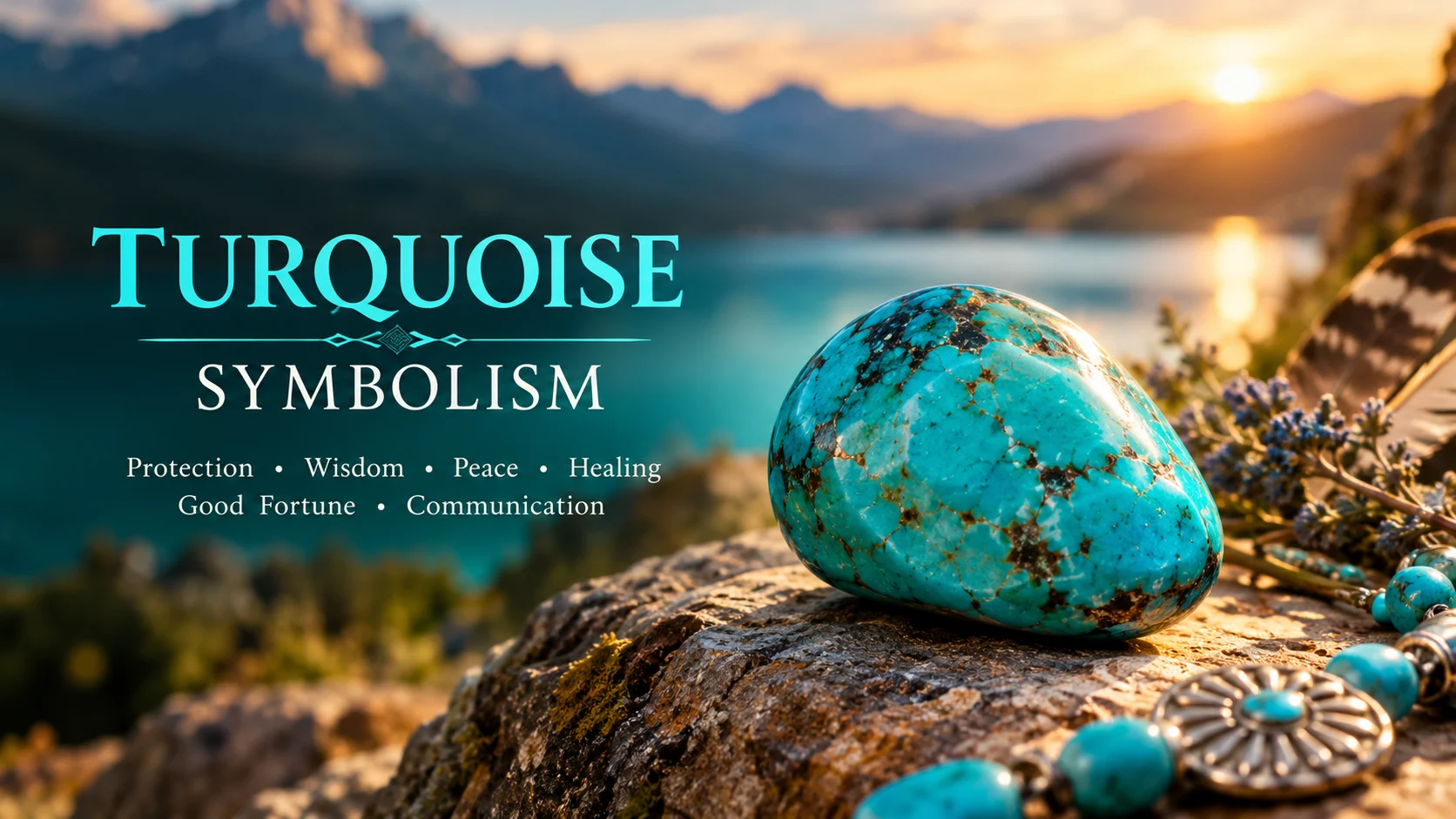
Turquoise symbolism is deeply connected to protection, wisdom, peace, healing, and good fortune. Known for its beautiful blue-green color, turquoise has been treasured for thousands of years as a gemstone associated with the sky, water, and the natural world. Its calming appearance and rich cultural history have made it a lasting symbol of hope, emotional balance, and spiritual connection.
From ancient jewelry to modern fashion, turquoise represents more than beauty. Many people associate this gemstone with positive energy, clear communication, inner strength, and protection against negativity.
Whether you wear turquoise jewelry, admire its natural color, or are curious about its spiritual meaning, understanding turquoise symbolism can reveal why this gemstone continues to inspire people across cultures.
Turquoise Symbolism Meaning (Clear Definition)
Turquoise symbolism refers to the meanings and associations connected with the turquoise gemstone, especially protection, wisdom, peace, healing, communication, and good fortune.
The gemstone’s blue-green color often evokes clear skies, flowing water, and a sense of natural harmony. Throughout history, people have valued turquoise for its beauty and incorporated it into jewelry, ceremonial objects, and cultural traditions.
At its core, turquoise symbolizes the balance between emotional calm and personal strength. It can represent the courage to speak honestly, the ability to move through difficult experiences, and the hope of welcoming positive changes.
Here are the most common meanings associated with turquoise:
- Protection: A traditional symbol of spiritual safeguarding and security.
- Wisdom: The ability to learn from experience and make thoughtful decisions.
- Peace: Calmness, harmony, and emotional balance.
- Healing: Renewal, comfort, and the desire to restore well-being.
- Communication: Honest expression, truth, and understanding.
- Good fortune: Luck, prosperity, and hopeful opportunities.
- Connection with nature: The beauty of water, sky, and the natural world.
These meanings vary across cultures and personal beliefs. Although turquoise is traditionally associated with healing and protection, there is no strong scientific evidence that the gemstone itself produces supernatural effects.
What Does Turquoise Symbolism Represent?
Turquoise symbolism represents several powerful ideas that make the gemstone meaningful in both traditional and modern life.
1. Protection and Safety
One of the most enduring meanings of turquoise is protection. Across various cultures, people have worn turquoise jewelry or carried turquoise objects as protective charms.
The gemstone is often associated with feeling safe, remaining grounded, and facing uncertainty with confidence. A turquoise pendant or ring may serve as a personal reminder to approach life’s challenges with courage.
2. Wisdom and Understanding
Turquoise is also connected with wisdom, awareness, and thoughtful decision-making.
Its long history encourages associations with inherited knowledge and lessons passed from one generation to another. Symbolically, turquoise reminds us to pause, consider different perspectives, and learn from experience before making important choices.
3. Peace and Emotional Balance
The blue-green color of turquoise is frequently associated with peaceful water and open skies.
These natural images make the gemstone a symbol of calmness, emotional stability, and harmony. People who feel drawn to turquoise may appreciate what it represents: a quieter mind, balanced emotions, and a more peaceful approach to everyday life.
4. Healing and Renewal
In traditional spiritual beliefs, turquoise has been associated with healing and restoration.
Its symbolism can represent recovery after a difficult period, renewed hope, or the willingness to care for yourself. This meaning is especially relevant during times of transition, when emotional resilience and self-compassion become important.
These are symbolic and traditional associations rather than proven medical benefits.
5. Communication and Truth
Turquoise is often linked with honest communication and self-expression.
Its blue tones suggest clarity, while its green tones evoke growth and harmony. Together, these associations make turquoise a fitting symbol for speaking truthfully, listening carefully, and expressing feelings with kindness.
6. Good Luck and Prosperity
Many traditions associate turquoise with good fortune and favorable circumstances.
As a symbolic object, it may represent optimism, new opportunities, and confidence about the future. Some people wear turquoise when beginning a new job, traveling, or entering an important stage of life.
7. Friendship and Loyalty
Turquoise can also symbolize trust, loyalty, and lasting relationships.
Its traditional role in jewelry and gift-giving makes it a meaningful choice for expressing affection and appreciation. A turquoise gift can represent the hope that a relationship remains honest, supportive, and strong.
Spiritual Meaning of Turquoise Symbolism
The spiritual meaning of turquoise symbolism centers on protection, inner peace, truth, and a deeper connection with oneself and the world.
In spiritual traditions that value gemstones, turquoise is sometimes viewed as a reminder to maintain emotional balance, trust personal wisdom, and approach life’s uncertainties with an open heart.
Turquoise and Spiritual Protection
Many people consider turquoise a protective stone. In spiritual practice, it may serve as a reminder to establish healthy boundaries, release unhelpful influences, and remain confident during challenging situations.
Its symbolic message is simple: protect your peace while remaining open to life.
Turquoise and the Throat Chakra
In some modern chakra traditions, turquoise is associated with the throat chakra, which represents communication, self-expression, and speaking one’s truth.
People who follow these beliefs may use turquoise during meditation or wear it as a reminder to express themselves honestly.
Chakra associations belong to spiritual belief systems rather than scientifically established descriptions of the human body.
Turquoise and Inner Peace
Turquoise is often connected with tranquility and emotional clarity.
Its resemblance to tropical waters and clear skies makes it a natural symbol of serenity. In a spiritual context, it can represent the practice of slowing down, listening to your inner thoughts, and responding thoughtfully rather than reacting impulsively.
Turquoise and Personal Transformation
Another spiritual interpretation of turquoise is transformation through wisdom.
The gemstone can symbolize learning from past experiences without allowing them to define your future. It encourages a balance between honoring your history and remaining open to new possibilities.
For many people, this makes turquoise a meaningful symbol during personal growth, major life changes, or periods of renewed purpose.
Biblical / Religious Meaning of Turquoise Symbolism
Turquoise symbolism has religious and cultural significance in several traditions, although its meaning is not identical across them.
In Christianity, the Bible does not establish a universal symbolic meaning for turquoise specifically. However, blue and blue-green colors may remind some readers of themes such as heaven, creation, peace, and divine beauty.
Turquoise and Biblical Themes
Turquoise can be interpreted through broader biblical themes, including:
- Creation: Its natural colors evoke the beauty of the sky, water, and the created world.
- Wisdom: The gemstone can serve as a personal reminder to seek understanding and make thoughtful choices.
- Peace: Its calming appearance may inspire reflection on spiritual peace and trust.
- Hope: Its bright color can represent renewal and the possibility of a better future.
These are interpretive associations, not definitive biblical teachings about turquoise.
Turquoise in Indigenous Spiritual Traditions
Turquoise holds particular importance in various Indigenous cultures of the American Southwest. Among some Diné (Navajo), Pueblo, and other Southwestern communities, it has been incorporated into jewelry, artistic traditions, ceremonial objects, and expressions of cultural identity.
Its significance differs between communities and contexts, so these traditions should not be reduced to a single universal spiritual meaning.
Turquoise in Islamic and Other Cultural Contexts
Turquoise has appeared in jewelry, decorative arts, architecture, and objects of religious or cultural importance in parts of the Islamic world and across Asia.
Its use reflects the gemstone’s beauty, craftsmanship, and cultural prestige. Although people may associate it with blessing, protection, or good fortune, the specific meanings depend on the community and tradition.
Overall, turquoise can inspire spiritual reflection, but its religious meaning should be understood in its particular historical and cultural context.
Turquoise Symbolism in History and Culture
Turquoise has been treasured for thousands of years. Its distinctive blue-green appearance, relative softness, and suitability for carving have made it a valued material for jewelry, ornaments, and decorative objects.


8
Ancient Egypt: Protection and Status
In ancient Egypt, turquoise was used in jewelry, amulets, and decorative objects. It appeared alongside materials such as gold, carnelian, and lapis lazuli.
Its striking color was associated with preciousness and the beauty of the natural world. Turquoise objects could also carry religious or protective significance within ancient Egyptian traditions.
Persia: Beauty and Craftsmanship
Turquoise became especially prominent in Persian art and architecture.
Skilled artisans used turquoise-colored tiles and gemstone inlays to decorate buildings, jewelry, and ornamental objects. The color became a recognizable feature of Persian decorative traditions, particularly in religious and architectural settings.
In these contexts, turquoise represents artistic excellence, cultural heritage, and enduring beauty.
Indigenous Cultures of the American Southwest
Turquoise has a long and important history among Indigenous peoples of the American Southwest.
It has been used in necklaces, bracelets, silverwork, and other forms of artistic expression. In some communities, turquoise carries spiritual, relational, or ceremonial significance in addition to its material value.
Its importance cannot be separated from the living traditions, knowledge, and identities of the peoples who have worked with and treasured it.
Turquoise Along Trade Routes
Turquoise traveled across regions through trade networks, connecting distant communities and artistic traditions.
The gemstone’s movement helped spread its use in jewelry, decorative objects, and cultural exchange. Its enduring popularity reflects both its distinctive appearance and the meanings different societies have attached to it.
Turquoise in Modern Jewelry
Today, turquoise remains popular in rings, pendants, earrings, bracelets, and statement necklaces.
It appears in traditional silverwork, contemporary minimalist designs, and bohemian-inspired fashion. For some wearers, turquoise celebrates cultural heritage; for others, it expresses individuality, a love of nature, or a personal association with peace and protection.
Turquoise Symbolism in Literature and Art
In literature and art, turquoise often evokes the sea, the sky, distant landscapes, and the mystery of precious objects.
Its meaning depends on how an artist uses its color, texture, and cultural associations.
Turquoise as a Symbol of Freedom
The color turquoise can suggest open horizons, tropical waters, and expansive skies.
Writers and visual artists may use it to create a feeling of escape, independence, or adventure. A turquoise sea, for example, can represent the desire to move beyond familiar surroundings and discover new possibilities.
Turquoise as a Symbol of Mystery
As a gemstone, turquoise can represent rarity, hidden value, and ancient knowledge.
In a story, a turquoise pendant might serve as a family heirloom, a treasured gift, or an object connected with a character’s past. Its significance comes from the memories and experiences attached to it.
Turquoise as a Symbol of Hope
Turquoise’s bright color can introduce a sense of renewal into an otherwise dark or subdued scene.
An artist might use turquoise accents to suggest emotional recovery, a fresh beginning, or the return of optimism after hardship.
Turquoise in Visual Design
Artists and designers often use turquoise to balance coolness with vibrancy.
It can create a fresh, peaceful atmosphere while remaining more energetic than many muted blues. When combined with gold, it may feel luxurious; paired with white, it can feel clean and airy; alongside earthy browns, it can evoke desert landscapes and natural materials.
These associations make turquoise useful in painting, illustration, interior design, and fashion.
Dream Meaning of Turquoise Symbolism
Dreaming about turquoise may symbolize peace, emotional clarity, protection, communication, or a desire for positive change.
However, dream meanings are subjective. A dream’s personal significance depends on your emotions, memories, cultural background, and the details of the experience.
Here are several possible interpretations:
- Seeing a turquoise gemstone: You may be thinking about personal value, confidence, or something meaningful in your life.
- Wearing turquoise jewelry: This may reflect a desire for security, self-expression, or stronger personal boundaries.
- Receiving turquoise as a gift: The dream could relate to trust, appreciation, friendship, or emotional support.
- Finding turquoise: This might represent discovering a new perspective, recognizing your strengths, or becoming aware of an opportunity.
- Losing turquoise: This could reflect concerns about security, confidence, or losing touch with something important.
- Seeing bright turquoise water: The image may suggest calmness, freedom, emotional renewal, or a wish for a fresh start.
Rather than treating these interpretations as predictions, consider what turquoise means to you personally. Your feelings during the dream may offer more insight than the gemstone alone.
Modern Meaning of Turquoise Symbolism
In modern life, turquoise symbolism continues to connect traditional meanings with personal expression, style, and well-being.
Its versatility allows people to interpret the gemstone in ways that reflect their values, experiences, and aspirations.
Turquoise in Fashion and Jewelry
Turquoise jewelry can symbolize individuality, confidence, and a connection with natural beauty.
The gemstone pairs well with silver, gold, leather, and neutral clothing. Some people choose it because of its cultural significance, while others simply appreciate its distinctive color.
Turquoise in Home Decor
Turquoise is widely used in interior design because it can feel both calming and refreshing.
In a living room, it can add energy to a neutral palette. In a bedroom, softer turquoise tones may create a peaceful atmosphere. In kitchens and creative spaces, brighter shades can introduce a lively, uplifting accent.
Its effect depends on the shade, lighting, and colors surrounding it.
Turquoise as a Personal Symbol
Many people choose gemstones as reminders of personal goals or values.
Turquoise can represent the courage to speak honestly, the importance of emotional balance, or the intention to protect one’s peace. Wearing it may provide a meaningful connection to these ideas without requiring any supernatural belief.
Turquoise as a Gift
Turquoise can make a thoughtful gift for birthdays, milestones, travel, or new beginnings.
Depending on the relationship and the recipient’s beliefs, it may communicate wishes for protection, happiness, friendship, and good fortune.
The most meaningful gift is one that reflects the recipient’s personal taste and the significance you share.
Turquoise Symbolism: Quick Reference Table
| Symbolic meaning | What it represents |
|---|---|
| Protection | Safety, confidence, and spiritual safeguarding |
| Wisdom | Understanding, experience, and thoughtful choices |
| Peace | Calmness, harmony, and emotional balance |
| Healing | Renewal, comfort, and restoration |
| Communication | Truth, self-expression, and honest conversation |
| Good fortune | Optimism, opportunity, and prosperity |
| Friendship | Loyalty, trust, and meaningful connections |
| Freedom | Open horizons, independence, and exploration |
| Transformation | Growth, resilience, and new beginnings |
These meanings are common symbolic associations, not fixed rules. Your personal interpretation may differ from traditional beliefs.
Frequently Asked Questions About Turquoise Symbolism
1. What does turquoise symbolize spiritually?
Turquoise is commonly associated with spiritual protection, wisdom, peace, and inner balance. In some modern spiritual traditions, it is also linked with the throat chakra and honest communication.
2. Is turquoise a symbol of good luck?
Yes, turquoise has traditionally been regarded as a good-luck stone in various cultures. People may wear it as a symbol of hope, favorable opportunities, and protection, although its ability to influence luck has not been scientifically established.
3. What does turquoise symbolize in love?
Turquoise can symbolize trust, loyalty, honest communication, and emotional harmony in relationships. As a gift, it may express affection and the wish for a lasting, supportive connection.
4. What does wearing turquoise mean?
Wearing turquoise may represent personal style, cultural heritage, protection, peace, or a connection with nature. Its meaning depends on the wearer’s beliefs, background, and personal intentions.
5. What is the difference between turquoise and blue symbolism?
Blue is commonly associated with calmness, trust, depth, and stability, while turquoise combines many blue associations with the freshness and growth often connected with green. As a gemstone, turquoise also carries distinctive historical and cultural meanings related to jewelry, craftsmanship, and protection.
Conclusion: The Lasting Meaning of Turquoise
Turquoise symbolism brings together protection, wisdom, peace, communication, and hope. From ancient artifacts and traditional jewelry to modern fashion and personal keepsakes, this remarkable gemstone continues to inspire people with its beauty and rich cultural history.
Whether you see turquoise as a spiritual symbol, an expression of personal style, or a reminder to live with greater balance, its central message is one of clarity, connection, and renewal. Its true significance lies not only in its color but also in the meaning you choose to give it.

I am Simon Michael, an author passionate about exploring symbols, their meanings, and cultural significance. I enjoy making symbolism simple, engaging, and meaningful for curious readers everywhere.


