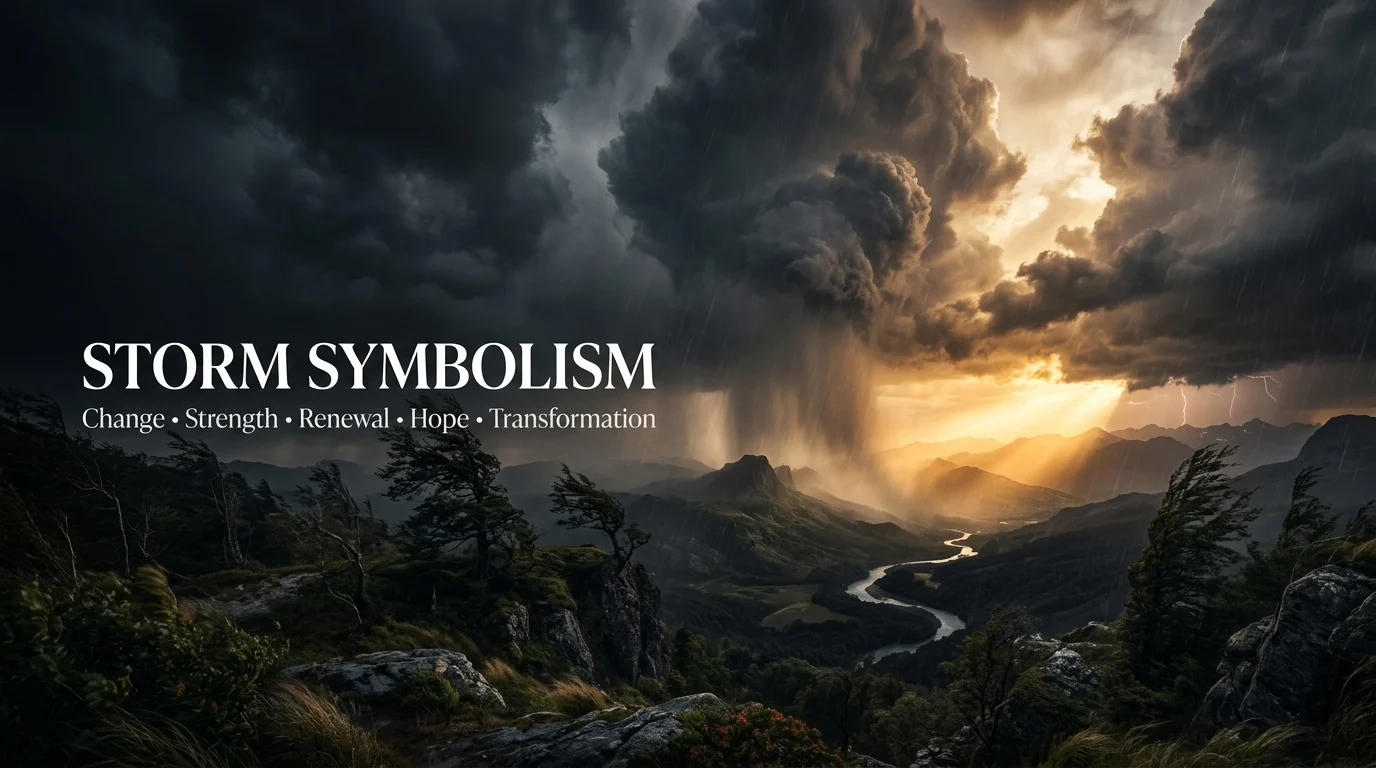
Storm symbolism is often connected with powerful change, emotional intensity, conflict, cleansing, and transformation. A storm can represent the difficult moments that disrupt life, but it can also symbolize renewal, inner strength, and the hope that follows darkness.
From ancient myths to modern literature, storms have been used to express forces that are larger than ourselves. Their meaning can feel frightening, inspiring, or deeply personal depending on the situation.
Storm Symbolism Meaning (Clear Definition)
Storm symbolism represents powerful change, emotional turmoil, conflict, cleansing, transformation, and the release of built-up energy.
A storm contains both destruction and renewal. Heavy rain can wash away what is old, while thunder and lightning can symbolize sudden realization or dramatic change.
Common meanings of storm symbolism include:
| Symbolic Meaning | What It Represents |
|---|---|
| Change | A major shift or turning point |
| Emotional turmoil | Inner conflict, stress, or overwhelming feelings |
| Power | Forces beyond human control |
| Cleansing | Release, purification, and emotional renewal |
| Transformation | Growth through difficult experiences |
| Conflict | Tension, disagreement, or struggle |
| Hope | The promise of calm after hardship |
The meaning is rarely limited to something negative. A storm may symbolize the difficult process that ultimately creates space for something better.
What Does Storm Symbolism Represent?
Storm symbolism can represent several powerful ideas:
- Transformation: Storms can mark the end of one phase and the beginning of another.
- Emotional release: Thunder, rain, and wind can reflect suppressed emotions finally coming to the surface.
- Strength and resilience: Surviving a storm symbolizes endurance and courage.
- Conflict: Dark clouds and violent weather often represent tension or struggle.
- Cleansing and renewal: Rain can symbolize washing away pain, negativity, or the past.
- Uncertainty: An approaching storm may represent fear of what cannot yet be controlled.
- Awakening: Lightning can symbolize a sudden insight, realization, or breakthrough.
In everyday life, people often describe difficult periods as “storms” because the metaphor captures both their intensity and temporary nature.
Spiritual Meaning of Storm Symbolism
Spiritually, storms can symbolize trials, purification, transformation, and spiritual awakening.
A storm may appear as a metaphor for a period when old beliefs, habits, or emotional patterns are being challenged. Although the experience may feel chaotic, it can encourage deeper self-awareness.
Storms as Spiritual Transformation
Storms can represent the process of becoming stronger through adversity. The disruption forces a person to reconsider what is important and what needs to change.
Storms as Cleansing
Rain has long been associated with purification. Spiritually, a storm can symbolize releasing emotional burdens and creating a fresh beginning.
Storms as a Test of Faith
An intense storm can represent a period when faith, patience, or trust is being tested. The symbolism often emphasizes remaining grounded even when circumstances are uncertain.
Storms as Awakening
Thunder and lightning arrive suddenly, making them powerful symbols of realization. A storm can therefore represent an unexpected truth or an important moment of personal awakening.
Biblical / Religious Meaning of Storm Symbolism
In the Bible and other religious traditions, storms can carry meanings related to divine power, judgment, testing, protection, and faith.
Biblical storm imagery often emphasizes the enormous power of God compared with human limitations. Storms can also become settings in which characters experience fear, uncertainty, miracles, or renewed faith.
One of the best-known biblical storm narratives appears in the Gospels, where Jesus calms a storm while his disciples are frightened. The story is commonly interpreted in relation to faith, trust, and divine authority.
Storms can therefore have a dual religious meaning: they may represent frightening trials, while also reminding believers that hardship does not necessarily mean they have been abandoned.
Storm Symbolism in History and Culture
Storms have fascinated human societies for thousands of years because ancient people could witness their extraordinary power without understanding their meteorological causes.
In many ancient cultures, thunder and storms were associated with powerful gods or supernatural forces. Storm deities frequently represented authority, fertility, warfare, or the ability to control nature.
Rainstorms could have a particularly positive meaning for agricultural societies because rainfall supported crops and survival. At the same time, destructive storms could symbolize danger, divine displeasure, or chaos.
Across cultures, storm symbolism commonly developed around the tension between destruction and renewal.
A storm could destroy homes and crops, yet the rain could nourish the earth afterward. This contradiction helped make storms a lasting symbol of life’s difficult but transformative cycles.
Storm Symbolism in Literature and Art
Storms are among the most powerful symbols in literature and visual art.
Writers often use changing weather to reflect a character’s emotional state. A violent storm may appear during moments of fear, conflict, betrayal, or uncertainty, while clearing skies can suggest relief and hope.
In poetry, storm imagery can represent intense love, anger, grief, revolution, or personal struggle.
Artists also use storms to create dramatic contrasts between darkness and light. A threatening sky can make a small figure appear vulnerable, emphasizing humanity’s relationship with nature and forces beyond personal control.
Some common artistic interpretations include:
- Dark clouds: uncertainty or approaching difficulty
- Thunder: conflict, warning, or powerful emotion
- Lightning: sudden insight or revelation
- Heavy rain: grief, cleansing, or emotional release
- Strong wind: instability or freedom
- A storm clearing: hope, recovery, and renewal
- Sunlight after a storm: peace after hardship
Dream Meaning of Storm Symbolism
Dreaming about a storm can symbolize emotional pressure, uncertainty, major change, conflict, or the need to release something.
The specific meaning depends heavily on what happens in the dream.
Dreaming of a Violent Storm
A violent storm may reflect overwhelming emotions, stress, or a difficult situation that feels outside your control.
Dreaming of Watching a Storm
Watching a storm from a safe place can symbolize awareness. You may recognize that change or conflict is approaching without being directly consumed by it.
Dreaming of Being Caught in a Storm
Being inside a storm may represent feeling overwhelmed by circumstances, relationships, responsibilities, or powerful emotions.
Dreaming of a Storm Ending
A storm that suddenly clears can symbolize relief, healing, resolution, or the beginning of a calmer period.
Dreaming of Rain After a Storm
Rain following a storm can suggest emotional cleansing and renewal. It may symbolize letting go of the past and moving forward with greater clarity.
Modern Meaning of Storm Symbolism
Today, storm symbolism remains relevant because people still use storms to describe periods of intense personal or social change.
A person might describe a difficult relationship, career setback, emotional struggle, or uncertain period as a “storm.” The expression reflects the idea that hardship can be powerful without being permanent.
Modern interpretations often focus on resilience and personal growth.
The storm represents the challenge, while surviving it represents strength. In this sense, storm symbolism encourages people to remember that difficult seasons can eventually lead to greater clarity and a new direction.
Storms can also symbolize emotional honesty. Instead of pretending everything is calm, storm imagery acknowledges that anger, grief, fear, and frustration are natural parts of human experience.
Frequently Asked Questions About Storm Symbolism
What is the main meaning of storm symbolism?
Storm symbolism mainly represents change, emotional turmoil, conflict, power, cleansing, and transformation. It can also symbolize resilience and hope after hardship.
What does a storm symbolize spiritually?
Spiritually, a storm can represent a period of testing, purification, awakening, or transformation. It may symbolize finding strength and faith during uncertain circumstances.
What does a storm symbolize in dreams?
A storm in a dream can represent overwhelming emotions, conflict, uncertainty, or major life changes. A storm that ends may symbolize relief, healing, or a fresh beginning.
What does a storm symbolize in the Bible?
Biblical storm symbolism can relate to divine power, faith, trials, judgment, and protection. Storm narratives often highlight humanity’s vulnerability and the importance of trusting in God.
Is storm symbolism positive or negative?
Storm symbolism can be either positive or negative. While storms can represent fear, destruction, and conflict, they can equally symbolize cleansing, transformation, strength, and renewal.
Conclusion
Storm symbolism reminds us that life is not always calm or predictable. A storm can represent fear and struggle, but it can also bring cleansing, transformation, and the possibility of a new beginning.
Sometimes the most meaningful part of a storm is not the darkness itself, but what becomes possible after the clouds begin to clear.

I am Leon James, Administrator at SymboJoy, passionate about symbols, special characters, emojis, and creative text. I help make digital expression simple, useful, inspiring, and enjoyable.