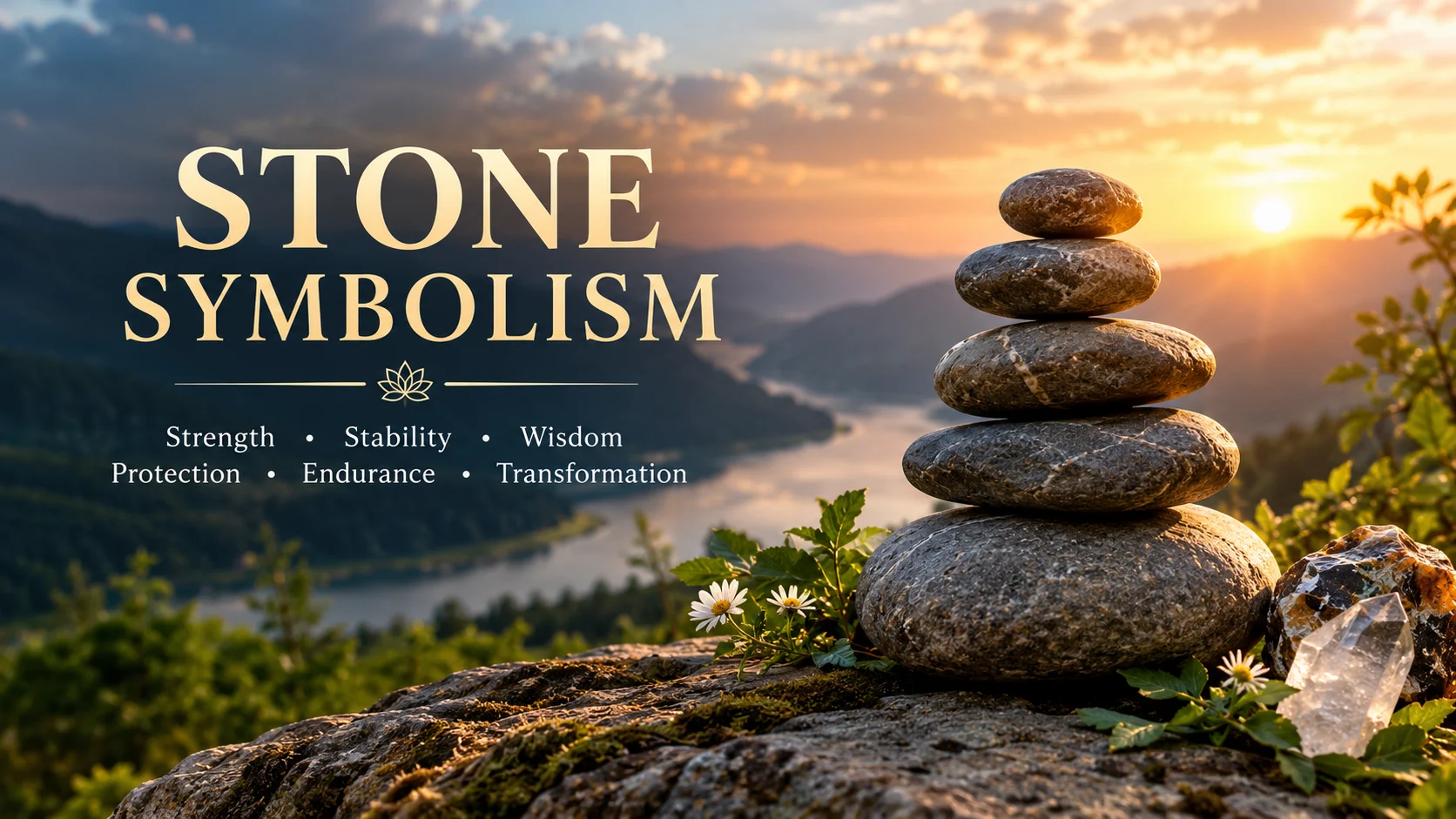
Stone symbolism explores the deep meanings people have attached to stones throughout history, including strength, stability, endurance, wisdom, and protection. From ancient monuments to spiritual traditions, stones have represented the ability to remain grounded through change and stand firm during life’s challenges.
A simple stone may seem ordinary, yet its lasting presence can inspire powerful reflections on patience, resilience, and the passage of time. Stones form slowly through natural processes, often enduring for thousands or even millions of years. This remarkable durability has made them meaningful symbols of permanence and inner strength across cultures.
if you discover a stone on a quiet walk, wear one as jewelry, or encounter it in a dream, its symbolic meaning often connects to stability, personal growth, and the foundations of life.
Stone Symbolism Meaning (Clear Definition)
Stone symbolism refers to the symbolic meanings associated with stones, especially strength, stability, endurance, protection, permanence, and wisdom.
Because stones withstand many natural forces, they often represent qualities that help people remain steady during difficult times. They can also symbolize emotional grounding, ancient knowledge, and the lasting foundations upon which individuals build their lives.
The meaning of a stone may change depending on its color, shape, location, cultural background, and personal significance.
For example, a large mountain stone may represent permanence and resilience, while a small smooth stone collected from a river might symbolize peace, reflection, or a meaningful memory.
At its core, stone symbolism reminds us that lasting strength often develops through patience, time, and the ability to endure challenges.
What Does Stone Symbolism Represent?
Stone symbolism carries several important meanings that connect the natural world with human experience.


9
Here are the most common symbolic interpretations of stones.
- Strength: Stones represent the ability to remain firm when life becomes difficult.
- Stability: Their solid nature symbolizes security, balance, and dependable foundations.
- Endurance: Stones can survive for centuries, making them symbols of patience and perseverance.
- Protection: Stone walls, fortresses, and protective structures represent safety and defense.
- Wisdom: Ancient stones connect us with history, experience, and knowledge passed between generations.
- Grounding: Natural stones can serve as reminders to stay present and connected to reality.
- Permanence: Their durability symbolizes lasting commitments, memories, and relationships.
- Transformation: Stones change through pressure, erosion, heat, and time, reflecting the gradual process of personal growth.
These meanings can overlap. A stone used in a family monument, for instance, might symbolize both enduring love and the preservation of memory.
Stone Symbolism at a Glance
| Symbolic meaning | What it represents |
|---|---|
| Strength | Courage and resilience |
| Stability | Security and balance |
| Protection | Safety and boundaries |
| Wisdom | Experience and ancient knowledge |
| Endurance | Patience through hardship |
| Grounding | Present-moment awareness |
| Transformation | Growth through life’s challenges |
| Permanence | Lasting bonds and memories |
The most meaningful interpretation depends on how the stone appears and what it represents in your particular situation.
Spiritual Meaning of Stone Symbolism
Spiritually, stones often represent grounding, inner strength, protection, and a connection to the natural world. Many spiritual practices use stones as reminders of personal intentions, mindfulness, and the importance of maintaining balance.
1. Grounding and Connection to Earth
Stones come directly from the Earth, making them natural symbols of grounded living. Their solid texture and weight can remind people to slow down, become aware of the present moment, and reconnect with their surroundings.
Holding a smooth stone during meditation, for example, may serve as a simple way to focus attention and encourage calm reflection.
2. Inner Strength and Resilience
Stone symbolism can encourage you to recognize your ability to withstand difficult experiences without losing your sense of self.
Just as a stone may remain in place while weather changes around it, you can learn to respond to uncertainty with patience and thoughtful action.
This does not mean you must become emotionally hard. True resilience also includes flexibility, compassion, and knowing when to seek support.
3. Protection and Spiritual Boundaries
Across different traditions, stones have been used in protective objects, sacred structures, and meaningful personal rituals.
Symbolically, they may represent the boundaries that help protect your energy, time, values, and emotional well-being.
4. Patience and Personal Growth
Stones remind us that many natural processes take time. Erosion gradually shapes a rock, while pressure and heat can transform minerals into new forms.
This offers a powerful metaphor for personal development: growth does not always happen quickly, and difficult experiences can sometimes lead to greater understanding.
5. Connection With Ancient Wisdom
Ancient stone circles, carved monuments, and sacred buildings demonstrate humanity’s long-standing desire to preserve knowledge and meaning.
Spiritually, stones can represent the wisdom gained from experience and the importance of remembering the lessons of previous generations.
A simple spiritual message of stone symbolism is this: stay grounded in your values, remain patient with your progress, and build a life on foundations that matter.
It is worth remembering that spiritual interpretations are matters of belief and culture. There is no scientific evidence that ordinary stones possess supernatural powers or guarantee protection, healing, or good fortune.
Biblical / Religious Meaning of Stone Symbolism
In biblical and religious traditions, stones carry several significant meanings, including faith, strength, remembrance, judgment, refuge, and spiritual foundations.
Their meanings depend on the passage, tradition, and historical context in which they appear.
Stones as Symbols of Faith
In the Bible, God is sometimes described through the imagery of a rock, emphasizing reliability, protection, and strength.
Psalm 18:2 describes the Lord as a rock, fortress, and deliverer. This imagery presents divine protection as something dependable during times of danger or distress.
Stones as Foundations
In Matthew 7:24–25, Jesus compares a wise person who follows his teachings to someone who builds a house on rock.
When storms arrive, the house remains standing because its foundation is secure.
Symbolically, this passage connects stone with wisdom, faith, obedience, and the importance of building life on enduring principles rather than unstable circumstances.
Stones as Memorials
In Joshua 4, the Israelites set up twelve stones taken from the Jordan River as a memorial of their crossing.
These stones served as reminders of an important event and the story of a community’s journey.
In this context, stones represent remembrance, gratitude, shared identity, and the preservation of spiritual history.
The Cornerstone and Spiritual Unity
The cornerstone is an important biblical image of a foundational element that supports a structure. In Christian interpretation, Jesus is described as the cornerstone in passages such as Ephesians 2:20.
This image symbolizes spiritual stability, unity, and the central importance of faith.
Stones as Symbols of Judgment and Renewal
Biblical stories also associate stones with judgment, conflict, and the consequences of human actions. In other passages, stone imagery points toward renewal and the transformation of the heart.
For example, Ezekiel 36:26 uses the contrast between a heart of stone and a heart of flesh to describe a movement away from spiritual hardness toward renewal and responsiveness.
Overall, biblical stone symbolism is not limited to toughness. It also concerns faithfulness, remembrance, moral foundations, and the possibility of inner transformation.
Other religious traditions have their own interpretations of stones, including sacred stones, pilgrimage sites, and objects associated with devotion. These meanings should be understood within their specific religious contexts rather than treated as identical beliefs.
Stone Symbolism in History and Culture
Stones have played essential roles in human history, from the earliest tools to monuments that continue to shape cultural identity.


8
Ancient Tools and Survival
During the Stone Age, humans used stone tools for cutting, hunting, building, and preparing food. Stone was a practical material that helped communities survive and develop.
Because these tools were essential to daily life, stone can symbolize resourcefulness, adaptability, and the foundations of civilization.
Ancient Monuments and Sacred Places
Stone circles, megaliths, temples, and tombs reveal how communities used durable materials to create lasting landmarks.
Structures such as Stonehenge demonstrate the enduring relationship between stone, collective effort, ritual, and cultural memory. The precise meanings of many prehistoric monuments remain subjects of scholarly investigation.
Stones as Markers of Memory
Throughout history, people have used stones to mark graves, commemorate important events, establish boundaries, and preserve inscriptions.
A gravestone, for example, can represent remembrance and the desire to honor a life beyond its physical ending.
Boundary stones may symbolize ownership, order, and the separation of one space from another.
Stones in Folklore and Tradition
In folklore, stones sometimes appear as objects of luck, healing, protection, or transformation. Particular stones may be connected to local legends, sacred landscapes, or family traditions.
Such beliefs vary widely. Their significance often comes from the stories and practices communities attach to the stones rather than from any universally accepted symbolic meaning.
Stones as Signs of Wealth and Status
Precious stones such as diamonds, rubies, emeralds, and sapphires have been associated with wealth, beauty, authority, and prestige.
Their rarity, appearance, and use in royal jewelry made them powerful cultural symbols. Different gemstones have also acquired distinct meanings in traditions surrounding birthstones, gifts, and ceremonial objects.
Across history, stone has represented both practical survival and the human desire to create something lasting.
Stone Symbolism in Literature and Art
In literature and art, stones often carry meanings that go beyond their physical appearance. Writers and artists use them to communicate emotional weight, personal struggles, permanence, and change.
Stones as Symbols of Emotional Hardness
A character described as having a heart of stone is commonly understood to be emotionally distant, unfeeling, or resistant to compassion.
The image works because stone is hard and difficult to bend. It becomes a metaphor for someone who refuses to respond emotionally to others.
However, this symbolism can also suggest emotional self-protection. A person who seems hard may have developed defenses after experiencing pain.
Stones as Symbols of Stability
A large rock or solid stone foundation can represent a dependable person, a lasting relationship, or a belief that remains steady during uncertainty.
In a story, a stone structure may provide a sense of safety while the surrounding world changes.
Stones as Symbols of Burden
Carrying a heavy stone can represent guilt, grief, responsibility, or an unresolved problem.
The physical weight of the object mirrors an emotional burden that a character cannot easily set aside.
Writers may use this image to explore the cost of secrets, regret, or obligations.
Stones as Symbols of Transformation
A weathered rock can represent the gradual effects of time. A stone broken into smaller pieces might symbolize loss, disruption, or the end of an established way of life.
Conversely, a carefully shaped sculpture demonstrates how patience and skill can reveal beauty within a hard material.
Stones in Visual Art
Artists use stones to explore texture, permanence, age, and the relationship between nature and human creativity.
Sculptures made from marble or granite may communicate dignity and endurance, while rough stones in a landscape painting can create feelings of isolation, strength, or timelessness.
In both literature and art, stone symbolism invites us to consider what remains, what changes, and what we choose to preserve.
Dream Meaning of Stone Symbolism
Dreaming about stones may reflect your feelings about stability, obstacles, responsibilities, emotional boundaries, or personal strength. The meaning depends on the dream’s details and the emotions you experience.
Dream interpretations are subjective rather than scientifically established predictions of the future.
Here are some common symbolic possibilities.
- Finding a stone: You may be thinking about discovering stability, recognizing an important truth, or holding on to something meaningful.
- Holding a smooth stone: This may represent comfort, patience, reflection, or a desire for emotional balance.
- Carrying a heavy stone: You may feel burdened by responsibilities, guilt, pressure, or an unresolved situation.
- Climbing over rocks: This may reflect the effort required to overcome obstacles and move toward a goal.
- Seeing a large boulder: It may represent a major challenge, a strong boundary, or something in your life that feels difficult to change.
- Throwing stones: Depending on the context, this may reflect frustration, conflict, anger, or a desire to defend yourself.
- Building with stones: This may symbolize creating a stable future, developing a relationship, or working toward a long-term goal.
- Seeing broken stones: This may suggest changing foundations, disappointment, or the need to reconsider an old belief.
What Does It Mean to Find a Stone in a Dream?
Finding a stone in a dream may symbolize discovering a source of strength, recognizing a personal value, or becoming aware of something you want to preserve.
Consider where you found the stone, if it felt valuable, and how you felt when you picked it up. Those details may offer a more useful interpretation than a universal dream definition.
Modern Meaning of Stone Symbolism
Today, stone symbolism remains relevant in architecture, jewelry, interior design, personal rituals, and everyday expressions.
Its modern meanings often combine traditional ideas of durability with contemporary themes of mindfulness, emotional resilience, and authenticity.
1. Stones in Mindfulness and Meditation
Some people use ordinary stones as physical reminders to pause, breathe, or focus on an intention.
A small stone carried in a pocket may serve as a personal reminder to remain calm during stressful moments. Its value lies in the meaning and attention the person gives it, not in any proven supernatural effect.
2. Stones in Jewelry and Personal Expression
Stone jewelry can communicate personal taste, identity, affection, and cultural belonging.
A gemstone ring may represent commitment, while a pendant made from a locally collected stone may preserve memories of a special place.
The symbolic meaning often comes from the giver, wearer, or occasion.
3. Stones in Architecture and Design
Stone remains a popular material in buildings, gardens, monuments, and interior spaces because of its texture, durability, and natural beauty.
A stone wall can create a sense of privacy and security, while a stone pathway may suggest a journey or a gradual movement toward a destination.
In design, stone often communicates timelessness, authenticity, and permanence.
4. Stones as Symbols of Resilience
Modern personal-growth discussions frequently use stone as a metaphor for emotional stability and the ability to withstand pressure.
However, being strong does not mean refusing to change. Stone symbolism can also encourage people to develop flexible foundations, adapt to new circumstances, and recognize when old structures no longer serve them.
5. Stones and Personal Memories
An ordinary stone can become meaningful when connected to a person, place, or experience.
A stone collected during a memorable trip might represent freedom, friendship, or a period of personal growth. Another might serve as a reminder of a loved one.
These personal meanings demonstrate that symbolism is not always inherited from ancient traditions. Sometimes, it develops through everyday life.
Ultimately, the modern meaning of stone symbolism centers on creating a stable life while remaining open to change.
Frequently Asked Questions About Stone Symbolism
1. What Does a Stone Symbolize Spiritually?
Spiritually, a stone commonly symbolizes grounding, strength, protection, patience, and a connection to the Earth. Its meaning may vary depending on the spiritual tradition and the individual’s personal beliefs.
2. Is a Stone a Symbol of Good Luck?
Some cultures and personal traditions associate particular stones with luck, prosperity, or protection. However, these associations are matters of cultural belief, and there is no reliable scientific evidence that ordinary stones guarantee good fortune.
3. What Does a Stone Symbolize in the Bible?
In the Bible, stones can symbolize God as a source of strength, faith as a secure foundation, and memorials that preserve important events. Their meaning depends on the specific passage and its religious context.
4. What Does It Mean to Find a Stone?
Finding a stone may symbolize stability, resilience, discovery, or a meaningful connection to a particular place. Its personal significance depends on the circumstances in which you find it and what it reminds you of.
5. What Does a Stone Symbolize in Dreams?
In dreams, stones may represent obstacles, emotional burdens, security, endurance, or personal strength. The most helpful interpretation considers the dream’s setting, your feelings, and what is happening in your waking life.
Conclusion: The Lasting Power of Stone Symbolism
Stone symbolism reminds us of the importance of strength, stability, endurance, wisdom, and meaningful foundations. From ancient monuments and religious teachings to modern jewelry and personal memories, stones have helped people express ideas that words alone cannot always capture.
A stone can represent the courage to endure hardship, the patience to grow over time, or the desire to preserve what matters most. Its deeper lesson is not simply to remain unchanging, but to develop strong foundations while allowing life to shape you.
Like a stone weathered by the elements, you can become more grounded through experience, more resilient through challenges, and more aware of the values that give your life meaning.

I am Luna Grace, an author passionate about exploring the meanings, history, and symbolism behind everyday signs. I enjoy sharing thoughtful insights that help readers understand symbols and their deeper significance.


