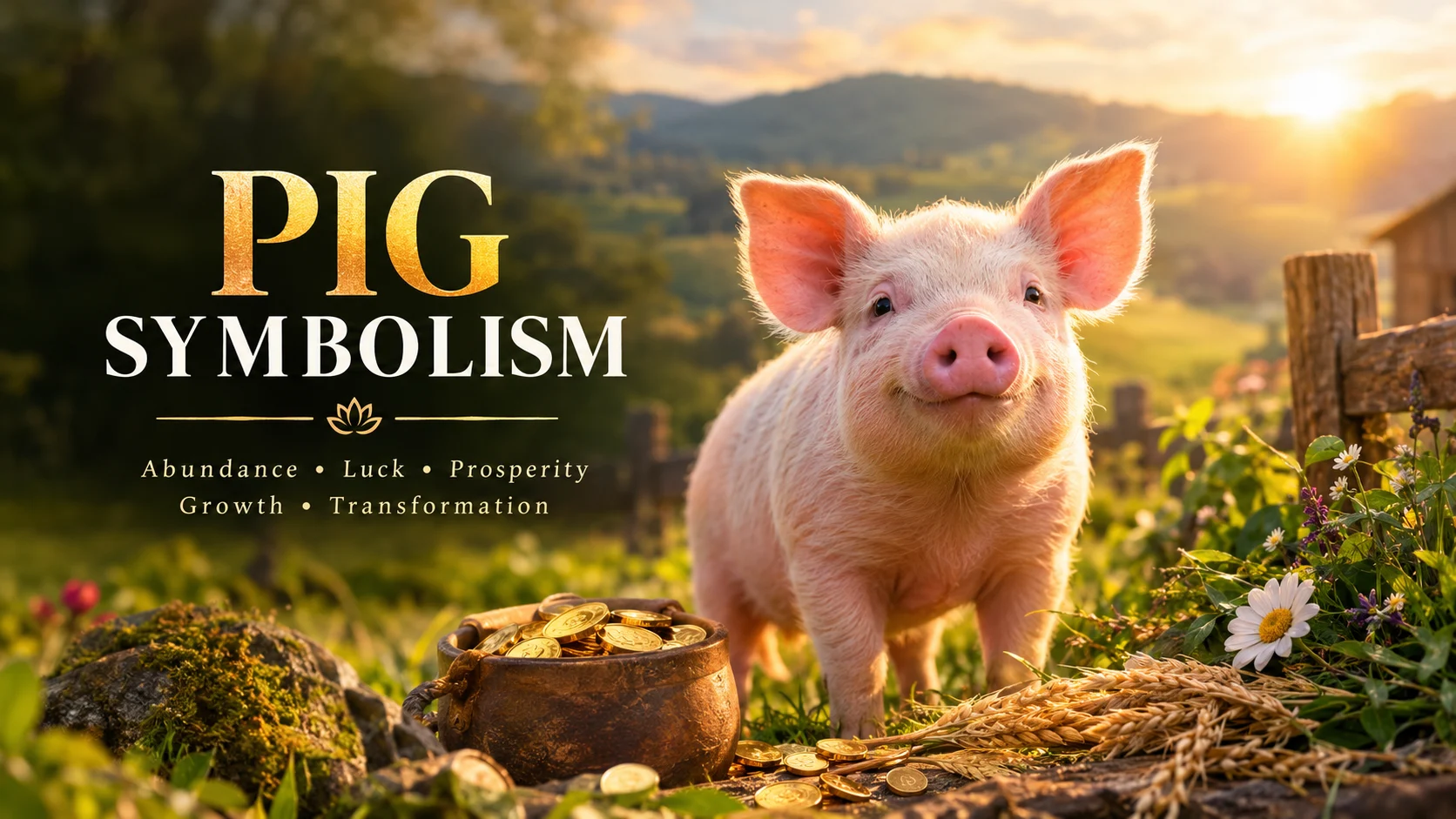
Pig symbolism is often associated with abundance, prosperity, intelligence, nourishment, fertility, and transformation. Across different cultures, pigs can represent wealth and good fortune, while in other traditions, they symbolize greed, excess, or a lack of self-control. Their meaning depends on cultural beliefs, religious traditions, personal experiences, and the situation in which the animal appears.
Understanding pig symbolism can reveal interesting lessons about the balance between material success and inner growth. Whether you encounter a pig in a dream, a story, a spiritual setting, or everyday life, its symbolic meaning may invite you to reflect on prosperity, contentment, and your relationship with the world around you.
Pig Symbolism Meaning (Clear Definition)
Pig symbolism refers to the meanings and associations people give to pigs in spiritual beliefs, cultural traditions, religious teachings, literature, and everyday life.
The pig is commonly associated with:
- Abundance and prosperity: Wealth, financial security, and having enough to live comfortably.
- Fertility and nourishment: Growth, family, food, and the continuation of life.
- Intelligence and adaptability: Practical problem-solving and the ability to adjust to different environments.
- Good fortune: Luck, success, and favorable opportunities in certain cultures.
- Greed and excess: Overindulgence, selfishness, and the desire for more than one needs.
- Transformation: Learning from experience and changing unhealthy habits.
- Comfort and contentment: Enjoying simple pleasures and appreciating life’s necessities.
The pig is a particularly interesting symbol because it carries both positive and negative meanings. It can represent the blessings of material abundance, but it can also serve as a reminder that possessions and pleasure should not control our lives.
What Does Pig Symbolism Represent?
Pig symbolism represents several aspects of human life, from financial success to personal discipline. Its interpretation often depends on the qualities emphasized in a particular culture or story.

1. Abundance and Prosperity
Pigs have long been connected with food, farming, and economic value. Their symbolism can reflect financial stability, material comfort, and the hope of a prosperous future.

2. Fertility and Growth
The birth of piglets makes pigs natural symbols of reproduction, family growth, and new beginnings. They may also represent the development of a project or the growth of something meaningful in your life.

3. Intelligence and Resourcefulness
Pigs are capable of learning, remembering, and solving problems. Symbolically, they can encourage practical thinking, curiosity, and making the most of available resources.

4. Comfort and Pleasure
Pigs can symbolize enjoying food, rest, and life’s physical comforts. This meaning encourages appreciation of simple pleasures while reminding us to maintain balance.

5. Greed and Excess
In some cultural expressions, pigs are used to represent greed, selfishness, or overindulgence. This interpretation invites people to consider whether their desires are supporting their well-being or creating problems.
Quick Summary of Pig Symbolic Meanings
| Symbolic meaning | What it represents |
|---|---|
| Abundance | Wealth, resources, and prosperity |
| Fertility | Family, reproduction, and growth |
| Intelligence | Learning and practical wisdom |
| Good fortune | Luck and favorable opportunities |
| Contentment | Comfort and appreciation |
| Greed | Excess and uncontrolled desire |
| Transformation | Personal development and change |
Spiritual Meaning of Pig Symbolism
The spiritual meaning of pig symbolism often centers on abundance, grounding, self-awareness, and the responsible use of resources.
Pigs are closely connected to the physical world because of their associations with food, farming, nourishment, and survival. Spiritually, these connections can remind us that a meaningful life includes caring for our physical needs while developing inner wisdom.
1. Abundance and Receiving Blessings
A pig may symbolize the importance of recognizing the abundance already present in your life. This could include supportive relationships, meaningful opportunities, personal skills, or financial resources.
Its symbolism encourages gratitude rather than constant comparison with others.
2. Grounding and Connection to Nature
Pigs are associated with the earth, soil, and agricultural life. In a spiritual interpretation, they may represent staying grounded, respecting nature, and appreciating the practical foundations of a fulfilling life.
This meaning can be especially relevant when you feel distracted by ambition or uncertainty.
3. Self-Awareness and Inner Balance
Because pigs can symbolize both abundance and excess, they offer a useful metaphor for balance.
A pig may encourage you to examine your habits, spending, appetite, or desire for recognition. The lesson is not to reject pleasure but to enjoy it without allowing it to become an unhealthy attachment.
4. Fertility and New Beginnings
Pig symbolism can also reflect creativity and the development of new opportunities. Seeing a pig in a meaningful personal context might prompt you to consider what you want to nurture, whether that is a relationship, a personal goal, or a new phase of life.
These interpretations are symbolic rather than universal spiritual rules.
5. Transformation Through Awareness
The pig’s contrasting associations can represent the process of recognizing both strengths and weaknesses. Its symbolism may inspire you to turn excessive habits into mindful choices and material ambition into a more balanced sense of purpose.
Ultimately, the spiritual message of the pig can be summarized as welcome abundance, remain grounded, and use what you have wisely.
Biblical / Religious Meaning of Pig Symbolism
The meaning of pigs in religious traditions varies considerably. In the Bible, pigs are generally associated with ritual impurity in particular Jewish and Christian scriptural contexts, while other cultures associate them with prosperity, luck, or nourishment.
Pig Symbolism in the Bible
In the Old Testament, pigs are classified as unclean animals under the dietary laws described in Leviticus 11:7–8 and Deuteronomy 14:8. These passages instruct the Israelites not to eat their meat or touch their carcasses.
In this context, pig symbolism is connected with ritual purity, religious obedience, and the distinction between permitted and prohibited foods.
A well-known New Testament passage is the story of the prodigal son in Luke 15:11–32. After losing his wealth, the younger son finds himself feeding pigs and longing for their food. This scene emphasizes his extreme hardship and humiliation before he decides to return to his father.
Another passage, Matthew 7:6, refers to giving what is holy to dogs and throwing pearls before pigs. The imagery conveys the importance of discernment and recognizing when something precious may not be appreciated.
These passages use pigs within specific literary and theological contexts. They should not be taken as a statement about the inherent worth of the animal or as a justification for mistreating people.
Pig Symbolism in Islam
In Islam, pork is prohibited for consumption, as stated in passages including the Quran 2:173, 5:3, and 16:115, subject to the exceptions described in the relevant verses.
The religious significance of pigs in Islam is therefore closely connected with dietary restrictions and obedience to divine guidance. Islamic teachings about the prohibition should be understood within their religious context rather than reduced to a general symbolic meaning.
Pig Symbolism in Other Religious and Cultural Traditions
Not every religious or cultural tradition interprets pigs negatively.
In some Chinese cultural traditions, pigs are associated with wealth, abundance, prosperity, and good fortune. The pig also appears as the twelfth animal in the Chinese zodiac.
These contrasting interpretations demonstrate that animal symbolism is shaped by the values, history, and beliefs of the community interpreting it.
Pig Symbolism in History and Culture
Throughout history, pigs have played an important role in agriculture, food production, folklore, and cultural celebrations. Their symbolic meanings have developed from their practical importance as well as from religious and social beliefs.
1. Pig Symbolism in Chinese Culture
In Chinese culture, the pig is commonly associated with prosperity, generosity, comfort, and material success.
The pig is the final animal in the traditional Chinese zodiac cycle. People born in Pig years are often described in popular zodiac interpretations as sincere, kindhearted, and generous, although these traits are cultural beliefs rather than scientifically established personality characteristics.
The pig’s association with abundance reflects its historical importance as a source of food and household wealth.
2. Pig Symbolism in European Traditions
In various European agricultural societies, pigs represented valuable household resources. Raising pigs could provide food, support family livelihoods, and contribute to economic security.
This practical importance helped establish associations between pigs, prosperity, and the rewards of hard work.
At the same time, European folklore and popular expressions sometimes used pigs to represent dirtiness, greed, or excessive appetite. These associations reveal how the same animal can acquire both favorable and unfavorable meanings.
3. Pig Symbolism in Folklore and Fairy Tales
Pigs appear in many familiar stories, where their behavior often communicates lessons about intelligence, preparation, and responsibility.
In The Three Little Pigs, the pigs’ different approaches to building their houses illustrate the value of planning and persistence. The story encourages readers to think about the long-term consequences of their choices.
Other folktales use pigs as symbols of luck, foolishness, cleverness, or the unexpected rewards of ordinary life.
4. Pig Symbolism in Farming Communities
For farming communities, pigs have historically represented nourishment, productivity, and the ability to make practical use of available resources.
Their ability to adapt to different environments has also contributed to associations with resourcefulness and survival.
These meanings remind us that symbolism often begins with the relationship between people, animals, and the natural world.
Pig Symbolism in Literature and Art
Pigs are versatile symbols in literature and art because they can represent innocence, wealth, greed, intelligence, social power, or human weakness.
Writers and artists often use them to explore the difference between how people appear and how they behave.
Pigs in George Orwell’s Animal Farm
One of the most famous literary uses of pig symbolism appears in George Orwell’s Animal Farm.
The pigs initially emerge as leaders of an animal rebellion. Over time, some become increasingly authoritarian and adopt the privileges and behaviors they once opposed.
In this political allegory, the pigs represent the corruption of revolutionary ideals and the dangers of concentrated power. Orwell uses their transformation to explore inequality, propaganda, and the abuse of authority.
Pigs in Children’s Stories
In children’s literature, pigs frequently appear as clever, playful, or determined characters.
The Three Little Pigs emphasizes preparation and perseverance, showing how thoughtful decisions can help overcome difficult circumstances.
These stories can make pig symbolism accessible to younger audiences by connecting the animal with practical lessons about responsibility and problem-solving.
Pigs in Visual Art and Popular Culture
Pigs appear in paintings, cartoons, sculptures, advertising, and decorative objects.
Depending on the context, an artistic pig might represent prosperity, humor, innocence, gluttony, or social criticism. Piggy banks, for example, connect the animal with saving money and financial security.
The meaning of a pig in art depends on the artist’s intention, the surrounding imagery, and the cultural context in which the work is viewed.
Dream Meaning of Pig Symbolism
Dreaming about a pig can have several possible interpretations, including abundance, comfort, personal desires, or concerns about money and behavior.
There is no universally established meaning for every animal dream. Your emotions, experiences, and the details of the dream are often more useful than a fixed symbolic definition.
Here are some common interpretations:
| Pig dream | Possible symbolic interpretation |
|---|---|
| A healthy pig | Prosperity, stability, or contentment |
| A piglet | New beginnings, innocence, or growth |
| A group of pigs | Family, community, or plentiful resources |
| A pig eating | Nourishment, pleasure, or overindulgence |
| A pig in mud | Comfort, grounding, or concerns about appearances |
| A running pig | Restlessness, missed opportunities, or a desire for freedom |
| A sick or injured pig | Worries about security, resources, or vulnerability |
| Feeding a pig | Nurturing a goal or investing in future growth |
What Does It Mean to Dream About a Pig?
A pig appearing in a pleasant dream may reflect your thoughts about security, comfort, or having enough. If the dream feels uncomfortable, it might instead connect with concerns about excess, judgment, or a situation that feels difficult to manage.
Consider three questions when reflecting on your dream:
- How did you feel when you saw the pig?
- What was the pig doing, and what stood out about its surroundings?
- Does the dream connect with anything happening in your waking life?
These questions can help you explore your own associations without assuming that a dream predicts the future.
Modern Meaning of Pig Symbolism
In modern life, pig symbolism continues to appear in financial imagery, popular culture, personal reflection, and conversations about social behavior.
Its meaning often depends on how the animal is represented.
1. Wealth and Financial Security
The piggy bank is one of the most recognizable modern symbols associated with pigs. It represents saving money, building financial security, and preparing for future needs.
This association makes the pig a useful symbol of gradual progress rather than instant success.
2. Abundance and Gratitude
Modern interpretations of pig symbolism often focus on having enough and appreciating what you already possess.
The pig can serve as a reminder that prosperity involves more than accumulating money. Relationships, health, opportunities, and a sense of security can also contribute to a rich life.
3. Intelligence and Adaptability
Growing awareness of animal cognition has challenged simplistic assumptions that pigs are unintelligent animals. Their demonstrated learning and problem-solving abilities have helped make them symbols of curiosity and adaptability in some modern contexts.
This association encourages people to look beyond appearances and reconsider assumptions.
4. Greed and Materialism
Pigs are still used in everyday expressions and satire to criticize greed, selfishness, or overconsumption.
In this sense, pig symbolism raises questions about the difference between enjoying prosperity and allowing material desires to dominate personal values.
5. Individuality and Personal Interpretation
Today, people may interpret an encounter with a pig through their own memories, beliefs, and experiences.
For one person, a pig may symbolize good luck or a comfortable home. For another, it may evoke a religious tradition, a childhood story, or a lesson about moderation.
The most meaningful interpretation considers the wider context instead of relying on a single universal definition.
Frequently Asked Questions About Pig Symbolism
1. What does a pig symbolize spiritually?
A pig can symbolize abundance, grounding, nourishment, fertility, and self-awareness. Some spiritual interpretations also use the pig as a reminder to balance material desires with inner growth.
2. Is a pig a symbol of good luck?
Yes, in some cultural traditions, particularly Chinese culture, pigs are associated with good fortune, wealth, and prosperity. However, their meaning varies across cultures and religious contexts.
3. What does a pig symbolize in the Bible?
In biblical passages, pigs are associated with ritual impurity under Old Testament dietary laws. They also appear in stories and teachings that use their imagery to communicate lessons about hardship, discernment, and spiritual values.
4. What does it mean to dream about a pig?
Dreaming about a pig may reflect thoughts about prosperity, comfort, family, personal desires, or excess. The most useful interpretation depends on the dream’s details and your own feelings and experiences.
5. What does a pig represent in literature?
In literature, pigs can symbolize intelligence, innocence, greed, corruption, or social power. Their meaning depends on how an author uses the animal within the story.
Conclusion: The Deeper Meaning of Pig Symbolism
Pig symbolism reflects the many contrasts found in human life. It can represent abundance, prosperity, intelligence, fertility, and comfort, while also reminding us of the dangers of greed and excess.
Across cultures, religions, dreams, and literature, the pig offers different lessons about wealth, responsibility, and personal values. Its most enduring message is to appreciate life’s blessings, remain grounded, and seek balance between material comfort and meaningful growth.

I am Simon Michael, an author passionate about exploring symbols, their meanings, and cultural significance. I enjoy making symbolism simple, engaging, and meaningful for curious readers everywhere.


