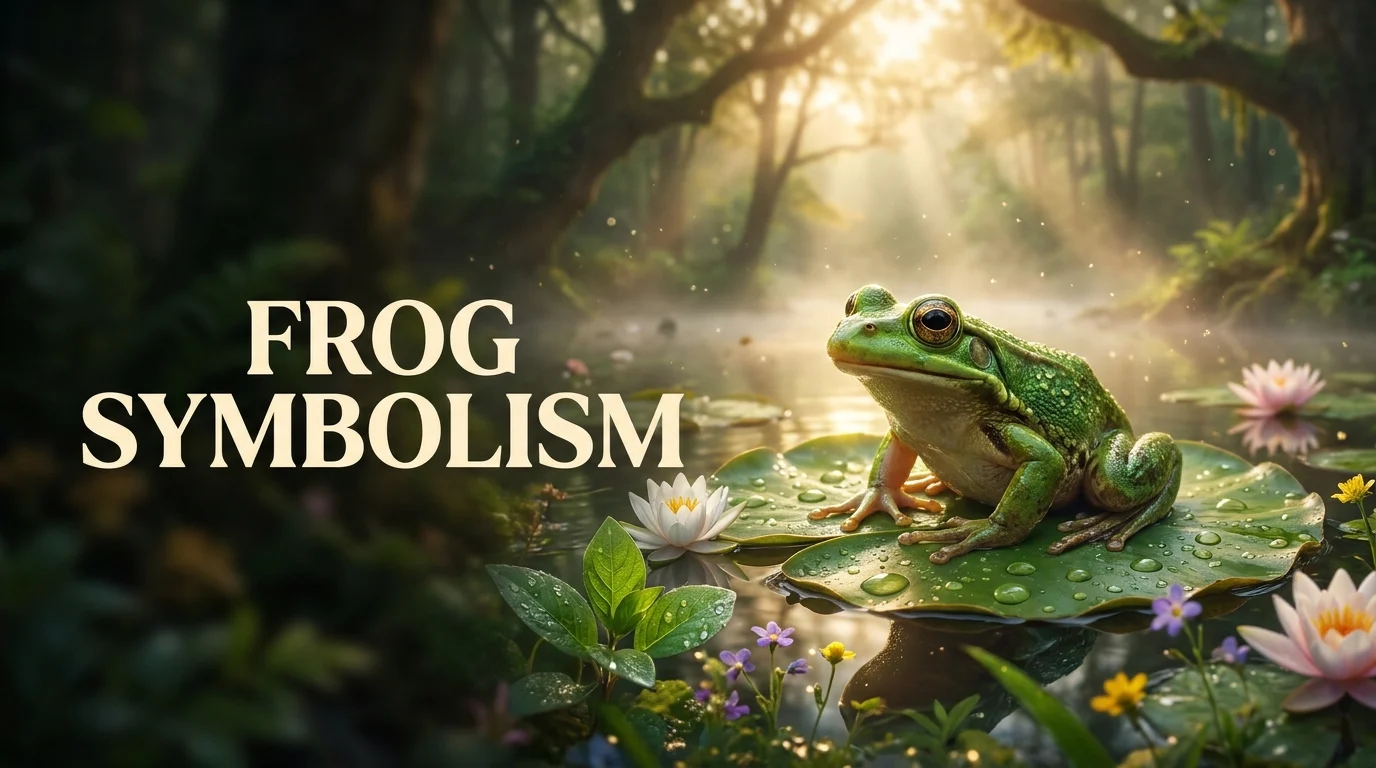
Frog symbolism is deeply connected to transformation, renewal, prosperity, fertility, and emotional cleansing. Throughout history, frogs have appeared in myths, spiritual traditions, folklore, and dreams as powerful symbols of change and new beginnings. Their remarkable life cycle, from tadpole to adult frog, makes them a natural representation of personal growth and the ability to adapt to changing circumstances.
Seeing a frog in nature, dreaming about one, or repeatedly noticing frogs in your daily life can inspire you to reflect on the changes happening around you. Although interpretations vary across cultures and personal beliefs, frog symbolism often encourages you to embrace growth, release the past, and trust the process of transformation.
Whether you are curious about the spiritual meaning of frogs, their biblical significance, or what a frog represents in dreams, understanding these interpretations can offer a fresh perspective on life’s transitions.
Frog Symbolism Meaning (Clear Definition)
Frog symbolism refers to the meanings and ideas associated with frogs, including transformation, renewal, abundance, fertility, adaptability, and cleansing. Because frogs change dramatically throughout their lives and thrive in environments connected to water, they are frequently associated with personal evolution and emotional renewal.
A frog’s journey from an egg to a tadpole and finally to an adult represents the natural process of becoming something new. This transformation reminds us that growth takes time and that important changes may begin in ways we cannot immediately recognize.
Frogs are also associated with rain, wetlands, and fertile landscapes. In many traditions, their presence has been connected with seasonal renewal, agricultural abundance, and the return of life after dry periods.
The most common meanings of frog symbolism include:
- Transformation: Embracing change and entering a new phase of life.
- Renewal: Releasing old habits and making room for fresh opportunities.
- Abundance: Representing prosperity, fertility, and the potential for growth.
- Adaptability: Learning to navigate unfamiliar situations.
- Emotional cleansing: Symbolizing the release of emotional burdens.
- Fertility: Connecting with creation, reproduction, and new possibilities.
- Good fortune: Representing luck and prosperity in certain cultural traditions.
At its heart, frog symbolism reminds us that change is not something to fear. Sometimes, the most meaningful transformations happen gradually, long before their results become visible.
What Does Frog Symbolism Represent?
Frogs can represent different things depending on their appearance, behavior, cultural setting, and the circumstances in which they are encountered. Their natural characteristics help explain why they have acquired such a rich collection of symbolic meanings.
1. Transformation and Personal Growth
Transformation is one of the strongest meanings associated with frogs.
A tadpole looks completely different from an adult frog. As it develops, it grows legs, changes its body structure, and gradually adapts to a new way of living.
Symbolically, this process reflects the human experience of growing through challenges, gaining wisdom, and becoming more confident. A frog can represent a period when your identity, relationships, career, or priorities are changing.
Its message is simple: you do not have to remain the person you were yesterday.
2. Renewal and New Beginnings
Frogs are often associated with fresh starts because of their connection to water, rain, and changing seasons.
Their appearance may serve as a reminder to reconsider outdated habits, forgive past mistakes, or approach a difficult situation with a renewed perspective.
Renewal does not always require a dramatic life change. It may involve developing a healthier routine, rebuilding a relationship, or finding the courage to begin again after disappointment.
3. Prosperity and Abundance
In several cultural traditions, frogs are associated with wealth, good fortune, and abundance.
Their connection to water and fertile environments makes them natural symbols of thriving ecosystems and productive land. In Chinese cultural traditions, certain frog and toad figures are also associated with attracting wealth and prosperity.
This symbolism can encourage a positive attitude toward opportunities and growth. However, seeing a frog is not evidence that money or good fortune is guaranteed to arrive.
4. Adaptability and Resilience
Frogs depend on environments that support different stages of their lives. Their ability to navigate land and water makes them useful symbols of adaptability.
In everyday life, this meaning relates to adjusting when plans change, learning unfamiliar skills, and responding thoughtfully to uncertainty.
Frog symbolism encourages resilience without suggesting that change is always easy. Adaptability means learning how to move forward while respecting your own limits.
5. Fertility and Creation
Frogs lay eggs, and many species produce large numbers of offspring. This reproductive capacity has helped establish associations with fertility, creation, and the continuation of life.
Symbolically, fertility can refer to more than having children. It may represent creative ideas, new projects, growing relationships, or opportunities that have the potential to develop into something meaningful.
6. Emotional Cleansing and Healing
Because frogs are closely associated with water, they are sometimes interpreted as symbols of emotional cleansing.
Water often represents feelings, intuition, and the inner world in symbolic traditions. A frog near a pond or stream may therefore suggest a need to acknowledge emotions and release what no longer serves you.
This interpretation can be especially meaningful during periods of stress, grief, uncertainty, or personal reflection.
Frog Symbolism at a Glance
| Symbolic meaning | What it represents |
|---|---|
| Transformation | Personal evolution and major life changes |
| Renewal | Fresh starts and releasing the past |
| Prosperity | Abundance, opportunity, and good fortune |
| Fertility | Creation, growth, and new possibilities |
| Adaptability | Flexibility and resilience |
| Emotional cleansing | Processing feelings and finding balance |
| Good luck | Hope and favorable possibilities in some traditions |
Spiritual Meaning of Frog Symbolism
The spiritual meaning of frog symbolism often centers on transformation, emotional balance, and the willingness to welcome change. In modern spiritual interpretations, frogs can represent the transition between one stage of life and another.
These meanings are matters of personal belief rather than universally established spiritual facts. Their value often lies in the reflection and encouragement they inspire.
Frog as a Symbol of Spiritual Transformation
A frog’s life cycle provides a powerful image of spiritual development.
Just as a tadpole gradually becomes an adult frog, people may move through periods of uncertainty before developing a deeper understanding of themselves.
A frog can symbolize leaving behind an old identity, questioning familiar beliefs, or becoming more aware of what matters most.
If you are experiencing a period of change, this symbolism can encourage patience. Personal growth rarely happens all at once.
Frog Symbolism and Emotional Healing
In spiritual interpretations, frogs are sometimes connected with cleansing, release, and emotional renewal.
Seeing a frog may prompt you to consider whether you are holding on to resentment, fear, or expectations that no longer fit your life.
Rather than treating the encounter as a supernatural instruction, you can use it as an opportunity for reflection. Ask yourself what needs attention, what deserves to be released, and what would help you feel more balanced.
Frog as a Symbol of Abundance
Some spiritual traditions associate frogs with prosperity because of their connection to fertile environments, rain, and reproduction.
In this context, abundance can mean financial stability, supportive friendships, meaningful work, creativity, or a greater appreciation for what you already have.
The frog’s symbolism can encourage you to recognize opportunities and cultivate gratitude while taking practical steps toward your goals.
What Does It Mean Spiritually to See a Frog?
The meaning depends on your beliefs and circumstances. Some people interpret a frog encounter as a reminder to welcome change, remain flexible, or pay attention to emotional well-being.
Consider what was happening in your life when you saw the frog. Your own thoughts and experiences may provide a more useful interpretation than a fixed symbolic rule.
Biblical / Religious Meaning of Frog Symbolism
Frogs have a specific and significant place in the Bible, particularly in the account of the plagues of Egypt in the Book of Exodus.
Unlike some modern spiritual interpretations that emphasize prosperity and renewal, the biblical meaning of frogs is primarily associated with divine judgment, the disruption of ordinary life, and the demonstration of God’s power.
Frogs in the Book of Exodus
In Exodus 8:1–15, frogs become the second plague sent upon Egypt after Pharaoh refuses to release the Israelites from slavery.
The frogs emerge from the Nile and spread throughout the land, entering houses and even places where food is prepared. Their overwhelming presence makes the plague an unmistakable disruption of daily life.
Within the biblical narrative, this event demonstrates God’s authority and challenges Pharaoh’s refusal to obey the divine command.
The story also shows how something familiar in nature can become a powerful sign within a religious narrative.
Frogs in the Book of Revelation
Frogs appear again in Revelation 16:13, where three unclean spirits resembling frogs emerge from the mouths of the dragon, the beast, and the false prophet.
In this apocalyptic vision, frogs are associated with deception and unclean spirits rather than prosperity or positive transformation.
The passage uses vivid symbolic imagery to describe spiritual opposition and the gathering of earthly rulers for conflict.
Do Frogs Represent Good or Evil in the Bible?
The biblical meaning of frogs is generally negative in the passages where they appear. Exodus presents them as a plague, while Revelation uses frog-like imagery to portray unclean spirits.
However, the Bible does not establish a universal rule that every frog encountered in everyday life is a sign of evil or misfortune.
It is important to distinguish the specific meaning of frogs within these passages from the broader symbolic meanings developed in other cultures and modern spiritual practices.
Frog Symbolism in History and Culture
Frogs have appeared in religious traditions, folklore, decorative art, and popular customs for thousands of years. Their associations differ across societies because people have interpreted them through local environments, agricultural practices, and cultural beliefs.
Ancient Egyptian Frog Symbolism
In ancient Egypt, frogs were associated with fertility, regeneration, and the emergence of life.
The goddess Heqet, commonly depicted with a frog’s head or in frog-like form, was associated with childbirth and the protection of mothers and newborns.
Frogs were particularly meaningful in a landscape shaped by the annual flooding of the Nile. The floodwaters renewed agricultural land and supported new growth, helping establish connections between frogs, fertility, and regeneration.
This historical symbolism illustrates how an animal’s natural environment can influence its religious significance.
Chinese Frog Symbolism
In Chinese culture, frogs and toads appear in traditions associated with prosperity, fortune, and abundance.
One well-known figure is the Jin Chan, often called the three-legged money toad. It is commonly depicted with coins and is associated in popular feng shui practices with wealth and financial good fortune.
The meaning depends on the specific figure and tradition. It should not be assumed that every frog image in Chinese culture carries the same financial symbolism.
Frog Symbolism in Japanese Culture
Frogs are also associated with a sense of return in Japanese wordplay and popular customs.
The Japanese word for frog, kaeru, can also mean “to return” when written with a different character but pronounced the same way. This connection has inspired frog charms and souvenirs associated with safe returns, including the return of travelers or lost possessions.
This example demonstrates how language itself can shape animal symbolism.
Frog Symbolism in European Folklore
European stories and folklore sometimes portray frogs as enchanted creatures, mysterious messengers, or figures connected with transformation.
The familiar tale The Frog Prince, collected by the Brothers Grimm, presents a frog who becomes a prince after a series of events involving a princess. Although versions differ, the story explores promises, appearances, and unexpected change.
Frogs have also appeared in folk beliefs connected with rain and seasonal weather, reflecting their tendency to become more noticeable around wet conditions.
Frog Symbolism in Indigenous Traditions
Frogs hold different meanings in Indigenous cultures around the world. In some communities, they are connected with rain, water, ecological knowledge, and relationships with the natural world.
There is no single Indigenous interpretation of frog symbolism. Beliefs and stories differ among nations, regions, and communities, and specific meanings should be understood within their own cultural contexts.
Frog Symbolism in Literature and Art
Frogs have inspired writers, artists, storytellers, and illustrators because they combine unusual physical characteristics with a remarkable life cycle.
Their symbolic meanings can shift depending on whether a creator emphasizes transformation, humor, fertility, nature, or the mysterious boundary between the familiar and unfamiliar.
Frogs as Symbols of Transformation in Fairy Tales
In fairy tales, frogs often represent the possibility that appearances can be misleading.
The Frog Prince is a well-known example. The frog’s transformation into a prince connects the animal with hidden potential and unexpected change.
This theme remains relevant because people often judge themselves and others by present circumstances rather than considering what they may become.
Frogs in Poetry and Children’s Literature
Frogs frequently appear in poetry and children’s stories as lively, humorous, or observant characters.
Their distinctive croaks, jumping movements, and pond habitats make them engaging figures for exploring nature, friendship, curiosity, and the experience of growing up.
In some stories, frogs represent the joy of discovering the natural world. In others, they act as comic characters who help readers consider human behavior from a different perspective.
Frogs in Visual Art
Artists often depict frogs near lily pads, ponds, reeds, and flowers. These settings emphasize their relationship with water and the rhythms of the natural world.
In symbolic artwork, a frog may represent renewal, fertility, or environmental balance. In decorative objects, its meaning may depend on the cultural tradition behind the design.
Contemporary artists also use frogs in playful illustrations, fantasy scenes, and environmental themes, demonstrating that their symbolism continues to evolve.
Dream Meaning of Frog Symbolism
Dreaming about frogs can be interpreted in several ways, depending on the dream’s setting, your emotional response, and the details you remember.
Dream interpretation is subjective, and there is no scientific evidence that a particular frog dream predicts a specific event. However, examining the dream’s imagery can help you reflect on current concerns, hopes, and transitions.
Dreaming of a Green Frog
A green frog may bring to mind nature, growth, renewal, and vitality.
If the dream feels peaceful, you might associate it with a fresh start or a growing sense of confidence. If it feels uncomfortable, consider whether a recent change has left you uncertain.
Dreaming of a Frog Jumping
A jumping frog can symbolize movement, flexibility, or a desire to move forward.
The dream may remind you of a decision you have been postponing or an opportunity that requires action. Its meaning depends on whether the movement feels exciting, surprising, or threatening.
Dreaming of Many Frogs
A dream filled with frogs might reflect a sense of abundance, activity, or being overwhelmed by several changes at once.
Think about how you felt in the dream. A lively pond may suggest curiosity and possibility, while an unpleasant scene may reflect stress or a need for greater personal space.
Dreaming of a Frog in Your House
A frog inside your home may draw attention to personal boundaries, family life, or changes in your private world.
Your home in a dream can be associated with comfort and personal identity, but the interpretation is not universal. Consider whether anything in your home life currently feels new, unfamiliar, or in need of attention.
Dreaming of a Frog Turning Into Something Else
A changing frog may represent the idea of transformation particularly strongly.
It could reflect a changing self-image, a new relationship, or a developing ambition. Rather than viewing the dream as a prediction, use it to consider what is changing and how you feel about that process.
Modern Meaning of Frog Symbolism
Today, frog symbolism appears in home decor, jewelry, tattoos, fashion, social media, environmental campaigns, and personal spiritual practices.
Although traditional meanings remain influential, modern interpretations often focus on individual growth and the relationship between people and the natural world.
Frog Symbolism in Tattoos
A frog tattoo can represent several personal values, including:
- Transformation: A reminder of how far you have come.
- Resilience: The ability to adapt after difficult experiences.
- Renewal: A commitment to fresh starts and personal development.
- Nature: Appreciation for wildlife and the environment.
- Playfulness: A sense of humor and an unconventional personality.
- Prosperity: An expression of cultural or personal associations with abundance.
The meaning of a tattoo ultimately depends on the wearer. Some people choose frogs because they value their symbolism, while others simply enjoy their appearance.
Frog Symbolism in Everyday Life
Encountering a frog outdoors can inspire curiosity about nature and the changing seasons.
Because frogs depend on suitable habitats and many species are sensitive to environmental changes, their presence can also encourage awareness of wetlands, water quality, and biodiversity.
If you repeatedly notice frogs, you may choose to treat the experience as a personal reminder to welcome change or reconnect with nature. There is no need to assume that the encounter carries a predetermined supernatural message.
Frog Symbolism and Environmental Awareness
Frogs play important roles in many ecosystems. They consume insects and other small organisms, while also serving as food for birds, fish, snakes, and other animals.
Many amphibians are vulnerable to habitat loss, pollution, climate change, disease, and other environmental pressures.
As a result, frogs have become meaningful symbols of biodiversity and ecological health. Their survival reminds us that protecting wetlands and natural habitats benefits entire communities of living things.
Is Frog Symbolism Positive or Negative?
Frog symbolism can be positive, negative, or neutral depending on the tradition.
In modern spiritual interpretations, frogs commonly represent renewal, transformation, adaptability, and abundance. In the biblical accounts of Exodus and Revelation, they appear in negative contexts associated with a plague and unclean spirits.
The most appropriate interpretation depends on the cultural background, story, or personal context in which the frog appears.
Frequently Asked Questions About Frog Symbolism
1. What does a frog symbolize spiritually?
Spiritually, a frog commonly symbolizes transformation, renewal, adaptability, and emotional cleansing. Some modern spiritual traditions also associate frogs with prosperity and abundance.
2. Is seeing a frog a sign of good luck?
In some cultural traditions, frogs and toads are associated with good fortune, fertility, and wealth. However, seeing a frog does not guarantee a lucky event; its meaning depends on your beliefs and cultural context.
3. What does a frog symbolize in the Bible?
In the Bible, frogs appear as the second plague of Egypt in Exodus and as images of unclean spirits in Revelation. These passages give frogs a generally negative meaning within their specific religious contexts.
4. What does it mean to dream about a frog?
A frog dream may prompt you to reflect on change, personal growth, adaptability, or uncertainty. Its possible meaning depends on the dream’s details and the emotions you experienced.
5. What does a frog symbolize in love?
In modern symbolic interpretations, frogs can represent renewal, fertility, and transformation in relationships. A frog may serve as a personal reminder to nurture emotional growth, communicate openly, or welcome a new chapter in your love life.
Conclusion: The Deeper Meaning of Frog Symbolism
Frog symbolism offers a meaningful way to explore transformation, renewal, resilience, fertility, and the possibilities that accompany change. From ancient Egyptian associations with regeneration to modern interpretations of personal growth, frogs have inspired people to reflect on the natural cycles of life.
Their meanings are not identical across every culture or belief system. Nevertheless, the frog’s remarkable life cycle provides a lasting reminder that growth often involves leaving familiar conditions behind and adapting to something new.
if you encounter a frog in nature, in a dream, or in a work of art, its symbolism can encourage you to approach life’s transitions with patience, curiosity, and an open mind.

I am Simon Michael, an author passionate about exploring symbols, their meanings, and cultural significance. I enjoy making symbolism simple, engaging, and meaningful for curious readers everywhere.


