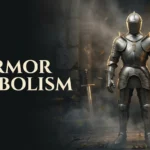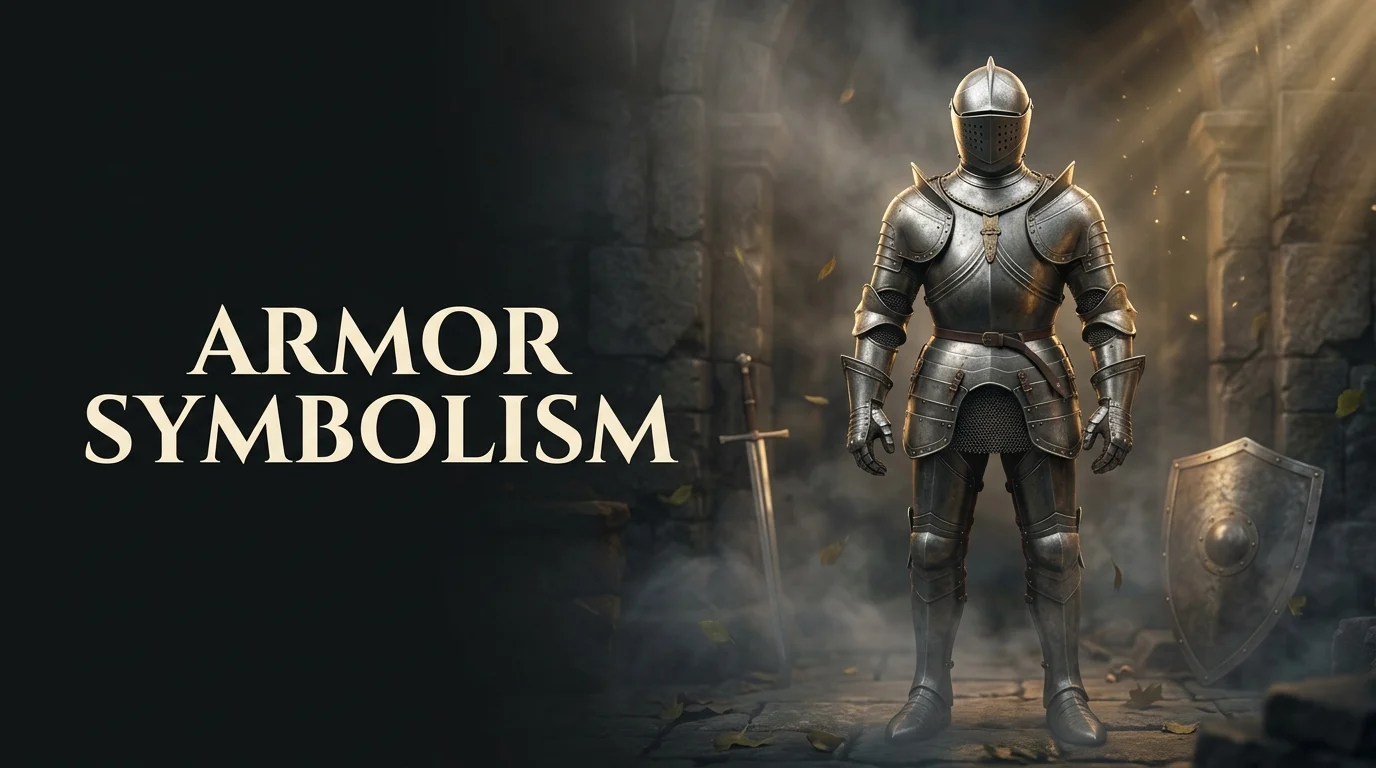
Armor symbolism is deeply connected with protection, strength, courage, resilience, and the ability to face challenges without losing your sense of self. Across history, armor has protected warriors physically, but its deeper meaning often reaches beyond battle. It can represent emotional boundaries, inner strength, spiritual defense, confidence, and readiness to overcome adversity.
Whether armor appears in mythology, religious imagery, dreams, literature, art, or modern culture, it often carries one central idea: being prepared to protect what matters most.
Armor Symbolism Meaning (Clear Definition)
Armor symbolism represents protection, strength, courage, resilience, defense, and emotional security.
Historically, armor was designed to protect the body from physical danger. Symbolically, this practical purpose became associated with the protection of the heart, mind, values, identity, and personal boundaries.
In simple terms, armor can symbolize:
- Protection from harm or danger
- Strength during difficult situations
- Courage to confront challenges
- Resilience after hardship
- Emotional boundaries that prevent unnecessary pain
- Security and a desire for safety
- Readiness to face uncertainty
- Discipline and self-control
Armor can therefore have both positive and cautionary meanings. It may represent healthy boundaries, but it can also symbolize emotional walls that prevent vulnerability and connection.
What Does Armor Symbolism Represent?
Armor can represent different qualities depending on its context.
1. Protection
The most obvious meaning of armor is protection. Symbolically, it can represent the desire to safeguard yourself, your loved ones, beliefs, or important values.
2. Strength
Armor suggests the ability to withstand pressure. Seeing armor may symbolize inner strength and the determination to remain steady during difficult times.
3. Courage
Armor is often associated with warriors who willingly enter dangerous situations. As a symbol, it can represent bravery and the willingness to confront fear.
4. Resilience
Because armor is designed to withstand impact, it can symbolize resilience—the ability to experience difficulties and continue moving forward.
5. Emotional Defense
Armor can also represent emotional protection. Someone may metaphorically “wear armor” after experiencing disappointment, betrayal, rejection, or emotional pain.
6. Discipline and Self-Control
Armor requires preparation and responsibility. Symbolically, it can represent discipline, self-control, and the ability to remain composed under pressure.
7. Readiness
Armor can suggest preparation for an approaching challenge. It may symbolize being mentally, emotionally, or spiritually prepared for what lies ahead.
Spiritual Meaning of Armor Symbolism
Spiritually, armor often represents inner protection and spiritual strength.
It can symbolize the idea that a person needs more than physical strength to overcome life’s difficulties. Faith, wisdom, courage, patience, and self-awareness can serve as forms of spiritual armor.
Armor may appear symbolically during periods when someone feels vulnerable or uncertain. In this context, it can encourage a person to strengthen their inner foundation rather than relying entirely on external protection.
Spiritually, armor may represent:
- Protection from negativity
- Strength of faith
- Inner courage
- Spiritual resilience
- Wisdom and discernment
- Emotional boundaries
- Perseverance through hardship
At the same time, spiritual armor does not necessarily mean becoming emotionally closed. True strength can include knowing when to defend yourself and when it is safe to remain open.
Biblical / Religious Meaning of Armor Symbolism
Armor has an important symbolic role in Christianity, particularly through the biblical imagery known as the “armor of God.”
In Ephesians 6:10–18, Paul uses armor as a metaphor for spiritual readiness. The passage describes elements such as the belt of truth, breastplate of righteousness, shield of faith, helmet of salvation, and sword of the Spirit.
The imagery emphasizes that spiritual struggles require qualities such as truth, faith, righteousness, salvation, and God’s word.
The broader religious symbolism of armor can therefore include:
| Armor Element | Symbolic Association |
|---|---|
| Breastplate | Righteousness and protection |
| Shield | Faith and defense |
| Helmet | Salvation and protection of the mind |
| Sword | God’s word and spiritual strength |
| Belt | Truth and readiness |
| Armor as a whole | Spiritual preparedness and perseverance |
Other religious and mythological traditions also use protective clothing, shields, helmets, and divine armor to symbolize protection, authority, courage, and sacred power. The exact meaning depends on the tradition and historical context.
Armor Symbolism in History and Culture
Armor has been used by civilizations around the world, from ancient soldiers to medieval knights and ceremonial warriors.


In medieval Europe, a knight’s armor could symbolize military strength, social status, duty, and honor. Elaborate armor was not simply protective equipment; it could also communicate identity and rank.
Japanese samurai armor similarly combined practical defense with visual symbolism. Colors, designs, helmets, and decorative elements could communicate status, family identity, or spiritual and cultural associations.
In ancient cultures, helmets, breastplates, shields, and other protective equipment were often connected with military power and leadership.
Across these traditions, armor repeatedly became a symbol of preparedness, authority, protection, and courage.
Armor Symbolism in Literature and Art
Writers and artists frequently use armor as a metaphor rather than simply depicting a piece of military equipment.
A character wearing armor may appear physically protected while emotionally vulnerable underneath. This creates a powerful contrast between outer strength and inner sensitivity.
In literature, armor can symbolize:
- A defensive personality
- Hidden emotional pain
- Heroism
- Duty and responsibility
- Personal transformation
- Protection of loved ones
- The struggle between vulnerability and strength
Artists may also use armor to create themes of conflict, identity, mortality, courage, or protection.
An empty suit of armor can carry an especially striking meaning. It may suggest a warrior who has disappeared, the passage of time, lost identity, or the lasting memory of conflict.
Dream Meaning of Armor Symbolism
Dreaming about armor can symbolize protection, emotional defense, courage, or preparation for a challenge.
The meaning depends strongly on what happens in the dream.
- Wearing armor: You may feel the need to protect yourself emotionally or prepare for difficulty.
- Putting on armor: May represent readiness, confidence, or preparing to confront a problem.
- Removing armor: Can symbolize vulnerability, trust, openness, or letting go of emotional defenses.
- Broken armor: May reflect feelings of vulnerability or a weakened sense of security.
- Shiny or powerful armor: Can represent confidence, strength, ambition, or personal authority.
- Fighting while wearing armor: May symbolize determination and the willingness to defend your values.
- Seeing someone else in armor: Could represent a person you perceive as protective, strong, distant, or difficult to approach.
Dream symbolism is personal rather than universal, so the emotions and circumstances surrounding the dream are important.
Modern Meaning of Armor Symbolism
Today, armor is rarely limited to literal battlefield equipment. Its symbolic meaning has expanded into everyday emotional and psychological language.
People may describe themselves as wearing “emotional armor” when they protect themselves from rejection, criticism, disappointment, or heartbreak.
Modern armor symbolism can therefore represent:
Boundaries + Confidence + Emotional Protection + Resilience + Self-Preservation
In a healthy sense, armor can symbolize knowing your limits and protecting your well-being. However, excessive emotional armor can also suggest isolation or difficulty allowing others to get close.
The modern lesson is not necessarily to keep your armor on forever. Sometimes strength means knowing when protection is necessary—and when it is safe to lower your defenses.
Common Symbolic Meanings of Armor
The symbolism of armor can be summarized through several powerful themes:
- Protection — guarding yourself or something valuable
- Strength — remaining steady under pressure
- Courage — facing fear instead of avoiding it
- Resilience — recovering after hardship
- Defense — maintaining personal boundaries
- Confidence — believing in your ability to cope
- Readiness — preparing for challenges
- Emotional barriers — protecting yourself from vulnerability
Frequently Asked Questions About Armor Symbolism
What is the spiritual meaning of armor symbolism?
Armor can spiritually represent protection, faith, courage, resilience, and readiness to face adversity. It often symbolizes developing inner strength rather than depending only on physical protection.
What does armor symbolize in dreams?
Armor in dreams commonly represents protection, emotional defenses, courage, or preparation for a challenge. The specific meaning depends on whether the armor is worn, broken, removed, or used in battle.
What does armor symbolize in Christianity?
In Christianity, armor is strongly associated with the biblical “armor of God” in Ephesians 6. Its elements represent qualities such as truth, righteousness, faith, salvation, and spiritual strength.
Does armor symbolize emotional protection?
Yes. Armor can metaphorically represent emotional defenses that protect someone from rejection, betrayal, criticism, or emotional pain.
What does broken armor symbolize?
Broken armor can symbolize vulnerability, weakened defenses, hardship, or the realization that old methods of protecting yourself are no longer working.
Conclusion
Armor symbolism ultimately represents the strength to protect what matters while remaining prepared to face life’s challenges. From ancient warriors and religious imagery to dreams and modern emotional language, armor carries themes of protection, courage, resilience, faith, and inner strength.
Its deepest message may be that true strength is not simply about building stronger defenses. It is also about understanding when to stand protected, when to face adversity, and when it is safe to remove the armor.

I am Simon Michael, an author passionate about exploring symbols, their meanings, and cultural significance. I enjoy making symbolism simple, engaging, and meaningful for curious readers everywhere.